

Key takeaways
- Compare the best hummingbird feeders on capacity, bee guards, ant moats, materials and cleaning access to keep nectar fresh and birds returning daily.
As an Amazon Associate we earn from qualifying purchases.
Disclosure: This article contains affiliate links. If you buy through these links, we may earn a commission at no extra cost to you.
Our top pick: Aspects HummZinger HighView 12 Oz Hanging Hummingbird Feeder. Runner-up: First Nature 3055 32-Ounce Hummingbird Feeder.
A quiet corner of the yard changes once hummingbirds learn fresh nectar waits there every morning. They arrive early, hover to check the area, settle on a perch if one is offered, and return through the day. Keeping that routine going depends less on luck than on the feeder. A feeder that leaks, draws bees, or takes ten minutes to scrub will soon be filled less often, and stale nectar drives birds away. A feeder that opens fully and keeps ants out makes the habit easy to keep.
This guide compares five feeders: a shallow saucer that is simple to inspect, two large plastic feeders from the same maker with different port styles, a compact glass feeder with a built-in ant moat, and a large hand-blown glass feeder that doubles as garden decoration. Each was chosen because its parts come apart for washing and its design addresses the problems that end most routines: insects in the nectar, mould in hidden corners, and reservoirs awkward to fill.
How to Choose a Hummingbird Feeder
Capacity should match traffic, not ambition. A feeder holding ten or twelve ounces suits a yard with a handful of regular visitors, because the nectar will be finished or replaced while still fresh. Nectar should be changed every two to three days in warm weather, and daily during a heat wave, so a very large reservoir only helps when many birds are feeding. Feeders holding thirty-two ounces or more make sense during migration or on a property with constant activity. If only two birds visit, a large feeder simply means more nectar is thrown away at each cleaning.
Material shapes care and longevity. Glass reservoirs are easy to inspect, do not hold odours, and keep their clarity when washed by hand, but they need careful handling. Polycarbonate and sturdy plastic feeders tolerate knocks and are often lighter to lift down from a high hook. Weight matters: a full thirty-six ounce glass feeder is noticeably heavy, so a comfortable hanging height and a secure hook are part of the decision.
Port design decides how much trouble bees and wasps cause. Raised ports on a saucer feeder keep nectar below the surface, so bees cannot reach it while a hummingbird tongue can. Flower ports and bee guards add a barrier favouring the birds, and yellow port flowers are thought to draw hummingbirds while being less attractive to bees. A leaking feeder attracts insects regardless of guards, but a sound design reduces the daily contest at the ports.
For ants, a built-in moat is the simplest defence: a small cup above the feeder filled with plain water, forming a barrier crawling ants cannot cross. It uses no chemicals and only needs topping up as water evaporates. Never use oils, grease, or sticky substances on a pole or hanger, because they can harm a bird if they reach its feathers.
Cleaning access matters most over a season. Look for a wide mouth that admits a brush, a base that separates, and ports that open so mould cannot hide. Saucer feeders have an advantage, because lifting the cover exposes the whole well. Choose the feeder you will actually wash every few days. Hang feeders four to six feet up, near flowers, with shade for part of the day.
Aspects HummZinger HighView 12 Oz Hanging Hummingbird Feeder

The HummZinger HighView takes the saucer approach, and it is the easiest feeder here to understand at a glance. Nectar sits in a shallow polycarbonate bowl beneath a bright red cover, and lifting that cover exposes the entire reservoir for washing. There are no narrow necks, hidden tubes, or corners a brush cannot reach. You can see the nectar level, see whether it has clouded, and clean the feeder without special tools, which suits a calm morning routine of watching birds from a patio chair.
Four feeding ports sit in the cover, raised above the nectar surface. That helps keep bees from reaching the liquid, and the ports accept optional nectar guard tips when wasps are persistent. A built-in ant moat in the centre of the cover blocks crawling insects, and the raised HighView perch ring gives an unobstructed side view of a feeding bird. The twelve ounce capacity fits moderate traffic: large enough for a reliable supply, small enough that nectar is replaced while fresh. Wash bowl and cover at each refill, paying attention to the ports where residue collects first.
Specs
- Capacity: 12 fluid ounces
- Feeding ports: 4 raised ports, compatible with nectar guard tips
- Material: UV-stabilised polycarbonate bowl and red cover
- Ant protection: Built-in central ant moat
- Perch: Raised HighView wrap-around perch ring
- Model: Aspects 429, hanging saucer design
First Nature 3055 32-Ounce Hummingbird Feeder

The First Nature 3055 is the practical high-capacity option for a yard where many birds feed through the day. Its wide-mouth plastic reservoir holds thirty-two ounces, and the patented two-part base separates for filling and washing, so the large size does not bring the cleaning penalty of narrow bottle feeders. A sealing ring in the base helps limit leaks when the feeder hangs level and parts are seated correctly after each wash.
Ten feeding ports ring the red base, with a round perch that lets several birds settle at once rather than hovering in turn, spreading birds out during busy periods. An included S-hook makes hanging from a branch, pole, or porch hook straightforward, and the clear reservoir makes the nectar level easy to check from a distance. In hot weather, fill it only partway so fresh nectar cycles through rather than ageing. Wash both base sections and every port at each change, rinse thoroughly, and inspect the sealing ring for wear. For a larger garden or a migration-season surge, this is a dependable workhorse.
Specs
- Capacity: 32 fluid ounces
- Feeding ports: 10 ports with round perch ring
- Material: Plastic wide-mouth reservoir with two-part base
- Cleaning: Two-part base separates, wide mouth for brush access
- Included: S-hook and leak-limiting sealing ring
- Model: First Nature 993055-446 (model 3055)
More Birds Bird Health+ Ruby Hummingbird Feeder

The Ruby is the compact choice here, built around a ten ounce glass bottle for a small patio, a balcony hook, or a first feeder placed close to a favourite chair. Its size is a feature: a smaller supply is finished quickly, so nectar is replaced often and stays fresh, and the feeder is light to lift down even when full. The wide bottle opening and a base that comes apart make hand washing straightforward.
Four flower-shaped stations sit in the red base, each with an integrated perch, a soft port for a comfortable feeding angle, and bee guards. A built-in ant moat above the bottle blocks ants, notable protection at this size. The maker advises hand washing, since high heat can damage parts, and the ports and gaskets should be checked as the season goes on, because those flexible parts do the sealing work. For one feeder close to the house, the Ruby covers the essentials without excess size or weight.
Specs
- Capacity: 10 fluid ounces (295 ml)
- Feeding ports: 4 flower-shaped stations with perches and bee guards
- Material: Glass bottle with plastic top and base, BPA-free parts
- Ant protection: Built-in ant moat
- Dimensions: About 6.5 x 6.5 x 8.75 inches; weight about 10 ounces
- Model: More Birds 35IN, Ruby Red
First Nature 3090 32-Ounce Hummingbird Flower Feeder

The First Nature 3090 shares the thirty-two ounce capacity and wide-mouth convenience of the 3055, but its ports differ. The red base carries ten yellow flower feeding ports, a colour arrangement intended to draw hummingbirds to the flowers while discouraging bees and wasps from investigating the openings. For a garden where bees have been the main frustration at other feeders, that port treatment is the reason to choose this model over its sibling.
The reservoir keeps the same easy handling: a wide mouth for pouring without a funnel, a two-part base that opens for scrubbing, and a sealing aid that helps prevent drips when the feeder is assembled carefully and hung level. A round perch lets birds rest while feeding, an included S-hook covers common hanging points, and polymer construction keeps a large feeder manageable to carry. Full loads suit peak migration or a busy station; partial fills suit ordinary weeks. At each change, brush the port flowers inside and out, since their petal shapes give mould more surface to cling to, and rinse until the water runs clear.
Specs
- Capacity: 32 fluid ounces
- Feeding ports: 10 yellow flower ports with round perch
- Material: Durable polymer reservoir and base
- Cleaning: Wide-mouth reservoir with two-part base
- Included: S-hook and sealing aid to limit leaks
- Model: First Nature 993090-546 (model 3090)
LUJII Hand Blown Glass Hummingbird Feeder
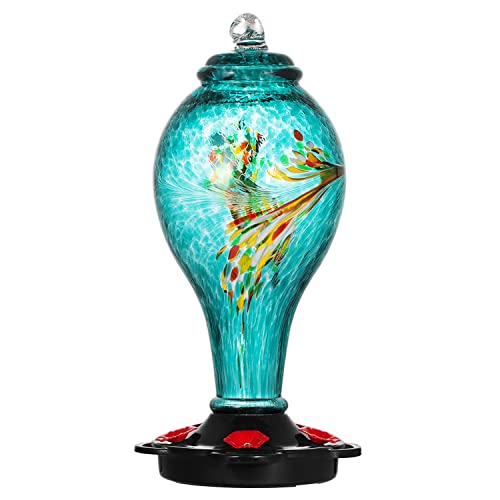
The LUJII is the decorative centrepiece here, and it does not sacrifice capacity for looks. The hand-blown glass reservoir holds thirty-six fluid ounces, the largest supply in this group, with colour embedded through two layers of glass so the finish resists fading in sunlight. Each piece is individually blown, so small bubbles and slight pattern variations are part of the making process. Hung in a flower bed or beside a seating area, it reads as garden ornament first and feeding equipment second, until the birds arrive.
Five metal stations sit in the rust-resistant base, each with a perch. A leak-limiting gasket seals the base, and the package includes an ant moat and an S-hook. The wide mouth makes filling and cleaning manageable, and the two-part base separates for washing. A full glass reservoir is heavy, so choose a strong hook, lift it down with two hands, and tighten the base fully after each wash, since most drips trace back to a gasket not seated evenly.
Specs
- Capacity: 36 fluid ounces
- Feeding ports: 5 metal feeding stations with perches
- Material: Hand-blown glass, two-layer embedded colour, metal base
- Ant protection: Ant moat included, hung above the feeder
- Cleaning: Wide-mouth reservoir, two-part base with gasket
- Included: S-hook for hanging
Comparison Summary
The five divide by capacity and insect handling. The HighView, at twelve ounces, is easiest to scrub because its bowl opens completely. The Ruby, at ten ounces, is lightest, with bee guards and a built-in moat. The First Nature models share a thirty-two ounce reservoir, two-part base, and ten ports for high traffic: choose the 3055 for its red base, or the 3090 if yellow flower ports appeal where bees are a problem. The LUJII stands apart with thirty-six ounces in hand-blown glass, suited to a garden focal point. Across all five, the routine is identical: plain sugar water, four parts water to one part sugar, no dye and no honey, changed every few days.
FAQ
How often should nectar be changed and the feeder cleaned?
Change nectar every two to three days in mild weather and daily in very hot spells, washing the feeder at every change rather than topping it up. Wash all parts in warm soapy water with a brush that reaches the ports, rinse, and refill. If nectar looks cloudy, clean the feeder immediately.
What is the right nectar mixture, and what should never be used?
Mix four parts water with one part plain white refined sugar, stir until dissolved, let it cool, and fill the feeder. Never use honey, brown sugar, powdered sugar, or artificial sweeteners, and never add red dye: none are needed to attract hummingbirds and some can harm them. The red parts of the feeder provide all the colour signal the birds need.
How can ants, bees, and wasps be kept away from the nectar?
Keep the ant moat filled with plain water, since it only works while water remains in it. Raised ports, bee guards, or yellow flower ports make nectar harder for insects to reach; fix any leak promptly and avoid overfilling. Moving the feeder a short distance often breaks an insect trail or flight pattern, while hummingbirds find it again quickly.
Where is the best place to hang a hummingbird feeder at home?
Hang it four to six feet up in partial shade, near flowers, with a clear approach and a good view from a chair. Keep it a short distance from glass, on a hook strong enough for its full weight. If one bird dominates, hang a second feeder out of its sight.
Conclusion
The best feeder is the one that keeps nectar fresh with the least friction. The HighView earns its place for effortless cleaning, the First Nature pair serve busy gardens with large reservoirs and bases that come apart, the Ruby keeps things small and well defended, and the LUJII adds handmade beauty and the largest capacity. Pick by traffic, handling comfort, and cleaning access, keep the rhythm of fresh nectar and a thorough wash, and the birds will return day after day.
More from Amazon
Programs that pair well with the guide above. Offers and eligibility are set by Amazon and may change.
Collect the home and kitchen items you want in one registry that guests can shop from.
Create a wedding registrySet up recurring deliveries of everyday items on eligible products. Terms and savings are set by Amazon.
Explore Subscribe & SaveFree shipping on eligible items, Prime Video and more. Eligible new members can start with a free trial.
Start a Prime free trialAudiobooks and podcasts to listen to on the go. Eligible new members can start with a free trial.
Try Audible freeAs an Amazon Associate we earn from qualifying purchases.

Write Your Review
No reviews yet. Be the first to share your experience!