

Key takeaways
- Fit: Wear the sensor firmly enough to prevent movement, but not so tightly that it leaves persistent pressure marks. For exercise, a slightly more secure fit generally produces more consistent readings.
- Cleaning: Rinse sweat and sunscreen from the band after workouts, dry the skin underneath, and follow the manufacturer’s water-resistance instructions. Avoid harsh household cleaners.
- What wears first: Silicone bands, charging cables, screen coatings, and battery capacity usually show wear before the main electronics. Replacement bands are often cheaper than replacing the tracker.
- Water exposure: Water resistance is not the same as waterproofing. Salt water, hot tubs, soap, and high-pressure water can create problems even when ordinary swimming is supported.
- Common mistake: Leaving notifications, bright screens, and GPS running continuously can make a long-lasting tracker appear to have a faulty battery.
The best fitness trackers for most people are the Garmin Venu 3 for broad workout and health tracking, the Fitbit Charge 6 for a slim everyday band with strong sleep features, and the Apple Watch SE for iPhone users who also want smartwatch functions.
The right choice depends less on the longest feature list than on four practical questions: how accurately you need exercise data, how often you want to charge, whether sleep tracking matters, and whether you are willing to pay for an app subscription.
Our top picks

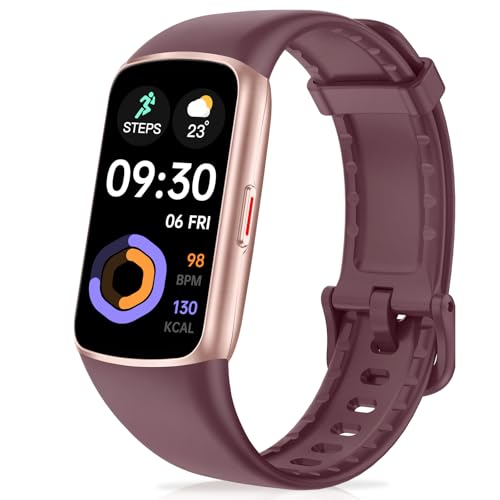


As an Amazon Associate we earn from qualifying purchases at no extra cost to you. Ratings are shown as listed on Amazon.
Best fitness trackers at a glance
| Tracker | Best for | Battery estimate | GPS | Subscription | Approximate price range |
|---|---|---|---|---|---|
| Garmin Venu 3 | Balanced health, gym, running, and sleep tracking | Up to 14 days; up to 26 hours in GPS mode | Built-in | Not required for core features | $400–$450 |
| Fitbit Charge 6 | Everyday activity, sleep, and lightweight exercise tracking | Up to 7 days; up to 5 hours with continuous GPS | Connected GPS through a phone | Some advanced insights require Fitbit Premium | $120–$160 |
| Apple Watch SE | iPhone owners wanting a smartwatch and fitness tracker | Up to 18 hours; roughly 36 hours in Low Power Mode | Built-in | Apple Fitness+ is optional | $250–$300 |
| Garmin Forerunner 165 | Runners who want training data without a premium subscription | Up to 11 days; up to 19 hours in GPS mode | Built-in | Not required for core features | $250–$300 |
| Fitbit Inspire 3 | Low-cost step, heart-rate, and sleep tracking | Up to 10 days | No built-in GPS | Some advanced insights require Fitbit Premium | $80–$100 |
Battery figures are manufacturer estimates and vary with screen brightness, notifications, GPS use, workout frequency, and other settings. Continuous GPS and always-on displays can reduce runtime substantially.
Our picks by situation
Best overall: Garmin Venu 3
The Garmin Venu 3 is the strongest all-round choice if you want one device for walking, running, cycling, strength training, gym sessions, sleep, and general wellness. Its built-in GPS avoids relying on your phone during outdoor workouts, while its AMOLED display is easier to read than the screen on a narrow activity band.
Garmin’s platform is particularly useful for people who want training history without paying a monthly fee. It offers many workout profiles, customizable data screens, recovery-oriented measurements, and compatibility with both iPhone and Android. The trade-off is size: at roughly 46 mm, it may feel large on a smaller wrist. A smaller Venu 3S version is available for people who prefer a more compact case.
Best slim tracker: Fitbit Charge 6
The Fitbit Charge 6 is a good fit for someone who wants a discreet band rather than a traditional watch. It tracks steps, heart rate, sleep stages, workouts, and daily activity, and its color display provides notifications without the bulk of a larger smartwatch.
Its main limitation is GPS. For route tracking, the Charge 6 generally depends on a paired phone, and phone connectivity can affect convenience and battery life. Fitbit Premium is also relevant to the buying decision: the tracker works without it, but some deeper sleep, readiness, workout, and trend features are placed behind the subscription.
Best for iPhone users: Apple Watch SE
The Apple Watch SE makes sense when fitness tracking is only one reason to wear a smartwatch. It integrates closely with the iPhone, supports a large selection of workout types, provides built-in GPS, and works with Apple’s Health and Fitness apps. It is also comfortable for notifications, calls, music control, and safety features.
The weakness is charging frequency. An estimated 18-hour battery means many owners charge daily, which can interrupt overnight sleep tracking unless charging is scheduled around the day. It is not compatible with Android phones, so an iPhone owner should confirm that the model and software requirements fit their setup before buying.
Best for runners: Garmin Forerunner 165
The Forerunner 165 is more focused than the Venu 3. It provides built-in GPS, pace and distance data, structured workouts, running metrics, and training-oriented summaries in a relatively light case. It is a better choice than a basic band for anyone who regularly runs outdoors and wants to leave the phone at home.
It also works for walking, cycling, indoor cardio, and strength training, but its design and menus prioritize running. Choose the Venu 3 instead if smartwatch-style features, broader wellness tools, or a more lifestyle-oriented appearance matter more than running controls.
Best budget option: Fitbit Inspire 3
The Inspire 3 covers the essentials: steps, heart rate, active-zone information, sleep duration, sleep stages, notifications, and multiple exercise modes. Its small size makes it comfortable for sleep and less conspicuous during the day.
It does not have built-in GPS, so it is best for people who are satisfied using a phone for outdoor route data. The lower purchase price is attractive, but include the potential cost of Fitbit Premium if you specifically want its extended analysis and guided content.
How the important features compare
Tracking accuracy
No wrist tracker measures every activity equally well. Step counts are usually most consistent during ordinary walking, while heart-rate readings can be affected by loose fit, vigorous arm movement, cold skin, tattoos, and strength exercises involving the wrist. GPS accuracy depends on satellite reception, buildings, tree cover, and how quickly the device acquires a signal.
For outdoor running or cycling, choose a model with built-in GPS. For casual walks and gym sessions, a phone-connected tracker may be accurate enough and usually costs less. A chest-strap heart-rate monitor can be preferable when precise exercise heart-rate data is important, because it measures electrical signals closer to the chest rather than estimating from wrist blood flow.
Battery life and charging habits
Battery capacity is less important than the charging routine you can maintain. A tracker that lasts seven to ten days is usually easier for sleep tracking than a watch that needs charging every night. Conversely, a short battery may be acceptable if you value apps, calls, navigation, and a bright smartwatch display.
Consider this practical calculation: if a device lasts seven days but loses two hours of battery during a GPS workout, five one-hour GPS sessions use about 10 hours. That can reduce the interval between charges by roughly a day, depending on the device and other settings. Built-in GPS, an always-on display, frequent notifications, and continuous blood-oxygen measurements can all shorten runtime.
Sleep features
For sleep tracking, comfort and battery life matter as much as the number of sleep metrics. A narrow band such as the Inspire 3 or Charge 6 is less intrusive for some sleepers, while the Venu 3 provides a broader set of overnight and daytime context. Apple Watch sleep tracking is useful within the Apple ecosystem, but its shorter battery requires more deliberate charging.
Sleep stages and recovery scores should be treated as estimates and trends rather than clinical measurements. If you have persistent sleep problems or symptoms that concern you, discuss them with a qualified healthcare professional rather than relying on a tracker diagnosis.
Workout modes and app compatibility
Garmin is the strongest option here for people who want structured training, sport profiles, and detailed workout history without a subscription. Fitbit is simpler to navigate and well suited to everyday activity, sleep, and guided wellness features. Apple Watch offers the broadest smartwatch integration for iPhone owners and can draw on many third-party apps.
Before buying, check phone compatibility, not just Bluetooth compatibility. Some features require a recent version of iOS or Android, a manufacturer account, location permissions, and background app access. A tracker may record an activity on its own but still need the phone app to sync, analyze, or export the result.
Subscription cost: the overlooked ownership expense
A lower-priced tracker is not always cheaper over several years. Fitbit’s core tracking works without Premium, but selected insights and content require a paid plan. Garmin does not require a recurring subscription for its main tracking and training features. Apple Fitness+ is optional, and the Apple Watch itself does not require it for ordinary workout recording.
Use this calculation before buying: if an optional plan costs $10 per month, two years adds $240 to ownership. A $140 tracker with that plan becomes approximately $380 before accessories or replacement bands. If you will not use guided workouts or advanced analysis, a device with more features included in the purchase price may be better value.
Comfort, durability, and maintenance
- Fit: Wear the sensor firmly enough to prevent movement, but not so tightly that it leaves persistent pressure marks. For exercise, a slightly more secure fit generally produces more consistent readings.
- Cleaning: Rinse sweat and sunscreen from the band after workouts, dry the skin underneath, and follow the manufacturer’s water-resistance instructions. Avoid harsh household cleaners.
- What wears first: Silicone bands, charging cables, screen coatings, and battery capacity usually show wear before the main electronics. Replacement bands are often cheaper than replacing the tracker.
- Water exposure: Water resistance is not the same as waterproofing. Salt water, hot tubs, soap, and high-pressure water can create problems even when ordinary swimming is supported.
- Common mistake: Leaving notifications, bright screens, and GPS running continuously can make a long-lasting tracker appear to have a faulty battery.
Bottom line
Choose the Garmin Venu 3 for the best balance of battery life, built-in GPS, workout variety, sleep tracking, and no required subscription. Choose the Fitbit Charge 6 if a slim band and simple everyday tracking are more important than independent GPS. Choose the Apple Watch SE if you use an iPhone and want smartwatch functions, accepting more frequent charging. Runners should start with the Garmin Forerunner 165, while budget buyers should consider the Fitbit Inspire 3 after checking whether its optional subscription features matter to them.

Write Your Review
No reviews yet. Be the first to share your experience!