

Key takeaways
- Small room: Around 6–8 feet works well. A 65-inch set may feel large at first but is usually comfortable for 4K content.
- Average living room: About 7–10 feet is a strong fit for movies, television, and games.
- Large room: At 10–12 feet, a 65-inch TV remains usable, but a 75-inch or larger screen may provide more cinematic impact.
The best 65-inch TVs for most buyers in 2026 are an OLED model for the most accurate contrast and movie performance, a mini-LED LCD model for bright rooms and larger value, or a standard LED/LCD set when the budget is the priority.
Our top picks
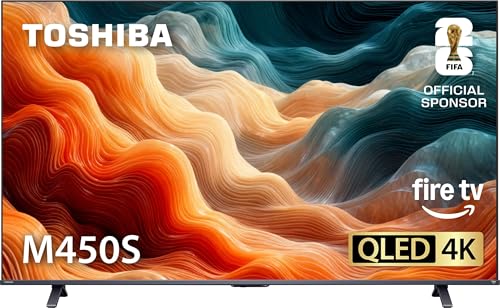


As an Amazon Associate we earn from qualifying purchases at no extra cost to you. Ratings are shown as listed on Amazon.
Quick picks by viewing situation
| Best for | Recommended type or example | Why it fits | Typical 65-inch price range |
|---|---|---|---|
| Dark-room movies and premium picture quality | LG C5 OLED or Sony BRAVIA 8 OLED | Per-pixel black levels, wide viewing angles, strong cinema processing | $1,500–$2,300 |
| Bright living rooms | Samsung S95F OLED or premium mini-LED LCD | High brightness, anti-reflection options, vivid HDR highlights | $1,500–$3,000 |
| Gaming and sports | LG C5 OLED or a 144Hz mini-LED LCD | Fast response, HDMI 2.1, variable refresh rate, low input lag | $900–$2,000 |
| Best value | TCL QM7K or Hisense U8-series mini-LED LCD | High brightness and local dimming at less than flagship prices | $700–$1,400 |
| Lowest-cost replacement TV | Entry-level 4K LED/LCD | Acceptable streaming and broadcast picture without premium features | $400–$700 |
OLED versus mini-LED LCD: the decision that matters most
Choose OLED for contrast and viewing angle
OLED pixels emit their own light, so a black pixel can be switched off rather than dimmed behind an LCD filter. This produces exceptionally deep blacks, no visible blooming around subtitles, and consistent color when viewers sit to the side. OLED also has very fast pixel response, which helps reduce motion blur in games and sports.
The LG C5 is a particularly balanced OLED choice. It combines 4K resolution, a 120Hz panel, four HDMI 2.1 inputs, Dolby Vision support, and webOS. The Sony BRAVIA 8 is another strong movie-oriented option, especially for viewers who value Sony’s motion handling and image processing.
OLED is not automatically best for every room. Bright windows can make reflections distracting, and prolonged display of an unchanging channel logo or computer interface creates a long-term image-retention risk. Modern OLED televisions include pixel-shifting and panel-maintenance features, but owners should still avoid leaving static content on screen for many hours.
Choose mini-LED LCD for brightness and flexibility
Mini-LED televisions remain LCD TVs, but they use thousands of small LEDs behind the panel and divide the backlight into local-dimming zones. This can deliver substantially higher full-screen brightness than OLED, making sports, daytime television, and HDR games easier to see in a sunlit room.
The trade-off is that an LCD cannot control each pixel independently. A bright object against a black background may produce a halo, commonly called blooming. The effect varies with the number of dimming zones, the processing, subtitles, and the viewer’s position. A high-quality mini-LED is often the better practical choice for a bright family room, while OLED usually wins in a controlled cinema room.
The TCL QM7K and Hisense U8-series illustrate the value end of the mini-LED category. They generally offer high brightness, local dimming, 4K resolution, and gaming features for considerably less than flagship OLED or LCD models. Their processing and factory calibration may be less refined than Sony or Samsung’s premium sets, but the difference is often less important than room lighting and screen size.
HDR, refresh rate, and smart platforms compared
| Feature | What to look for | Who benefits most | Common compromise |
|---|---|---|---|
| HDR brightness | About 600–1,000 nits for meaningful HDR impact; premium LCDs can go higher | Daytime viewers, HDR movie fans, sports watchers | Peak brightness may apply only to small highlights |
| HDR formats | HDR10, HLG, and preferably Dolby Vision or HDR10+ | Streaming and disc viewers | Samsung TVs generally omit Dolby Vision and emphasize HDR10+ |
| Refresh rate | 120Hz for premium sports and consoles; 144Hz can help compatible PC gaming | Gamers, sports viewers, people sensitive to motion blur | Some low-cost “120 motion rate” claims describe processing, not a native 120Hz panel |
| HDMI 2.1 | At least two ports supporting 4K at 120Hz, VRR, and ALLM | PlayStation 5, Xbox Series X, and PC gamers | Some televisions have only two full-bandwidth ports |
| Smart platform | Google TV, webOS, Tizen, Roku TV, or Fire TV with the desired apps | Streamers and households avoiding an external box | Menus, advertising, voice features, and app support differ |
A 120Hz native panel is more useful than an inflated motion-processing number. It can display 24-frame movie content cleanly, show 60-frame sports with better motion options, and accept 4K/120Hz signals from current consoles. A 144Hz mode is mainly valuable to PC players with a graphics card capable of producing frame rates above 120 frames per second.
HDR compatibility alone does not guarantee impressive HDR. A dim television may play HDR content but show it with muted highlights. For a bright room, prioritize measured brightness, reflection handling, and local dimming over a long list of supported formats.
How far should you sit from a 65-inch TV?
A 65-inch 16:9 screen is approximately 56.7 inches wide and 31.9 inches tall. For a genuinely immersive 4K picture, a useful target is about 6.5 to 9 feet. At 6 feet, fine 4K detail is easier to appreciate; at 9 to 10 feet, the picture feels more relaxed and is often better for mixed family viewing.
- Small room: Around 6–8 feet works well. A 65-inch set may feel large at first but is usually comfortable for 4K content.
- Average living room: About 7–10 feet is a strong fit for movies, television, and games.
- Large room: At 10–12 feet, a 65-inch TV remains usable, but a 75-inch or larger screen may provide more cinematic impact.
Here is a simple sizing calculation: if your sofa is 8 feet away, that is 96 inches. Dividing 96 by the 1.5 viewing-distance ratio gives a screen size of about 64 inches, making a 65-inch television a close match. This is a viewing-comfort estimate, not a strict rule; personal preference, content quality, and eyesight matter.
Best 65-inch TV choice for each budget
Under $700: entry-level LED/LCD
These televisions are suitable for casual streaming, news, and general television. Expect 4K resolution and a smart platform, but often a 60Hz native panel, modest HDR brightness, narrower viewing angles, and fewer HDMI 2.1 features. They are sensible when replacing a secondary-room television or when the screen will be viewed directly from the center.
$700–$1,400: value mini-LED
This range is often the sweet spot. A TCL QM7K or comparable mini-LED model can provide much stronger HDR brightness and black-level control than a basic LED set. Check the exact model’s refresh rate and HDMI specifications, because families can include both 60Hz and 120Hz versions.
$1,400–$2,300: mainstream OLED or premium LCD
This is where the LG C5 and Sony BRAVIA 8 become compelling. Choose the LG for a broad mix of gaming and movies, especially if four HDMI 2.1 inputs are useful. Choose the Sony when motion processing, upscaling of lower-resolution broadcasts, and cinematic image refinement matter more than maximum gaming flexibility.
Above $2,300: specialized premium performance
Premium models can add stronger anti-reflection treatment, brighter OLED performance, better processing, or more elaborate sound and design. They make the most sense in a bright, frequently used room or for a buyer who wants a flagship experience rather than the lowest cost per feature.
Ownership details that affect value
Measure before buying. A 65-inch screen is about 57 inches wide, but the complete television may be wider or deeper depending on its feet. Confirm the stand’s width, the furniture’s load rating, the VESA mounting pattern, and the location of wall outlets. A wall mount should be rated for the television’s weight, which commonly falls around 35–55 pounds without the stand depending on panel type and construction.
Screen cleaning is simple but important: turn the television off, use a clean dry microfiber cloth, and apply only a manufacturer-approved cleaner to the cloth rather than spraying the panel. Household glass cleaner, paper towels, and excessive pressure can damage anti-reflective coatings or leave scratches.
The parts most likely to cause frustration are not usually the screen itself. Remote batteries, HDMI cables, loose connections, operating-system updates, and a poorly positioned soundbar can affect daily use. Leave ventilation space around the set, avoid blocking its rear vents, and use certified high-speed HDMI cables for 4K/120Hz devices.
Final recommendation
Buy an OLED if your priority is the cleanest black level, wide seating flexibility, and excellent movie or gaming performance in a controlled-light room. Buy a mini-LED LCD if the room is bright, HDR impact matters, or you want the strongest performance per dollar. Choose an entry-level LED/LCD only when the lower price outweighs weaker HDR, motion, and viewing-angle performance. For most living rooms at 7–10 feet, a 65-inch 4K model with a native 120Hz panel is the most balanced long-term choice.

Write Your Review
No reviews yet. Be the first to share your experience!