

Key takeaways
- Small apartment or studio: Choose a 30–36-inch round or square counter-height table with two stools. A pedestal base or slim four-leg frame makes it easier to slide stools underneath.
- Narrow kitchen: Choose a rectangular table approximately 36–48 inches long and 18–24 inches deep. This gives two people dining space without blocking a walkway.
- Breakfast nook: A 36–42-inch round table is more forgiving in a tight corner because it has no sharp corners and allows stools to approach from different angles.
- Game room: Choose a 42-inch bar-height table, preferably 30–36 inches wide or in diameter, with a stable steel base and stools that include footrests.
- Occasional guests: Look for a drop-leaf or extendable pub table, or buy a two-stool set with a tabletop large enough to accommodate one or two additional seats.
The best pub table sets for small dining areas are 30-inch counter-height sets with a 36–42-inch round or square tabletop, two backless or low-back stools, and a narrow footprint; choose a 42-inch bar-height set only if you specifically want a game-room feel and have room for taller seating.
Pub tables are usually sold in two heights: counter height, around 34–36 inches, and bar height, around 40–42 inches. Counter-height sets are easier to use for everyday meals and generally fit apartments and kitchens better. Bar-height sets provide more knee clearance and a casual lounge atmosphere, but their taller stools take up more visual and physical space.
Our top picks


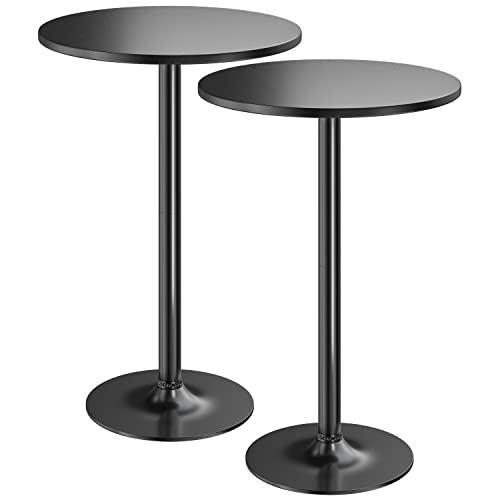

As an Amazon Associate we earn from qualifying purchases at no extra cost to you. Ratings are shown as listed on Amazon.
Best pub table sets by living situation
- Small apartment or studio: Choose a 30–36-inch round or square counter-height table with two stools. A pedestal base or slim four-leg frame makes it easier to slide stools underneath.
- Narrow kitchen: Choose a rectangular table approximately 36–48 inches long and 18–24 inches deep. This gives two people dining space without blocking a walkway.
- Breakfast nook: A 36–42-inch round table is more forgiving in a tight corner because it has no sharp corners and allows stools to approach from different angles.
- Game room: Choose a 42-inch bar-height table, preferably 30–36 inches wide or in diameter, with a stable steel base and stools that include footrests.
- Occasional guests: Look for a drop-leaf or extendable pub table, or buy a two-stool set with a tabletop large enough to accommodate one or two additional seats.
Counter height versus bar height
| Feature | Counter-height set | Bar-height set |
|---|---|---|
| Typical table height | 34–36 inches | 40–42 inches |
| Recommended seat height | 24–26 inches | 28–30 inches |
| Comfort for daily meals | Usually the better choice | Comfortable if users prefer a higher perch |
| Typical tabletop size | 30–42 inches round or square | 30–36 inches round or square |
| Typical seating | 2–4 people | 2–4 people |
| Best location | Kitchen, apartment, breakfast nook | Game room, entertaining area, home bar |
| Approximate stool clearance | 9–12 inches between seat and tabletop | 9–12 inches between seat and tabletop |
Measure the actual underside of the tabletop rather than relying only on the advertised table height. Aprons, braces, and thick tabletops can reduce legroom. For most adults, a 9–12-inch vertical gap between the seat surface and the underside of the table is a useful comfort target.
Tabletop size and realistic seating capacity
A pub table’s advertised capacity can overstate how comfortably it works. A 30-inch round top may technically seat four, but four adults will have limited elbow room. It is better treated as a comfortable two-person table. A 36-inch round top can seat two comfortably and four for shorter meals. A 42-inch round top is a more practical four-person choice.
| Tabletop dimensions | Comfortable capacity | Occasional maximum | Best use |
|---|---|---|---|
| 30-inch round | 2 | 3 | Apartment meals or coffee and snacks |
| 36-inch round | 2–3 | 4 | Small kitchen or breakfast nook |
| 42-inch round | 4 | 5 | Dining and casual entertaining |
| 36 x 18-inch rectangle | 2 | 2 | Narrow kitchen or hallway-side dining area |
| 48 x 24-inch rectangle | 4 | 4 | Kitchen, multipurpose room, or game room |
Allow at least 30 inches of open space behind a seated person if that side is also a walking route. Around 36 inches is more comfortable when people need to pass behind the stools. A table that fits the room on paper may still be impractical if stools cannot be pulled out without hitting a wall or cabinet.
Stool comfort matters more than the matching finish
Backless stools are the most space-efficient option because they slide completely under the tabletop. They work well for short meals and occasional use, but they become tiring during long dinners or game sessions. Low-back stools provide noticeably better support while still fitting beneath or near the table. Fully upholstered stools are usually the most comfortable, although they occupy more visual space and may be harder to clean.
- For meals under 30 minutes: a contoured wood or padded backless seat can be sufficient.
- For daily dining: choose a padded seat at least 14 inches wide, with a footrest and a supportive low back.
- For game rooms: prioritize a stable footrest, a wider seat, and a backrest over the smallest possible footprint.
- For children: avoid unstable swivel stools and check that the base does not rock on hard flooring.
Count the stool width as part of the set’s footprint. Two stools that are each 16 inches wide require roughly 34–36 inches of horizontal clearance when pulled out and used side by side.
Materials: what holds up and what wears first
Solid wood
Solid wood offers good repairability and a warmer appearance, but it can move slightly with seasonal humidity changes. Tighten fasteners periodically and wipe spills promptly. Felt pads under the feet help prevent scratches and reduce wobble on hard floors.
Engineered wood and laminate
Engineered wood keeps costs lower and often produces a flatter, more uniform tabletop. The vulnerable areas are exposed edges, screw holes, and seams. Do not leave standing water on the surface, and avoid abrasive cleaners that can dull the protective coating.
Steel frames
Powder-coated steel is common on modern pub sets and provides useful stiffness with relatively slim legs. Inspect welds and cross-braces before assembly is complete. A narrow, tall table with a lightweight base may feel unstable when someone leans on one edge.
Upholstered seating
Fabric seats are comfortable but can absorb spills. Faux leather is easier to wipe clean, though seams and peeling at high-contact edges can become ownership issues over time. For frequent use, removable or replaceable seat cushions are valuable.
Assembly difficulty and the mistakes that cause wobble
Most compact pub sets require basic assembly rather than specialist tools. A two-stool counter-height set commonly takes 30–60 minutes; a larger table with multiple braces or an adjustable mechanism may take 60–120 minutes.
- Lay out every part and hardware packet. Similar-looking bolts often have different lengths, and using the wrong one can damage a tabletop.
- Assemble the frame loosely. Keep bolts slightly loose until all legs, stretchers, and braces are aligned.
- Place the table on a level surface before final tightening. Tightening one corner first can lock in a twist.
- Use a small level and test each stool separately. A stool that rocks should be corrected at the foot or joint rather than compensated for by uneven floor pads.
- Retighten after two to four weeks. Wood and compressed hardware can settle after initial use.
A common mistake is positioning a pedestal or cross-brace where a user’s knees need to go. Before tightening anything, sit at the table and check knee clearance from several angles.
Decision matrix: which set fits your priorities?
| Your priority | Recommended configuration | Why |
|---|---|---|
| Lowest cost | 30-inch counter-height set with two backless stools | Uses less material and occupies the smallest footprint |
| Daily family meals | 36–42-inch counter-height set with low-back padded stools | Better comfort and enough surface for plates and drinks |
| Very limited floor space | 30–36-inch round top with stools that nest underneath | Reduces protruding corners and unused clearance |
| Long game sessions | 42-inch bar-height table with 28–30-inch stools and footrests | Provides supportive seating and a social standing-height layout |
| Frequent moving or rearranging | Lightweight steel frame with a manageable tabletop | Easier to relocate than a heavy solid-wood pedestal |
| Maximum durability | Solid-wood top with reinforced frame and replaceable seat pads | More repairable when finish, joints, or upholstery eventually wear |
Value beyond the purchase price
For a compact set costing approximately $150–$400, using it five times per week for five years produces about 1,300 uses. That works out to roughly 12–31 cents per use before cleaning or replacement parts. A cheaper set is not better value if loose joints, peeling upholstery, or an unstable base make it unpleasant to use.
Before buying, measure the table footprint, the pulled-out stool footprint, and the walking clearance together. For a 36-inch round table with two 16-inch-wide stools, plan for approximately a 60–66-inch-wide operating area if people need to sit and move around it comfortably. If that measurement blocks a kitchen work triangle or doorway, choose a 36 x 18-inch rectangular table instead.
Bottom line
For most small dining areas, the best pub table set is a 34–36-inch-high counter table with a 36-inch round or 36 x 18-inch rectangular top and two padded stools. Select a 42-inch bar-height set for a game room or home-bar atmosphere, not simply because it looks taller. Prioritize the correct seat height, usable knee clearance, stable bracing, and enough room to pull the stools out; those details determine whether the set remains convenient after the novelty of the matching finish wears off.



Write Your Review
No reviews yet. Be the first to share your experience!