

Key takeaways
- Use the manufacturer-approved gas and temperature limits.
- Do not breathe from a regulator while its cylinder is nearly empty and the first stage is icing.
- Avoid prolonged simultaneous use of the second stage and a high-flow inflator in freezing conditions.
- Keep the regulator dry before connecting it to a cylinder and never pressurize it without a secure dust cap or clean valve connection.
The best scuba regulators for most divers are a balanced diaphragm or piston first stage paired with a pneumatically balanced second stage, an environmental seal for cold or silty water, and a hose layout that matches the way you carry your alternate air and instruments.
There is no single best scuba regulator for every dive. A warm-water vacation diver may reasonably prioritize low weight and compact packing, while a cold-water, deep, or frequent diver should give more weight to environmental sealing, service support, and stable breathing performance as tank pressure falls.
Our top picks


As an Amazon Associate we earn from qualifying purchases at no extra cost to you. Ratings are shown as listed on Amazon.
Best scuba regulators by diving situation
| Diver or situation | Best choice | Features to prioritize | Reasonable new-market range |
|---|---|---|---|
| Warm-water recreational travel | Compact balanced-diaphragm or balanced-piston set | DIN or compact yoke, 2–3 low-pressure ports, under about 1.1 kg for the regulator set | $350–$700 |
| Frequent recreational diving | Midrange environmentally sealed diaphragm regulator | Adjustable inhalation, replaceable exhaust tee, broad service network | $550–$1,000 |
| Cold water or year-round diving | Cold-water-rated balanced diaphragm set | Environmental sealing, anti-freeze protection, manufacturer-approved cold-water rating | $700–$1,400 |
| Technical, deep, or stage-cylinder use | Two compatible regulator sets with redundant gas planning | Multiple low-pressure ports, DIN connection, long-hose routing, serviceable design | $1,000–$2,000+ |
| Occasional diver on a strict budget | Entry-level balanced or downstream second stage from a supported brand | Local servicing, easy-to-find parts, simple controls | $250–$500 |
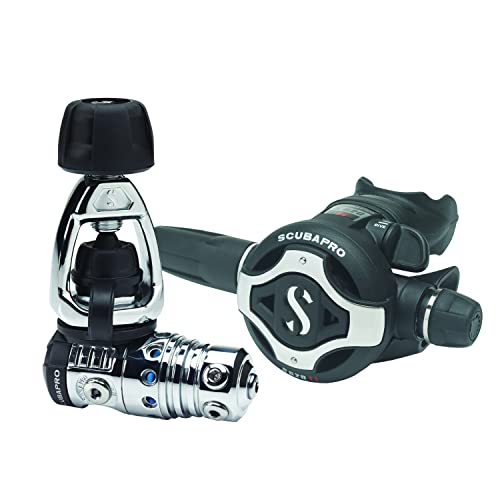
Examples of established product families include the Scubapro MK25 EVO/S620Ti, Apeks XTX series, Aqualung Legend series, and Mares 62X combinations. Exact configurations, connector types, included hoses, and regional service policies vary, so compare the actual package rather than relying only on the family name.
How first- and second-stage performance differs
First stage: tank pressure to intermediate pressure
The first stage attaches to the cylinder valve and reduces high tank pressure to an intermediate pressure, commonly around 9–10 bar (130–145 psi) above ambient pressure. It then sends that gas through the low-pressure hose to the second stage and inflator accessories.
A balanced first stage is designed to maintain relatively consistent intermediate pressure as tank pressure and depth change. This generally produces more predictable second-stage breathing than a basic unbalanced design. Balanced piston first stages can offer high gas flow with a relatively simple internal layout. Balanced diaphragm first stages isolate more of the internal mechanism from the water and are often favored for cold, dirty, or frequently used conditions.
The port layout matters as much as the internal mechanism. A swiveling turret can make routing more comfortable, but it adds another moving assembly. Five-port or turreted designs can be useful for doubles, stages, or long-hose configurations; a simple four-port body may be lighter and perfectly adequate for a single-cylinder recreational setup.
Second stage: intermediate pressure to breathing gas
The second stage delivers gas when you inhale. A pneumatically balanced second stage is intended to reduce the change in inhalation effort caused by depth and supply pressure. Adjustable inhalation resistance and venturi controls let a diver tune the regulator, although badly adjusted controls can cause free-flow or make breathing feel unnecessarily restrictive.
Do not judge performance by the number of adjustment knobs. A well-designed nonadjustable second stage may be easier to use and maintain than a feature-heavy model. Look for a comfortable mouthpiece, an exhaust tee that directs bubbles away from the face, and an alternate second stage that can be reached and donated without awkward hose tension.
Cold-water rating and environmental sealing
Cold water increases the risk of regulator icing because gas expands and cools as pressure drops. A regulator advertised for cold water should have a specific manufacturer rating or documented operating guidance—not merely a marketing phrase such as “all conditions.” In many recreational standards, cold-water testing uses water at or below 4°C (39°F), but the exact certification and limitations differ.
An environmental seal keeps water and contaminants away from key first-stage components. Some sealed designs use silicone fluid, grease, or a dry chamber; the details are manufacturer-specific. Environmental sealing can be valuable in cold, silty, or heavily used conditions, but it does not make a regulator maintenance-free.
- Use the manufacturer-approved gas and temperature limits.
- Do not breathe from a regulator while its cylinder is nearly empty and the first stage is icing.
- Avoid prolonged simultaneous use of the second stage and a high-flow inflator in freezing conditions.
- Keep the regulator dry before connecting it to a cylinder and never pressurize it without a secure dust cap or clean valve connection.
Weight, hose layout, and travel practicality
Manufacturers may publish the first stage, complete regulator set, or complete package weight, so numbers are not always directly comparable. The table below gives useful planning figures rather than universal specifications.
| Configuration | Typical approximate weight | Typical low-pressure ports | Travel implication |
|---|---|---|---|
| Compact unsealed travel set | 0.9–1.2 kg | 3–4 | Lightest option; better suited to warm water |
| Compact sealed diaphragm set | 1.1–1.5 kg | 4–5 | More versatile, with a modest luggage penalty |
| Heavy-duty cold-water set | 1.4–2.0 kg | 4–5 | More robust but less attractive for strict baggage limits |
| Two-regulator technical configuration | 2.5–4.0 kg before cylinders | Varies by set | Choose routing and redundancy before minimizing weight |
DIN connections are compact and commonly preferred for higher-pressure cylinders, technical configurations, and frequent international diving. Yoke connections are widely supported by rental cylinders and are quick to attach. If you travel, confirm what the destination operator supplies; an adapter can solve compatibility but adds bulk and another connection to inspect.
Hose length should follow the intended configuration. A standard primary hose around 70–75 cm (28–30 inches) suits many recreational setups. A long hose around 150–210 cm (59–83 inches) is used in some technical and overhead-environment configurations, but it should not be adopted casually without training in the routing and gas-sharing procedure.
Service intervals and ownership costs
Service intervals vary by brand, model, usage, storage, local regulations, and warranty terms. Many manufacturers specify inspection annually and full service at roughly two years or a stated number of dives, while some specify a longer interval when inspection confirms the regulator is within limits. Follow the model’s service manual and retain records, especially if warranty coverage depends on documented servicing.
A simple ownership calculation helps put price into context. Suppose a regulator set costs $800, is used for eight years, and receives two full services at $150 each. Before hoses, mouthpieces, shipping, and unexpected repairs, the ownership cost is:
($800 + $300) ÷ 8 years = about $138 per year.
At 20 dives per year, that is approximately $6.90 per dive. At only four dives per year, the cost is about $34.50 per dive, making local service availability and reliable storage more important than paying for advanced controls you rarely use.
What wears first and how to avoid common mistakes
- Mouthpiece: Replace it when torn, loose, or uncomfortable. A small cable tie can secure it, but do not overtighten and cut the rubber.
- Hoses: Inspect for cracking, bubbles, corrosion at fittings, or damaged outer braiding. Do not bend a hose sharply where it leaves the first stage.
- Exhaust valve: A damaged or dirty valve can admit water. Rinse thoroughly and have persistent leaking assessed by a technician.
- Dust cap and filter: Keep the cap clean and dry. Never rinse an unpressurized first stage unless the manufacturer specifically permits that procedure.
- Adjustment knobs: Do not use them to compensate for a regulator that needs service. Increasing inhalation resistance or venturi settings can mask a developing fault.
- Rinsing: Soak the assembled, pressurized regulator in fresh water after salt-water use, operate controls gently, and let it dry before storage.
A practical buying checklist
- Choose DIN or yoke based on the cylinders you will actually use.
- Select cold-water capability if you will dive near 4°C, in winter conditions, or in environments where icing is plausible.
- Prefer balanced performance for frequent, deep, or changing-depth diving.
- Count low-pressure ports and sketch the routing for your inflator, primary, alternate, and pressure instrument.
- Compare complete-set weight, not just the first-stage weight.
- Call a qualified local service center before buying and ask about parts availability, turnaround time, and the recommended interval.
- Have the regulator inspected and adjusted by a qualified technician before its first dive and after abnormal free-flow, impact, contamination, or prolonged poor storage.
For most recreational divers, the strongest all-purpose choice is a midrange balanced diaphragm regulator with environmental sealing, a comfortable pneumatically balanced second stage, four or five useful low-pressure ports, and dependable local service. Spend more for cold-water capability, redundancy, or a specialized hose configuration only when your diving actually requires it.




Write Your Review
No reviews yet. Be the first to share your experience!