

Key takeaways
- Best for frequent, all-day office use: LifeSpan TR1200-DT3, because its wide belt, substantial frame, and integrated workstation controls suit repeated use.
- Best for small rooms and occasional walking: WalkingPad C2, particularly if the treadmill must slide under a bed or sofa after work.
- Best budget category: A compact 2-in-1 walking pad with a belt at least 16 inches wide, a published continuous-duty rating, and a remote control.
- Best for a ready-made workstation: A treadmill-desk bundle with a crossbar or dedicated desk frame, provided its height range matches your chair and standing posture.
- Best for larger users or longer strides: A treadmill with a belt at least 18 to 20 inches wide and 50 inches long, rather than an ultra-compact pad.
The best treadmill desks are usually a stable standing desk paired with a quiet under-desk treadmill, and the right choice depends more on belt size, desk clearance, and walking speed than on the highest headline motor rating. For most home-office users, a 20-inch-wide commercial-style walking belt is the most comfortable option; a compact folding pad is better when storage space matters more than long sessions.
Our top picks

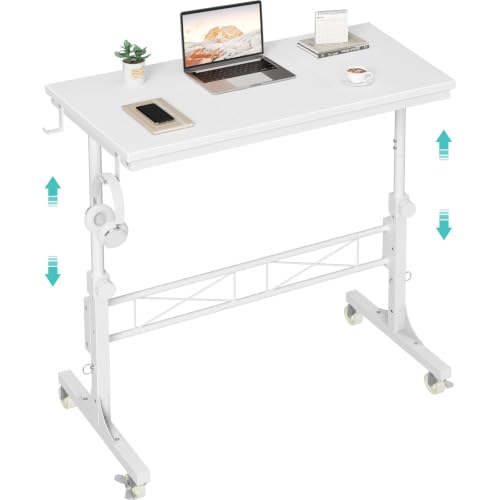

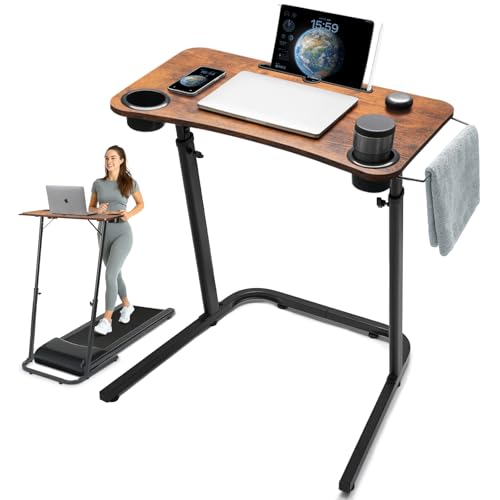
As an Amazon Associate we earn from qualifying purchases at no extra cost to you. Ratings are shown as listed on Amazon.
Quick picks by situation
- Best for frequent, all-day office use: LifeSpan TR1200-DT3, because its wide belt, substantial frame, and integrated workstation controls suit repeated use.
- Best for small rooms and occasional walking: WalkingPad C2, particularly if the treadmill must slide under a bed or sofa after work.
- Best budget category: A compact 2-in-1 walking pad with a belt at least 16 inches wide, a published continuous-duty rating, and a remote control.
- Best for a ready-made workstation: A treadmill-desk bundle with a crossbar or dedicated desk frame, provided its height range matches your chair and standing posture.
- Best for larger users or longer strides: A treadmill with a belt at least 18 to 20 inches wide and 50 inches long, rather than an ultra-compact pad.
Head-to-head comparison
The figures below are representative manufacturer specifications and can vary by revision or market. Confirm the exact version before buying. A treadmill advertised as “under desk” is not automatically suitable for eight-hour workdays; continuous-use design, belt width, noise, and service support matter just as much.
| Model or type | Walking belt | Typical top speed | Approx. machine weight | Published user capacity | Best fit |
|---|---|---|---|---|---|
| LifeSpan TR1200-DT3 | 20 x 56 in | 4 mph | About 119 lb | Up to about 350 lb | Frequent work walking and longer strides |
| WalkingPad C2 | About 15.7 x 47.2 in | About 3.7 mph | About 55 lb | About 220 lb | Compact storage and light daily use |
| Compact 2-in-1 walking pad | Typically 16 x 40–43 in | About 3.8–4 mph | About 45–65 lb | Typically 220–265 lb | Budget buyers with limited space |
| Wide commercial-style walking treadmill | Typically 18–20 x 50–60 in | About 4 mph | About 100–150 lb | Typically 300–400 lb | Stable, repeated use and larger users |
Belt dimensions matter more than the word “desk”
A 15-inch-wide belt can work for careful, slow walking, but it leaves less room for side-to-side movement. That matters when you are reading, using a mouse, or turning slightly toward another monitor. For regular work sessions, an 18- to 20-inch belt is easier to use without constantly watching your feet.
Length is equally important. A 40- to 43-inch belt is compact, but it can feel short for taller users or anyone with a long stride. A 47-inch belt is a reasonable middle ground for slow walking. Users over roughly 6 feet tall, or anyone planning to walk near 3 to 4 mph, should look for 50 inches or more.
Do not use the treadmill’s maximum speed as your expected work speed. Typing, spreadsheet work, and mouse precision are generally easier at approximately 1 to 2 mph. Faster walking may be suitable for phone calls or listening tasks, but it can reduce typing accuracy and increase the chance of stepping near the belt edge.
Desk stability and height adjustment: the overlooked half of the purchase
A treadmill can be quiet and powerful yet still make work unpleasant if the desk wobbles. The desk should have a broad base, a rigid frame, and enough depth for your monitor, keyboard, and mouse. A desk that is stable while standing on the floor may flex more when the treadmill raises you several inches and transfers vibration through your feet.
Check the desk’s lowest and highest settings against your own elbow height, not just the advertised range. A useful starting calculation is:
Required standing desk height = floor standing elbow height + treadmill deck height − keyboard thickness.
For example, if your standing elbow height is 42 inches, the treadmill deck is 5 inches high, and the keyboard is 1 inch thick, a desk around 46 inches high at the work surface may place your forearms near level. Adjust from there. The goal is relaxed shoulders, roughly level forearms, and a monitor that does not force your neck downward.
Electric height adjustment is preferable when two people share the desk or when you switch frequently between sitting and walking. A fixed-height desk can work, but measure carefully: many walking pads raise the user by 4 to 7 inches, which can make a normal seated-to-standing desk too high for comfortable keyboard use.
Noise and speed controls
“Quiet motor” does not mean silent operation. The belt, rollers, footfalls, and floor vibration all contribute to noise. A heavy treadmill with a larger deck often feels more planted, while a lightweight pad may transmit more vibration through hard flooring. Carpet can reduce vibration but may restrict ventilation underneath the machine; use the manufacturer’s recommended clearance.
For office use, look for:
- A speed range beginning at approximately 0.3 to 0.5 mph, allowing very slow walking during detailed tasks.
- Buttons on the remote or console that change speed in small increments.
- A quick-stop function that does not require reaching behind the desk.
- A visible speed display or a reliable control panel placed where the desk does not block it.
- A motor and warranty intended for sustained walking rather than short exercise intervals.
A remote control is convenient, but it is also easy to misplace. If the treadmill cannot operate without its remote, replacement availability becomes an ownership issue. A desk-mounted control module, such as the integrated control arrangement on some LifeSpan models, can be more practical for regular work.
Decision matrix: which type suits you?
| Your situation | Recommended specification | Most suitable choice | What to avoid |
|---|---|---|---|
| Under $500 general market budget | 16-inch belt, 3.8–4 mph top speed, at least 220 lb capacity | Compact walking pad | Unpublished motor ratings and very short belts |
| New to treadmill desks | Remote speed control, 0.5 mph starting speed, safety stop | Simple under-desk pad with clear controls | Buying a large treadmill before establishing a routine |
| Daily use for several hours | 18–20 x 50–56-inch belt, heavier frame, serviceable parts | LifeSpan TR1200-DT3 or similar commercial-style model | Lightweight folding units designed for occasional sessions |
| Small apartment or shared room | Under about 60 lb, folding deck, wheels, stored height under furniture | WalkingPad C2 or similar folding pad | A 100-plus-pound treadmill with no practical storage route |
| Taller user or longer stride | At least 18 x 50 inches; capacity comfortably above body weight | Wide commercial-style walking treadmill | 15-inch-wide belts and 40-inch decks |
Fit the treadmill under your existing workspace
Measure the actual clearance between the floor and the underside of the desk, including crossbars, cable trays, and drawer units. Then measure the treadmill’s highest point, not merely its deck height. Some pads have raised front housings that can collide with a desk frame even when the belt itself fits.
Leave room behind the treadmill for a safe exit and enough space to move the unit away from the desk for maintenance. A pad that fits exactly between two cabinets may be difficult to remove when the belt needs adjustment. Also check whether the desk legs sit inside or outside the treadmill’s footprint; a broad treadmill can prevent a two-leg desk from lowering evenly.
Ownership realities: cleaning, belt wear, and maintenance
The belt and deck are usually the first wear points. Dust, hair, and carpet fibers increase friction, which can make the motor work harder and produce more noise. Before each use, clear debris around the front and side edges. Once a week, vacuum around the machine and inspect the belt for fraying or uneven tracking.
Lubrication requirements vary. Some treadmills use a maintenance-free or pre-lubricated deck, while others require silicone lubricant at specified intervals. Do not apply lubricant unless the manual calls for it, and never use household oil. An incorrectly lubricated belt can slip, collect dust, or damage components.
Keep the treadmill level and avoid exceeding its user-weight limit. The capacity is not just a safety number: operating close to the limit can increase belt and motor stress. A useful ownership calculation is cost per use. A $400 walking pad used four times weekly for two years provides approximately 416 sessions, or about $0.96 per session before electricity and maintenance. If it is used only once weekly, the same purchase costs about $3.85 per session. Choosing a durable model makes more sense when the planned frequency is high.
Bottom line
Choose the LifeSpan TR1200-DT3 or a similar wide, heavy-duty walking treadmill if you expect frequent work sessions and have a stable adjustable desk. Choose the WalkingPad C2 or another folding compact pad when storage and price are the deciding factors. For either option, prioritize a belt that suits your stride, desk height that keeps your arms relaxed, small speed increments, and a realistic plan for cleaning and maintenance. The best treadmill desk is the one that fits your workspace and can be used quietly and comfortably often enough to justify its footprint.

Write Your Review
No reviews yet. Be the first to share your experience!