

Key takeaways
- Inspect the chain or drive strap monthly for unusual noise, stiffness or fraying.
- Keep the rail clean so grit does not accelerate seat-roller wear.
- Check foot-strap stitching and buckle tension before hard intervals.
- Tighten visible fasteners if the machine develops a new rattle.
- Replace batteries when the monitor becomes intermittent rather than repeatedly disconnecting cables.
- Use only the lubricant and maintenance schedule specified by the manufacturer; excess oil can attract dust.
The best air rowing machines for most home users are the Concept2 RowErg for dependable long-term training, the AssaultRower Pro for a robust alternative with a more aggressive pull, and a compact air rower with a folding rail when storage matters more than premium monitoring.
Our top picks

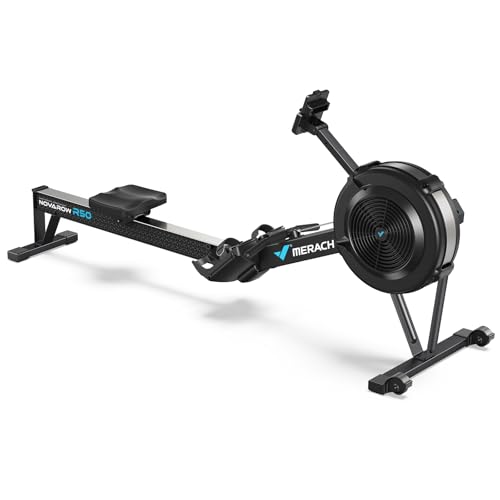
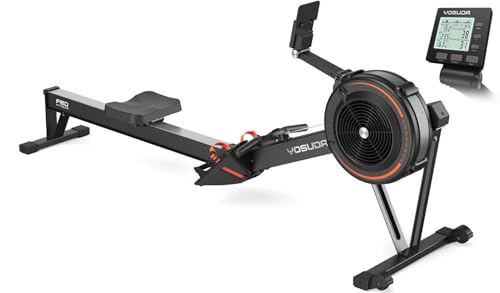

As an Amazon Associate we earn from qualifying purchases at no extra cost to you. Ratings are shown as listed on Amazon.
Best air rowing machines at a glance
| Machine | Resistance feel | Approx. assembled size | Weight | Monitor and metrics | Best for |
|---|---|---|---|---|---|
| Concept2 RowErg with Standard Legs | Smooth, highly consistent air resistance; harder pulls produce more resistance | 96 × 24 × 14 in | About 57 lb | PM5: pace, watts, calories, stroke rate, distance, time, heart rate compatibility | Most users, structured training, shared households |
| AssaultRower Pro | Strong air response with a firm, athletic feel at high stroke rates | About 98 × 20 × 51 in in use | About 109 lb | Console: time, distance, calories, watts, strokes per minute, interval modes | Hard interval work and a heavier commercial-style frame |
| Stamina ATS Air Rower | Basic fan resistance; less refined and less stable than premium models | About 77 × 18 × 22 in, depending on model | Roughly 50–60 lb | Basic display: time, count, calories and strokes per minute on some versions | Lower-cost occasional use and smaller rooms |
| Folding air-resistance rower, general category | Usually light resistance at low effort and louder fan noise under hard effort | Typically 75–85 in long; folded length often 35–50 in | Typically 45–70 lb | Usually time, count, calories and stroke rate; advanced data varies widely | Users who need to store the machine after every workout |
Dimensions and included features can change between model revisions, so check the current manufacturer specification before ordering. The comparison above is intended to show the practical differences between machine types rather than imply that every console or accessory is identical.
Our top choices by situation
Best overall: Concept2 RowErg
The Concept2 RowErg is the safest choice when you want accurate training data, a long-established design and easy access to replacement parts. Its PM5 monitor records distance, elapsed time, split pace, watts, calories, stroke rate and interval performance. It also supports compatible heart-rate transmitters and can connect to training apps.
The air resistance is self-regulating: pulling harder increases fan speed and resistance, while easing off makes the stroke easier. The damper lever changes the airflow feel, but it is not a conventional resistance level. A higher damper setting feels heavier and more connected; it does not automatically make the same workout more effective.
The standard 14-inch seat height is manageable for most users, while the optional elevated-leg configuration raises the seat for people who prefer easier mounting and dismounting. Its approximately 96-inch rail needs more floor length than many buyers expect. The frame separates into two pieces without tools, which is more useful for storage than a permanent one-piece design.
Best for intense intervals: AssaultRower Pro
The AssaultRower Pro is aimed at users who value a substantial frame and repeated high-effort sessions. Its large footprint and roughly 109-pound weight make it less convenient to move, but that mass helps it feel planted during sprints. The fan responds immediately to faster pulls, producing a pronounced increase in resistance as cadence rises.
Its console covers the main workout information—time, distance, calories, watts and strokes per minute—and includes interval-oriented training functions. It is a good match for conditioning sessions where work and recovery periods matter more than detailed stroke analysis. For long, low-intensity rows, the Concept2 ecosystem is generally more useful if you want standardized pace targets and widely shared training programs.
Measure doorways and storage routes carefully. A heavy commercial-style rower is difficult to carry upstairs, and its fixed frame is not the right choice if the machine must be put away after every workout.
Best lower-cost and compact direction: a folding air rower
Folding air rowers can make sense for a beginner who rows two or three times per week and has limited space. They are usually less expensive than premium machines and may fold to approximately half their operating length. The compromises are normally a shorter rail, a simpler monitor, lighter construction and a less polished seat or handle.
Before choosing one, check the maximum user weight, usable rail length and the folded depth—not merely the folded height shown in a listing. A machine can stand upright yet still require substantial clearance around the fan and seat when folded.
How the important differences affect your decision
Resistance feel
All air rowers become harder when you pull faster, but the fan diameter, housing and damper design affect how quickly that change is felt. A refined machine should feel progressive rather than jerky. Air resistance is especially suitable for intervals because the resistance automatically follows your effort. It is less suitable if you want a fixed load that feels identical at every stroke; magnetic or water rowers may be preferable for that purpose.
Rail length and user height
Rail length is more important than the advertised maximum height. A tall user needs enough travel for the seat to move forward without the knees crowding the handle, plus enough rear travel to avoid finishing with a cramped stroke. As a practical screening rule, users around 6 feet and taller should prioritize a full-length rail and read the usable seat-travel specification rather than relying on overall machine length.
For example, a 6-foot-2-inch user with a roughly 34-inch inseam may need about 38–40 inches of usable seat travel for a comfortable full stroke, depending on mobility and technique. This is only a fitting estimate; it is not a substitute for trying the machine or consulting a qualified fitness professional.
Monitor metrics
At minimum, look for elapsed time, distance, stroke rate and an adjustable workout target. Watts and split pace are more useful than calorie numbers for comparing sessions, because calorie estimates vary with body size, efficiency and the monitor’s assumptions. If you train with a heart-rate target, verify transmitter compatibility before buying.
Noise
The fan is the main noise source. Light rowing is often tolerable in a spare room, but hard intervals can be loud enough to disturb nearby rooms or video calls. A belt-driven fan usually sounds smoother than a poorly aligned chain or a rattling housing. Floor vibration also matters: a dense exercise mat can reduce transmitted vibration, although it will not eliminate fan noise.
Foldability
A separable frame, as on the RowErg, is often more practical than a hinged folding rail because it preserves a full-length stroke while reducing the storage footprint. Hinged machines are quicker to stow, but hinges, locking pins and shorter rails add more parts that require inspection. Leave clearance around the fan in storage so dust and fabric cannot enter the intake.
Ownership costs and maintenance
Air rowers are comparatively simple, but “low maintenance” does not mean maintenance-free. The chain, handle strap, seat rollers, foot straps and monitor batteries are the parts most likely to need attention. Wipe sweat from the rail and frame after each session, especially if the rower is used in a humid room. Vacuum or carefully dust the fan housing periodically; do not spray cleaner into the monitor or fan.
- Inspect the chain or drive strap monthly for unusual noise, stiffness or fraying.
- Keep the rail clean so grit does not accelerate seat-roller wear.
- Check foot-strap stitching and buckle tension before hard intervals.
- Tighten visible fasteners if the machine develops a new rattle.
- Replace batteries when the monitor becomes intermittent rather than repeatedly disconnecting cables.
- Use only the lubricant and maintenance schedule specified by the manufacturer; excess oil can attract dust.
For a simple ownership calculation, assume a $900 machine used four times per week for five years: 4 × 52 × 5 equals 1,040 sessions, or about $0.87 per session before electricity and replacement parts. A $400 machine used once per week for the same period costs about $1.54 per session. The cheaper rower is only the better value if its shorter rail, simpler monitor and lighter construction do not reduce how often you use it.
A practical buying checklist
- Measure the full operating length, then add at least 12 inches of clearance for access and movement.
- Confirm the usable rail travel against your inseam and preferred stroke.
- Decide whether the machine must be moved after every workout; if so, check transport wheels and folded dimensions.
- Choose a monitor based on the metrics you will actually use, not the number of display fields.
- Listen to a comparable fan rower at high effort if noise could affect household members.
- Check parts availability, warranty terms and the cost of seat rollers, straps, chain or drive components.
Final verdict
Choose the Concept2 RowErg if you want the best balance of resistance quality, rail length, data, repairability and long-term training support. Choose the AssaultRower Pro if a heavy frame and demanding interval work are your priorities and you have room for a permanent setup. Choose a folding air rower only after confirming that its rail length and monitor meet your needs; convenient storage is valuable, but not if it makes every workout feel cramped or difficult to track.

Write Your Review
No reviews yet. Be the first to share your experience!