

Key takeaways
- Best for a typical damp basement: Frigidaire FFAD5034W1. This 50-pint-per-day compressor dehumidifier is a sensible middle ground for many homes. It has a bucket and a hose connection for continuous drainage. It is best suited to basements that remain reasonably warm; check the manual’s operating-temperature limits before using it in a chilly space.
- Best for choosing a larger capacity: hOmeLabs 50-pint or 70-pint models. The right choice depends on the specific model and current specifications. The 50-pint version suits many moderately damp basements; a 70-pint model can be a better fit for a larger or wetter area if the unit’s published coverage and operating limits match your conditions. Verify the label: manufacturers update product lines, and capacity claims are not interchangeable across model years.
- Best for a cold basement: a low-temperature compressor model such as the Midea Cube 50-pint. Its published operating range extends to cooler conditions than many conventional units, but it still needs to defrost when the coil gets cold. Confirm the current manual’s minimum temperature and drainage setup before buying.
- Best when energy use is a priority: an ENERGY STAR-certified model in the size you need. Certification can help narrow the field, but compare the current model’s energy factor and capacity rather than assuming every model from a brand is equally efficient.
Best Dehumidifiers for Basements: Match the Machine to the Space
The best dehumidifier for a basement is a compressor model sized for the room’s actual moisture load, with a continuous-drain option if you don’t want to empty a tank. For most damp finished basements, start with a 50-pint-per-day model; choose a larger-capacity unit for a large, persistently wet space, or a low-temperature model if the basement stays cold.
Shortlist by Basement Situation
- Best for a typical damp basement: Frigidaire FFAD5034W1. This 50-pint-per-day compressor dehumidifier is a sensible middle ground for many homes. It has a bucket and a hose connection for continuous drainage. It is best suited to basements that remain reasonably warm; check the manual’s operating-temperature limits before using it in a chilly space.
- Best for choosing a larger capacity: hOmeLabs 50-pint or 70-pint models. The right choice depends on the specific model and current specifications. The 50-pint version suits many moderately damp basements; a 70-pint model can be a better fit for a larger or wetter area if the unit’s published coverage and operating limits match your conditions. Verify the label: manufacturers update product lines, and capacity claims are not interchangeable across model years.
- Best for a cold basement: a low-temperature compressor model such as the Midea Cube 50-pint. Its published operating range extends to cooler conditions than many conventional units, but it still needs to defrost when the coil gets cold. Confirm the current manual’s minimum temperature and drainage setup before buying.
- Best when energy use is a priority: an ENERGY STAR-certified model in the size you need. Certification can help narrow the field, but compare the current model’s energy factor and capacity rather than assuming every model from a brand is equally efficient.
Compare Capacity, Temperature, and Drainage
Capacity is the amount of water a dehumidifier can remove under specified test conditions, not a guarantee that it will remove that amount every day in your basement. Older pint ratings and current DOE ratings may use different test procedures, so compare models using the same rating basis when possible. Basement size is only a starting point: a below-grade room with seepage or a damp crawlspace may need more capacity than a dry, finished room of the same area.
Our top picks
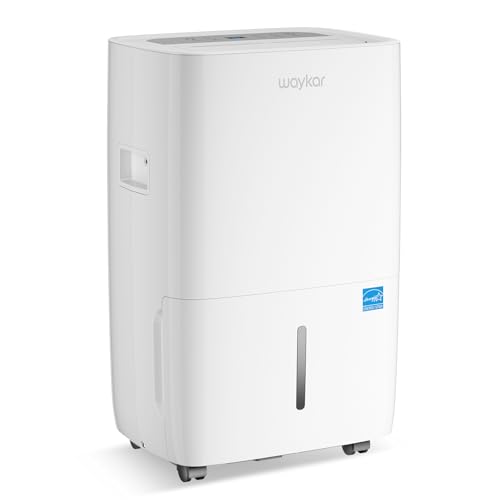


As an Amazon Associate we earn from qualifying purchases at no extra cost to you. Ratings are shown as listed on Amazon.
| Basement situation | Starting capacity | Drainage to look for | Important check |
|---|---|---|---|
| Small, mildly damp area, up to about 500 sq. ft. | 30–35 pints/day | Bucket; hose outlet is a useful extra | Actual dampness may call for a larger unit |
| Moderately damp basement, about 500–1,000 sq. ft. | 50 pints/day | Gravity hose drain or pump if no floor drain is nearby | Allow space around the intake and outlet |
| Large or very damp basement, about 1,000–1,500 sq. ft. | 50–70 pints/day | Continuous hose drain; pump for uphill routing | Check manufacturer coverage and room temperature |
| Cold basement, often below 65°F (18°C) | Capacity matched to area and moisture load | Drain compatible with the chosen model | Minimum operating temperature and auto-defrost behavior |
These are practical starting ranges, not engineering guarantees. If water is entering through walls or the floor, a dehumidifier manages indoor humidity but does not fix the source. Address drainage, leaks, or groundwater intrusion separately.
Choose by the Problem You Need to Solve
If you want the easiest day-to-day ownership
Choose a model with a standard hose outlet and place it near a floor drain. A gravity hose is simple and avoids repeated bucket trips, but the hose must slope continuously downward. If the drain is higher than the dehumidifier, look for a model with an integrated pump or use a compatible external condensate pump.
If the basement runs cold
Read the operating-temperature range, not just the “basement” label on the box. Conventional compressor models can frost up and pause to defrost in cool rooms, reducing water removal. A low-temperature design may handle cooler conditions better, but no compressor unit should be expected to work normally in freezing temperatures. In an unheated basement, placement away from cold exterior walls and pipes can help, but follow the manual’s clearance and temperature requirements.
If noise or electricity cost matters
Dehumidifiers make fan and compressor noise, so a unit next to a bedroom, office, or workout area may be distracting. Compare sound ratings when manufacturers publish them, and use a hose drain so the machine can run without frequent bucket checks. For energy use, check the nameplate watts or published energy data. Approximate monthly cost is:
Watts ÷ 1,000 × hours per day × days × electricity rate per kWh.
For example, a 500-watt unit running 8 hours a day for 30 days at $0.20 per kWh costs about $24: 0.5 × 8 × 30 × $0.20. Actual use varies because the compressor cycles on and off as humidity changes.
Setup That Prevents Common Problems
- Measure the room and note the temperature. Include connected rooms only if air can circulate freely between them. A closed door limits how much of the basement one unit can manage.
- Set a realistic humidity target. Around 50% relative humidity is a useful starting point for many basements. If condensation persists, lower it modestly; setting an unnecessarily low target can increase runtime and energy use.
- Position the unit correctly. Keep the manufacturer’s required clearance around air grilles. Don’t push the intake against a wall or hide the unit in a tight corner, where airflow will suffer.
- Route the drain before leaving it unattended. Secure the hose, check for kinks, and confirm water flows to the drain. A hose that slopes upward without a pump can cause overflow or shutoffs.
- Check the filter and bucket regularly at first. Clean the filter on the schedule in the manual; a clogged filter reduces airflow. Confirm that the bucket is seated properly if using bucket operation.
Ownership Realities Before You Buy
The air filter is the most routine cleaning task; dust buildup can reduce airflow and make the machine work harder. The bucket, float, and hose connection are also worth inspecting periodically for slime, debris, cracks, or poor seating. A pump adds convenience when water must travel uphill, but it adds parts that can clog or fail, so inspect and clean it as directed.
Common buying mistakes include choosing by square footage alone, overlooking a basement’s low winter temperature, and assuming “continuous drain” means the hose can run uphill. Also consider the physical footprint and weight: these are bulky appliances, and moving one up or down stairs with a full bucket is awkward. Keep it upright during transport and follow the manufacturer’s settling instructions before plugging it in.
Bottom Line
For a moderately damp, reasonably warm basement, a 50-pint-per-day compressor unit with a hose connection is the best starting point. Go smaller only for a genuinely small, mildly damp space; consider a higher-capacity model for a large or persistently damp area; and prioritize a low-temperature operating range for a cold basement. The best purchase is the one that matches the room’s moisture load and temperature, drains reliably where you need it, and can run without creating a noise or maintenance burden you won’t tolerate.

Write Your Review
No reviews yet. Be the first to share your experience!