

Key takeaways
- Compare bedside commodes on frame strength, seat height, bucket design and foldability to choose a commode chair for recovery, nights and caregiving.
As an Amazon Associate we earn from qualifying purchases.
Disclosure: This article contains affiliate links. If you buy through these links, we may earn a commission at no extra cost to you.
Our top pick: Drive Medical Folding Steel Commode (11148-1). Runner-up: Medline 3-in-1 Steel Bedside Commode, Elongated Seat (G1-200LX1).
Recovering at home changes the geography of a house. A bathroom that felt close before surgery, illness, or a fall can feel far away at two in the morning, when standing is slow, balance is uncertain, or a caregiver helps with every transfer. A bedside commode shortens that distance. Placed beside the bed, it gives the user a stable seat with arm support, a removable bucket a caregiver can empty in the morning, and height adjustment that makes sitting and standing less of a strain on healing hips, knees, and backs.
Small differences matter in daily use. A frame that flexes feels unsafe on the first night, a seat set too low makes standing a struggle, and a bucket without a lid makes a caregiver’s job harder. This guide compares five commodes from established home-medical brands on frame strength, seat height, seat size, bucket design, and how each chair folds, rolls, or converts for use over a toilet.
What to Look for in a Bedside Commode
Frame strength and weight capacity. Most standard folding commodes support up to 350 pounds, covering most adults with a sensible margin. Check the rating against the user’s weight plus the force of pushing down on the arms when standing, and choose a steel frame with welded or firmly braced joints for months of daily use. A lighter rolling chair trades some capacity for mobility, so match the rating honestly to the user.
Seat height and adjustability. The seat should let the user sit with feet flat and knees at a comfortable angle. Too low forces a deep, painful rise; too high leaves feet dangling and transfers unsteady. Push-button adjustment in one-inch steps is the norm, and a wide range matters when the commode later moves over a toilet, where it must sit higher to clear the bowl.
Seat size and shape. A standard seat is roughly thirteen to fourteen inches wide, while an elongated seat adds depth that taller users often prefer. Width between the armrests decides whether hips, bulky clothing, or a brace clear the sides. For longer sits, seat depth and a supportive back rail matter as much as headline capacity.
Bucket design. Look for a lid, a carry handle, and a splash guard. The lid contains odor overnight, the handle makes emptying safer, and the guard keeps the bedside area cleaner. A bucket that lifts out without tipping and accepts standard liner bags turns the least pleasant part of caregiving into a quick, dignified routine.
Foldability and extra roles. Most chairs below fold flat, helping when the commode is needed for only a few weeks, must travel, or should be stored away during the day. Many work three ways: standalone at the bedside, as a raised seat over a toilet, and as a safety frame around a toilet. One pick rolls, suiting a user who must move between bedroom, bathroom, and shower without repeated standing transfers.
Drive Medical Folding Steel Commode (11148-1)
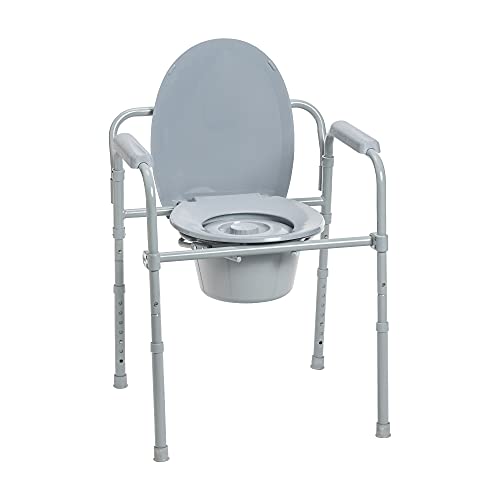
The Drive Medical folding steel commode is the reference design in this category, doing the basics without fuss. Its powder-coated steel frame supports up to 350 pounds, folds flat, and opens into a stable chair with fixed arms that give the user something solid to push against when standing. For a first commode bought quickly after a hospital discharge, that simplicity is a virtue: little to assemble, little to get wrong.
Height adjustment covers the range most households need, and the snap-on seat and lid remove quickly for cleaning. The bucket is generously sized for overnight use, with a cover, splash guard, and carry handle for steady carrying. Later in recovery, the frame works over a standard toilet as a raised seat or safety frame, extending its usefulness beyond the bedside weeks. Choose it for a proven all-rounder that suits users who can manage a fixed-arm transfer.
Specs
- Weight capacity: 350 lb
- Frame: powder-coated steel, folds flat
- Seat size: 14 x 16.5 inches, snap-on seat and lid
- Seat height: adjustable from 17 to 23 inches
- Bucket: 7.5-quart removable bucket with cover, splash guard, and carry handle
- Width between armrests: 18.125 inches; product weight about 13 lb
Medline 3-in-1 Steel Bedside Commode, Elongated Seat (G1-200LX1)

Medline supplies hospitals and care facilities at scale, and this elongated-seat commode reflects that background. The folding steel frame supports up to 350 pounds and assembles without tools, while the deeper seat gives taller users, and anyone who sits cautiously, more room to settle. The clip-on seat removes easily for cleaning, which caregivers who clean the chair daily will appreciate.
Push-button adjustment sets the seat to match bed height and leg length, and the frame folds to a slim profile for a closet or car trunk. The bucket includes a carry handle, cover, and splash shield, and the unit is light enough for one caregiver to reposition as the routine changes from bedside use at night to over-toilet use during the day. Choose it if seat depth is a priority, or if several caregivers will share setup and cleaning.
Specs
- Weight capacity: 350 lb
- Frame: gray powder-coated steel, folding, tool-free assembly
- Seat: elongated seat, 16.5 inches deep, clip-on and removable for cleaning
- Seat height: push-button adjustment from 16 to 22 inches
- Bucket: 7.5-quart bucket with carry handle, cover, and splash shield
- Folded size: about 25 x 21.5 x 5.7 inches; product weight about 13 lb
McKesson Folding Commode Chair (146-11148-1)

McKesson appears throughout clinics and home-care catalogs, and its folding commode follows the same dependable pattern as the leading steel models while keeping the seat a little narrower. That narrower seat helps in a small bedroom or tight space beside a bed, where a wider chair would crowd a nightstand, a walker, or the path a caregiver needs during transfers.
The powder-coated steel frame supports up to 350 pounds, folds flat, and assembles without tools. Push-button legs adjust across a broad height range, and the snap-on seat is removable when the user is ready to place the frame over a toilet instead. The bucket package is complete for overnight use, with splash shield, carry handle, and cover included. Choose it if floor space is limited, the user is of average build, or you want a straightforward three-in-one chair for bedside use first and bathroom use later.
Specs
- Weight capacity: 350 lb
- Frame: powder-coated steel, folds flat, tool-free assembly
- Seat width: 13.5 inches, snap-on plastic seat
- Seat height: push-button adjustment from 16.6 to 22.5 inches
- Bucket: 7.5-quart bucket with splash shield, carry handle, and cover
- Use modes: bedside commode, raised toilet seat, or toilet safety frame
DMI Rolling Shower Chair, Commode, and Transport Chair
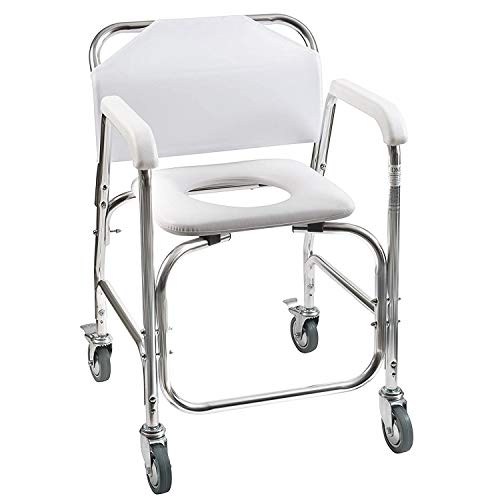
The DMI rolling chair solves a different problem. Instead of asking a recovering user to stand, walk, and sit again for every trip, it lets a caregiver roll the seated user from bedside to bathroom and directly over a standard toilet, or into a shower. For users with very limited standing ability, severe weakness after surgery, or a condition where each transfer raises fall risk, that rolling transfer can be the safest pattern in the house.
The aluminum frame stays light and resists rust in wet rooms, and the waterproof seat and backrest suit shower use as well as toileting. Rear wheel locks hold the chair during sitting and standing, and armrests support the user while seated. The trade-off is capacity: at 250 pounds it suits lighter users, and its fixed seat height should be checked against the toilet it must clear. Choose it when showering and toileting both need seated transport, or when one caregiver manages transfers alone.
Specs
- Weight capacity: 250 lb
- Frame: aluminum, rust-resistant, with rolling casters
- Overall size: 24 x 22 x 34 inches
- Seat: 16 x 16 inches, waterproof seat and backrest, fixed seat height of 21 inches
- Wheels: 4-inch tires with rear wheel locks
- Use modes: rolling commode, shower chair, and transport chair; rolls over a standard toilet
HEALTHLINE Deluxe 3-in-1 Folding Commode

The HEALTHLINE deluxe commode is built around a larger bucket and a removable back rail, two details that suit longer recoveries. Its welded, powder-coated steel frame is made for daily use, the plastic armrests add comfort during longer sits, and the back rail removes quickly when the frame must fit over a toilet or into a tighter bathroom. It opens and folds easily, so it can be set aside during the day and returned to the bedside at night.
The standout detail is the twelve-quart bucket, noticeably larger than the standard size on the other folding chairs here, meaning fewer overnight trips for a caregiver and more confidence for a user who needs the commode several times before morning. The snap-on seat and lid lift off for cleaning, and the legs adjust in one-inch steps so seat height can follow improving strength. Choose it if overnight capacity matters most, or if a removable back rail helps the chair fit your bathroom later.
Specs
- Weight capacity: 300 lb
- Frame: powder-coated welded steel, folds for storage and transport
- Seat: durable plastic snap-on seat and lid, plastic armrests for comfort
- Seat height: adjustable legs in 1-inch increments, about 18 to 22 inches
- Bucket: 12-quart bucket with cover, carry handle, and splash guard
- Back rail: removable for over-toilet and safety-frame use
Comparison Summary
The Drive Medical and McKesson are closest in spirit: standard seats, 350-pound steel frames, flat folding, and complete bucket sets, with the McKesson narrower for tight rooms. The Medline adds an elongated, deeper seat and a slim folded profile, making it the comfort pick for taller users. The HEALTHLINE trades a little capacity for the largest bucket in the group and a removable back rail, suiting longer recoveries and heavier overnight use. The DMI is the specialist, giving up folding and some capacity for wheels, a waterproof build, and seated transport between bed, toilet, and shower.
For most buyers, a 350-pound folding steel commode is the safest default. Move to the DMI only when rolling transfers are truly needed. Set the height before the first night, place the chair on a level floor close to the bed, and keep the path clear and lit.
Frequently Asked Questions
How high should a bedside commode seat be set?
Set it so the user can sit with both feet flat on the floor and stand without pulling hard on the arms. Bed height, leg length, and any hip or knee precautions from the care team come first. Raise the seat in small steps if standing is difficult, and confirm all four legs are locked at the same height before use.
Can a bedside commode be used over a regular toilet?
Yes. Most folding models here work three ways: standalone at the bedside with the bucket in place, over a toilet with the bucket removed and the splash guard fitted, or as a safety frame around the toilet. Measure toilet height and surrounding space first, and be sure the legs adjust high enough to clear the bowl. The DMI also rolls over a standard toilet, within its fixed height.
How do you keep a bedside commode clean and odor controlled overnight?
Use the lid every time, fit a liner bag for faster emptying, and add a little water to the bucket before use to make rinsing easier. Empty and rinse the bucket each morning, wash the seat and frame with a household cleaner suited to bathroom surfaces, and let parts dry fully before the next night. A larger bucket, like the twelve-quart design above, also reduces overnight emptying.
When should you choose a rolling commode instead of a folding one?
Choose rolling when the user cannot safely stand and pivot for each transfer, when one caregiver must move the user between bed, toilet, and shower, or when showering seated is part of the plan. Choose folding when the user can transfer with arm support, when the chair must be stored away or travel, or when a higher capacity is needed, since most folding steel models support more than rolling chairs.
Conclusion
A bedside commode protects sleep, dignity, and safety during hard weeks at home. Begin with capacity and seat height, because a chair that fits the user’s body and strength will be used confidently every night. Then consider the bucket, seat shape, and whether folding or rolling better matches the home. The Drive Medical is the dependable all-rounder, the Medline adds seat depth, the McKesson fits tighter spaces, the HEALTHLINE brings the largest bucket for long nights, and the DMI rolls the user where standing transfers are the risk. Matched well, the right commode turns nighttime toileting from a worry into a settled routine, and that steadiness is exactly what home recovery needs.
More from Amazon
Programs that pair well with the guide above. Offers and eligibility are set by Amazon and may change.
Collect the home and kitchen items you want in one registry that guests can shop from.
Create a wedding registrySet up recurring deliveries of everyday items on eligible products. Terms and savings are set by Amazon.
Explore Subscribe & SaveFree shipping on eligible items, Prime Video and more. Eligible new members can start with a free trial.
Start a Prime free trialAudiobooks and podcasts to listen to on the go. Eligible new members can start with a free trial.
Try Audible freeAs an Amazon Associate we earn from qualifying purchases.





Write Your Review
No reviews yet. Be the first to share your experience!