

Our Short List of 3

- Best for: Long trips where outlets, cars, and off-grid stretches all appear in one itinerary.
- Cooling methods: USB-powered lid, Biogel freeze pack, or both combined
- Temperature range: 36-46°F (2-8°C) in the internal chamber
- Hold time: up to 52 hours of refrigeration combined, 72 hours of cooling below 79°F
- Capacity: up to 7 pens, 900 ml chamber

- Best for: Multi-day travel with no reliable power, including camping and long rail or road journeys.
- Construction: 18/8 stainless steel inner and outer walls with double-layer vacuum insulation
- Hold time: up to 48 hours at 86°F with the blue gel bottle, extended to 60 hours with the white ice water bottle
- Gel preparation: freeze the blue gel bottle for 6-8 hours before use
- Capacity: 2-3 injection pens
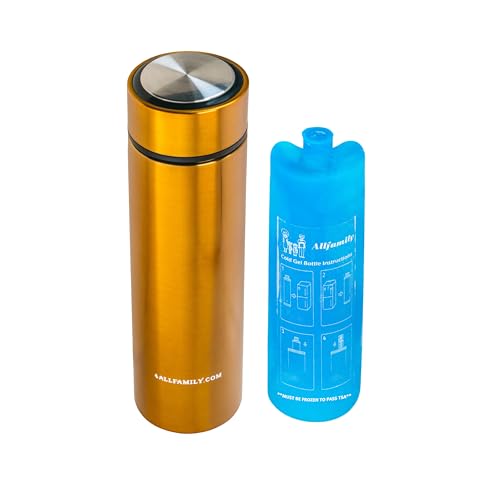
- Best for: One-to-two-day trips where fridge range matters and luggage space is tight.
- Cooling method: reusable Biogel freeze pack, non-electric
- Hold time: 36-46°F (2-8°C) for up to 27 hours, below 79°F (26°C) for up to 48 hours
- Gel preparation: freeze the Biogel pack before travel
- Capacity: up to 3-4 pens in the medium size
All 5 Picks at a Glance
| Product | Specs | Action |
|---|---|---|
| 4ALLFAMILY Explorer Insulin Cooler Travel Case |
| Check price on Amazon |
| DISONCARE Odyssey 60H Insulin Cooler Travel Case |
| Check price on Amazon |
| 4ALLFAMILY Nomad Insulin Cooler Travel Case |
| Check price on Amazon |
 FRIO Large Cooling Wallet |
| Check price on Amazon |
 MEDMAX Insulin Cooler EpiPen Carrying Case |
| Check price on Amazon |
Key takeaways
- Compare the best insulin coolers on cooling method, hold time, pen capacity and case size to keep insulin and other medication in range while traveling.
As an Amazon Associate we earn from qualifying purchases.
The real decision with an insulin cooler is not the shape of the case but how it holds temperature once you leave home: an evaporative wallet keeps in-use insulin below room-temperature limits without ice, a gel bottle in a vacuum steel tube can hold fridge range far longer, and a soft bag with frozen packs only works while the packs last. Match the method to your longest stretch away from a fridge, then check pen capacity against what you actually carry.
This guide serves daily carriers with one or two pens, flyers crossing several time zones, and travelers packing a week of pens and monitoring supplies. Every product below was chosen from the names and specifications on its Amazon product page, and cooling durations are the figures those listings and their makers publish.
Quick Picks
Disclosure: This article contains affiliate links. If you buy through these links, we may earn a commission at no extra cost to you.
| Product | Best for | Key spec from title |
|---|---|---|
| 4ALLFAMILY Explorer Insulin Cooler Travel Case | Long trips with power access | 72h cooling, USB powered |
| DISONCARE Odyssey 60H Insulin Cooler Travel Case | Multi-day trips without power | 60H cooling, medical alert tag |
| 4ALLFAMILY Nomad Insulin Cooler Travel Case | Compact fridge-range carry | 48H cooling, Biogel ice pack |
| FRIO Large Cooling Wallet | Ice-free daily carry | 45+ hours, no ice needed |
| MEDMAX Insulin Cooler EpiPen Carrying Case | Mixed medication and allergy supplies | Shoulder strap, insulated |
How to Choose
Cooling Method: Evaporative, Gel, or Powered
Three methods dominate this category, and each fails differently. Evaporative wallets such as the FRIO are soaked in water and cool as that water evaporates, so they need no freezer and never freeze medication, but they hold a moderate range rather than fridge temperature. Gel systems freeze a bottle or pack overnight and release cold slowly inside insulation. Powered lids add a fan-and-chip unit that extends gel performance while a USB source lasts. Pick evaporative for simplicity, gel for true fridge range, and a powered lid when hotel and car outlets are part of the route.
Hold Time and Temperature Range
Read hold times as two separate promises. A cooler may hold 36 to 46 degrees Fahrenheit, the fridge range unopened insulin usually needs, for one span, then stay below 79 degrees, the ceiling many in-use pens tolerate, for a longer span. The Explorer, for example, publishes 52 hours of refrigeration with gel and USB combined and 72 hours below 79 degrees. A soft bag with small packs may only promise single-digit hours below a set point. Compare the fridge-range figure against your longest door-to-door leg, including delays, not the headline number on the box.
Capacity in Pens, Vials, and Supplies
Capacity claims count pens, and pen widths vary, so treat the number as a guide and check your own models against the maker’s fit chart where one exists. A two-to-three-pen tube suits a short trip with one insulin type. A seven-pen bottle suits two insulin types plus spares, while a compartment organizer suits mixed medication loads. Remember that vials, syringes, a glucose meter, and test strips compete for the same space: a bottle cooler that swallows seven pens may leave no room for a meter, while a compartment bag trades cooling hours for organized storage.
Size, Weight, and Security Screening
A cooler only helps if it stays in your carry-on, because checked baggage can face cargo-hold temperatures at both extremes. Slim wallets slip into a pocket or handbag; steel tubes ride in a backpack side pocket; wide soft cases need a tote or carry-on corner. Gel packs and bottles travel as medical supplies, and keeping the case reachable, with prescription labels visible, speeds screening. Also weigh the daily burden: a case carried to work every day should be light enough that you never leave it behind on a warm morning.
The 5 Best Options
4ALLFAMILY Explorer Insulin Cooler Travel Case
- Best for: Long trips where outlets, cars, and off-grid stretches all appear in one itinerary.
- Cooling methods: USB-powered lid, Biogel freeze pack, or both combined
- Temperature range: 36-46°F (2-8°C) in the internal chamber
- Hold time: up to 52 hours of refrigeration combined, 72 hours of cooling below 79°F
- Capacity: up to 7 pens, 900 ml chamber
Long trips where outlets, cars, and off-grid stretches all appear in one itinerary.
The USB lid has no temperature display and no battery is included, so confirm your power bank capacity before relying on powered mode.
For travelers whose trips mix flights, cars, and hotel rooms, the Explorer hedges every leg with three cooling methods in one bottle. Run the Biogel pack alone when no outlet exists, plug in the USB lid at a desk or in a car, or combine both for the longest hold. Its seven-pen chamber covers two insulin types plus spares, and the steel body shrugs off knocks inside a packed carry-on. Travelers who want one cooler for both a weekend drive and a long-haul flight will find this the most adaptable option here.
DISONCARE Odyssey 60H Insulin Cooler Travel Case
- Best for: Multi-day travel with no reliable power, including camping and long rail or road journeys.
- Construction: 18/8 stainless steel inner and outer walls with double-layer vacuum insulation
- Hold time: up to 48 hours at 86°F with the blue gel bottle, extended to 60 hours with the white ice water bottle
- Gel preparation: freeze the blue gel bottle for 6-8 hours before use
- Capacity: 2-3 injection pens
Multi-day travel with no reliable power, including camping and long rail or road journeys.
Check your pen model against the maker’s capacity chart, because wider auto-injector pens reduce the two-to-three-pen fit.
The Odyssey takes the opposite approach to powered cooling: no cords at all, just a vacuum-insulated steel tube and two cooling bottles. Freeze the blue gel bottle before departure for the long hold, and fall back on the white bottle filled with ice water when no freezer is available mid-trip. The QR medical tag lets a finder or first responder reach your emergency information, and the included pen bags and thermometer round out a kit built for trips measured in days rather than hours. It suits travelers who distrust batteries and hotel fridges alike.
4ALLFAMILY Nomad Insulin Cooler Travel Case
- Best for: One-to-two-day trips where fridge range matters and luggage space is tight.
- Cooling method: reusable Biogel freeze pack, non-electric
- Hold time: 36-46°F (2-8°C) for up to 27 hours, below 79°F (26°C) for up to 48 hours
- Gel preparation: freeze the Biogel pack before travel
- Capacity: up to 3-4 pens in the medium size
One-to-two-day trips where fridge range matters and luggage space is tight.
Confirm whether your pens count toward the three or four end of the capacity range, since pen diameter decides the fit.
Where the Explorer adds power, the Nomad keeps the bottle format simple for shorter hops. Its Biogel pack freezes in six to eight hours and then holds fridge range through a full travel day and beyond, with a longer cushion below room-temperature limits after that. The medium steel tube carries three to four pens in a shape that drops into a carry-on or daypack without announcing itself as medical gear. For flyers whose longest leg is a day of connections rather than a multi-day expedition, this balance of hold time and size is the sweet spot.
FRIO Large Cooling Wallet
- Best for: Everyday carry and warm-weather travel where a freezer may not be available each night.
- Cooling method: evaporative, activated by soaking in cold water for 10-15 minutes
- Hold time: minimum 45 hours per activation, reusable by re-soaking
- Temperature band: maintains 18-26°C even at constant ambient temperatures up to 100°F
- Capacity: 4 medication pens or 6 insulin vials; inner wallet about 5.5 x 7 inches
Everyday carry and warm-weather travel where a freezer may not be available each night.
An activated FRIO must not be sealed inside an airtight or waterproof bag, because evaporation needs airflow to work.
The FRIO removes the freezer from the routine entirely. Soak the inner pouch in cold water for ten to fifteen minutes, towel it dry, and evaporation keeps insulin in its safe band for a minimum of forty-five hours, with a brief re-soak restarting the cycle. There are no packs to freeze, no cords to pack, and nothing that can freeze medication sitting against a gel wall. The large wallet carries four pens or six vials in a flat profile that slides into a jacket pocket. For daily carriers in warm climates, nothing else here is this simple.
MEDMAX Insulin Cooler EpiPen Carrying Case
- Best for: Day trips carrying insulin together with an EpiPen, inhaler, or other emergency medication.
- Exterior: premium water-resistant polyester with a YKK zipper
- Insulation: foam insulation layer that also adds padding and protection
- Compartments: 4 compartments with a zipper pocket
- Carry: shoulder strap in webbing, plus a web handle
Day trips carrying insulin together with an EpiPen, inhaler, or other emergency medication.
The listing describes foam insulation rather than a gel or powered system with a stated hold time, so confirm what cooling packs, if any, are included before relying on it for long, hot days.
Not every medication trip is insulin-only. This MEDMAX case is built for mixed loads: insulin pens alongside an EpiPen, an asthma inhaler, or Auvi-Q, all inside one insulated organizer with a shoulder strap. Its foam-padded, water-resistant polyester shell protects supplies on school runs, workdays, and short flights, while four compartments and a zipper pocket keep small items from scattering. It offers insulation and organization rather than the multi-day hold of a gel bottle, so it fits day-length outings best, especially for travelers whose emergency medication has to travel in the same bag as their insulin.
Which One Fits Your Situation
A Long-Haul Flight With Connections
Choose the 4ALLFAMILY Explorer Insulin Cooler Travel Case. Its combined gel and USB mode publishes the longest fridge-range hold here, and a power bank or seat outlet can stretch it further during layovers. The seven-pen chamber also means spare insulin rides in the same cooled space instead of a second bag that might end up in the hold.
Several Days Away From Any Freezer
Take the DISONCARE Odyssey 60H Insulin Cooler Travel Case or the FRIO Large Cooling Wallet. The Odyssey stretches a single freeze across days with its vacuum body, while the FRIO needs only a tap and a bowl of water to restart, which makes it the safer pick for campsites, boats, and rural stays.
Daily Commuting in Hot Weather
The FRIO Large Cooling Wallet fits this routine best. It lives in a pocket or handbag, asks for a short soak in the morning, and never depends on remembering to freeze a pack the night before. Drivers who leave a bag in a parked car should still bring it indoors, since no wallet defeats a closed car in full sun.
A School or Work Bag Full of Supplies
Pick the MEDMAX Insulin Cooler EpiPen Carrying Case when insulin travels alongside other medication. Its four compartments separate pens from an EpiPen, inhaler, or allergy supplies, and the shoulder strap keeps the whole kit together on school runs and workdays. For a day focused only on insulin in fridge range, the 4ALLFAMILY Nomad Insulin Cooler Travel Case is the stronger cooling pick.
Common Mistakes
- Judging a cooler by its headline hold time without checking how many of those hours are actually in fridge range.
- Putting a cooler in checked baggage, where cargo temperatures can freeze or overheat medication.
- Letting insulin touch a frozen gel pack directly instead of using the pouch or barrier the maker provides.
- Buying by pen count alone and discovering that wider pens or a glucose meter do not fit.
- Sealing an activated evaporative wallet inside a waterproof pouch, which stops the airflow it needs to cool.
Frequently Asked Questions
Can insulin coolers go through airport security?
Yes, insulin, cooling cases, and frozen gel packs for medical use are generally permitted in carry-on baggage. Keep the case reachable, expect the packs to be screened, and tell the officer the supplies are medical. Carrying prescription labels or a clinician letter helps if questions arise, and rules can differ outside the United States.
How long do insulin coolers actually keep medication cold?
It depends on the method and on which temperature band you count. Soft bags with gel packs often hold fridge range for part of a day, vacuum bottles with gel extend that to one or two days, and evaporative wallets hold a moderate band for forty-five hours or more. Always plan around the fridge-range figure for unopened insulin.
Will a gel pack freeze and damage insulin?
It can if medication rests directly against a freshly frozen pack. Makers of bottle coolers advise rinsing frost from the gel bottle and using the supplied pen bags or pouches as a barrier. Evaporative wallets avoid the risk entirely because they never drop to freezing. When in doubt, follow the packing order shown in the product instructions.
Do I need fridge range, or is below room temperature enough?
That depends on the medication and whether the pen is in use. Unopened insulin is usually stored refrigerated, while many in-use pens are kept below a stated room-temperature ceiling for a limited number of days. Check the leaflet for your exact product, and choose a cooler whose published range covers the stricter requirement on your trip.
More from Amazon
Programs that pair well with the guide above. Offers and eligibility are set by Amazon and may change.
Collect the home and kitchen items you want in one registry that guests can shop from.
Create a wedding registrySet up recurring deliveries of everyday items on eligible products. Terms and savings are set by Amazon.
Explore Subscribe & SaveFree shipping on eligible items, Prime Video and more. Eligible new members can start with a free trial.
Start a Prime free trialAudiobooks and podcasts to listen to on the go. Eligible new members can start with a free trial.
Try Audible freeAs an Amazon Associate we earn from qualifying purchases.
Write Your Review
No reviews yet. Be the first to share your experience!