

Key takeaways
- Compare the best walking canes on handle style, shaft material, height adjustment and tip design to walk with steadier balance and support every day.
As an Amazon Associate we earn from qualifying purchases.
Disclosure: This article contains affiliate links. If you buy through these links, we may earn a commission at no extra cost to you.
A walking cane looks simple, yet the details decide whether it gets used every day or left leaning in a corner. The right cane supports your weight at the correct height, keeps its tip planted when the ground changes, and feels secure in the hand from the first step out of bed to the last trip down the hallway. The wrong one is too short, too slippery, or too awkward to fold away, and each flaw quietly discourages the daily walking that keeps joints moving during home recovery.
This guide compares five walking canes that cover the main designs people actually live with: a self-standing folding cane with a pivoting base, a plain lightweight adjustable cane, a four-pronged quad cane for maximum ground contact, a compact travel folder, and an upright posture cane with a wide traction foot. Each is a real, currently sold model from an established mobility brand, and each suits a different balance of stability, weight, and portability.
How to Choose a Walking Cane
Height adjustment comes first. A cane works when the handle sits level with the crease of your wrist while you stand upright in your usual shoes, with your arm hanging relaxed. At that height your elbow keeps a slight, comfortable bend as you walk. A cane set too low pulls your shoulder down and rounds your back; one set too high lifts the shoulder and weakens every push. Look for a push-button adjustment with firm, evenly spaced settings, and confirm the range covers your wrist height with a setting to spare on either side.
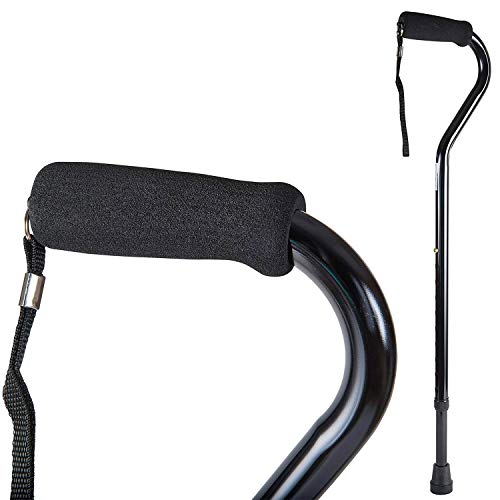
Handle style shapes comfort. A T handle gives a simple, centered grip that suits a steady hand. An offset handle curves the shaft forward so your weight lands directly over the shaft, spreading pressure across the palm and easing wrist strain on longer walks. A contoured or palm-style grip fills the hand more fully and helps anyone whose fingers tire quickly. Foam padding softens vibration on hard floors, while a smooth molded grip wipes clean easily.
Shaft material sets the weight you lift thousands of times. Anodized aluminum is the standard for good reason: it is light, resists corrosion in damp bathrooms and rainy streets, and holds its strength in thin tubing. Whatever the material, check the listed weight capacity and choose a cane rated comfortably above your body weight, because you lean harder on a cane when rising from a chair than you do mid-stride.
Tip and base design decide how planted you feel. A single rubber tip is light, quiet, and easy to maneuver in tight kitchens and bathrooms. A small pivoting base keeps more rubber on the ground as the shaft angles through each step, and lets the cane stand upright on its own when you let go. A quad base spreads four feet across a wider platform for the steadiest feel of all, at the expense of extra weight and a slower stride. Replace any tip when its tread wears smooth.
Folding and everyday details matter too. A folding cane collapses into a bag or a drawer, which suits travel and part-time use. A wrist strap keeps the cane from clattering to the floor when you need both hands. Before buying, ask a doctor or physical therapist whether a single-tip, pivoting, or quad design matches your balance needs, especially after surgery.
HurryCane Freedom Edition Folding Cane
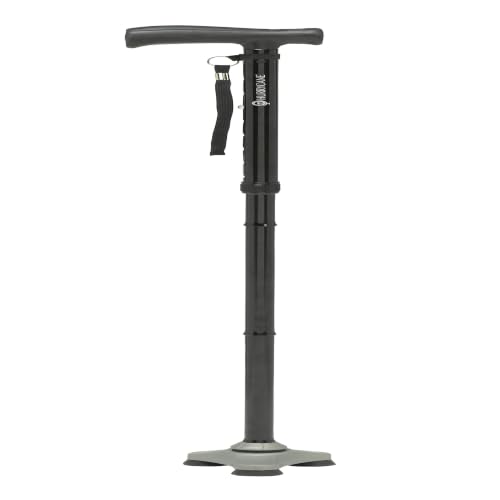
The HurryCane Freedom Edition is built around its SteadiGrip base, a three-point foot that pivots as you walk. Instead of a single tip rocking onto one edge, the base flexes to keep its contact points flat against the floor through the whole step, on tile, pavement, grass, and gentle slopes alike. That planted feel is the main reason this design became so widely known, and it pairs with a useful everyday trick: the cane stands upright on its own, beside a chair, counter, or table, with no wall needed and no bending down to retrieve it.
The shaft is aluminum and folds into sections, collapsing to a short bundle that fits in a tote or carry-on. Unfolded, it locks together and adjusts across a wide height range. The T handle is simple and centered, easy to grip with either hand, and the whole cane weighs about a pound. For home recovery, this is the pick for someone who moves between rooms all day and puts the cane down often.
Specs
- Height adjustment: 30.5 to 37.5 inches across 8 push-button settings
- Base: SteadiGrip three-point pivoting base, 4.25 inches wide, self-standing
- Shaft material: Aluminum, folding design that collapses to 13.7 inches
- Handle: T handle with wrist strap
- Weight capacity rating: 350 lb
- Cane weight: About 1 lb
DMI Deluxe Lightweight Adjustable Walking Cane
The DMI Deluxe is the straightforward cane in this group, and that simplicity is its strength. There is no folding mechanism and no pivoting base: a single aluminum shaft, an ergonomic hand grip, a wrist strap, and a slip-resistant rubber tip. For someone who wants a cane that lives by the front door or beside the bed and works the same way every time, this unfussy design is often the one that gets used most.
DMI, through its Duro-Med line, has sold this style of cane for many years, and the current version adjusts across a broad height range that suits most adults. The ergonomic grip sits comfortably in the palm rather than forcing the fingers around a narrow knob, which helps on longer walks. The wrist strap keeps the cane within reach when you open a door or pay at a counter.
Specs
- Height adjustment: 30 to 39 inches with push-button settings
- Shaft material: Lightweight aluminum, one-piece non-folding shaft
- Handle: Ergonomic hand grip with integrated wrist strap
- Tip: Single slip-resistant rubber tip
- Weight capacity rating: 250 lb
- Model: Duro-Med 502-1304-0255
Vive Quad Cane

When steadiness matters more than shaving off weight, a quad cane is the design therapists reach for, and the Vive Quad Cane is a well-judged example. Its base carries four prongs, each capped with a non-skid, non-marking rubber tip, so four contact points share your weight and grip the floor together. On hardwood, laminate, and tile, and on rougher ground such as grass, gravel, and carpet, that wide footprint feels noticeably more planted than any single tip.
The base also handles a detail many quad canes get wrong: handedness. It rotates and locks so the base sits correctly whether you hold the cane in your left or right hand, keeping the feet clear of your stride. The anodized aluminum frame adjusts in one-inch steps, secured by both a locking knob and a brass pin. It is the heaviest style in this guide, yet for recovery after a hip or knee procedure, that trade is usually worth making.
Specs
- Height adjustment: 28 to 37 inches in 1-inch increments
- Base: Four-prong quad base with non-skid, non-marking rubber tips, reversible for left or right hand use
- Shaft material: Anodized aluminum, corrosion resistant
- Handle: Contoured ergonomic grip with wrist strap
- Weight capacity rating: 250 lb
- Locking: Locking knob plus brass locking pin
Vive Folding Cane

The Vive Folding Cane is the travel specialist here. It folds at three points into a compact bundle that slips into a purse, briefcase, carry-on, or wheelchair bag, then opens and locks into a full-height cane in seconds. That suits people whose support needs come and go: steady on their own at home, but glad of a cane for airports, sightseeing, long shopping trips, or unfamiliar ground on holiday.
Despite the folding frame, the details are properly thought through. The anodized aluminum shaft adjusts in one-inch steps, the ergonomic grip is contoured to reduce hand fatigue, and an integrated wrist strap guards against drops. The slip-resistant rubber tip is a standard fitting, so it accepts most replacement tips, including tripod, quad, and ice tips, letting one light cane adapt across seasons. A storage sleeve keeps the folded sections tidy.
Specs
- Height adjustment: 33 to 37 inches in 1-inch increments
- Shaft material: Anodized aluminum, corrosion resistant, folds at three points
- Handle: Contoured ergonomic grip with integrated wrist strap
- Tip: Slip-resistant rubber tip, compatible with most replacement, tripod, quad, and ice tips
- Weight capacity rating: 250 lb
- Included: Storage sleeve for the folded cane
Campbell Posture Cane
The Campbell Posture Cane takes a different approach to the handle. Instead of a grip you lean down over, its upright Campbell handle positions your hand higher and more vertically, encouraging you to walk taller with your eyes ahead rather than on the ground. Many users find that posture cue makes walking feel more natural, and the upright grip also helps when pushing up from a chair, because your hand stays over the shaft as you rise.
The shaft is heavy-duty aluminum and folds for storage and travel, with ten height settings covering a wide range of user heights. At the bottom, a wide rubber traction tip spreads into a six-point footprint that grips flat and uneven ground and lets the cane stand on its own beside you. That combination suits someone whose main complaint is stooping. As with any change of walking aid, have a physical therapist check the fit before relying on it daily.
Specs
- Height adjustment: 10 settings, sized for users roughly 5 ft to 6 ft 2 in
- Shaft material: Heavy-duty aluminum, folding design
- Handle: Upright ergonomic Campbell handle for a taller walking posture
- Tip: Rubber traction tip with six-point footprint, self-standing
- Grip position: Hand sits over the shaft to aid rising from a seated position
- Construction: Folding sections with elastic cord retention
Comparison Summary
These five canes divide cleanly by base design and portability. The HurryCane Freedom Edition pairs a pivoting three-point base with a folding shaft and the highest listed capacity here, making it the most versatile everyday choice. The DMI Deluxe is the simplest option: one piece, one tip, broad height range, nothing to maintain beyond the tip itself. The Vive Quad Cane offers the widest, steadiest footprint for recovery and unsteady days, at the expense of extra weight. The Vive Folding Cane folds smallest for travel and intermittent use, with a tip that accepts wider replacement styles. The Campbell Posture Cane stands apart for its upright handle and six-point traction foot, aimed at walking taller.
If you put your cane down constantly, choose a self-standing base. If you travel, choose the folder. If balance is the overriding concern, choose the quad.
Frequently Asked Questions
Which cane base is best for balance at home?
A quad base gives the most ground contact and the steadiest feel, which suits recovery and unsteady days on flat indoor floors. A pivoting three-point base is a good middle ground: it stands on its own, handles thresholds and outdoor ground better, and is lighter to swing through each step. A single tip is enough when you need only light support and move through tight spaces often.
How do I set the correct cane height?
Stand upright in your usual shoes with your arms relaxed. The top of the handle should line up with the crease of your wrist. Set the cane to the push-button setting closest to that height, then walk a few steps: your elbow should keep a slight bend and your shoulder should stay level. Recheck the setting whenever you change to shoes with a different sole thickness.
Should I hold the cane on the strong side or the weak side?
In most cases the cane goes in the hand opposite the weaker or recovering leg, and it moves forward together with that leg. This shares load across your body and keeps your stride even. There are exceptions after certain procedures, so follow the guidance of your surgeon or physical therapist when they have given you specific instructions.
When should I replace the rubber tip on my cane?
Replace the tip as soon as its tread looks smooth, cracked, or unevenly worn, or when the cane begins to slip on floors it once gripped. Tips are wear parts and the single most important safety item on the cane. Check the tip weekly if you walk outdoors every day, since pavement wears rubber down quickly.
Conclusion
The best walking cane is the one set to your wrist height, with a handle your hand can hold all day and a base matched to how steady you need to feel. The HurryCane Freedom Edition covers the widest range of daily situations, the Vive Quad Cane maximizes stability, the Vive Folding Cane keeps support portable, and the DMI Deluxe and Campbell Posture Cane serve the simplest and most posture-focused needs respectively. Choose by base and handle first, set the height carefully, keep the tip fresh, and your cane becomes quiet, dependable support for getting around your home and neighborhood.
More from Amazon
Programs that pair well with the guide above. Offers and eligibility are set by Amazon and may change.
Collect the home and kitchen items you want in one registry that guests can shop from.
Create a wedding registrySet up recurring deliveries of everyday items on eligible products. Terms and savings are set by Amazon.
Explore Subscribe & SaveFree shipping on eligible items, Prime Video and more. Eligible new members can start with a free trial.
Start a Prime free trialAudiobooks and podcasts to listen to on the go. Eligible new members can start with a free trial.
Try Audible freeAs an Amazon Associate we earn from qualifying purchases.




Write Your Review
No reviews yet. Be the first to share your experience!