

Key takeaways
- Sealed tile: Almost any active mop system can work well, but textured grout benefits from rotating pads or a roller with meaningful downward contact.
- Luxury vinyl and sealed laminate: Use conservative water settings and avoid leaving the robot repeatedly wetting one area. Follow the flooring manufacturer’s care instructions.
- Sealed hardwood: Select a robot with controlled water delivery and reliable carpet or no-mop mapping. Do not assume “wood mode” makes every floor waterproof.
- Unsealed stone, unfinished wood and damaged laminate: Avoid automated wet cleaning unless the floor manufacturer specifically permits it.
- Rugs and carpet: Look for mop lifting or mop removal, carpet detection and room-specific settings. Thick rugs, fringe and black borders can still cause navigation errors.
The best robot mops in 2026 are the Roborock Saros 10R for the most balanced mix of mopping and navigation, the Dreame X50 Ultra for homes with thresholds and mixed flooring, and the Ecovacs Deebot X8 Pro Omni for buyers who prioritize continuous roller mopping.
A robot vacuum with a damp cloth is not automatically a good mop. The important differences are how much pressure reaches the floor, whether the mop pads or roller are washed with clean water, how well the robot avoids cables and pet messes, and how much work remains at the dock. The right choice depends as much on your floor plan and cleaning habits as on suction power.
Our top picks

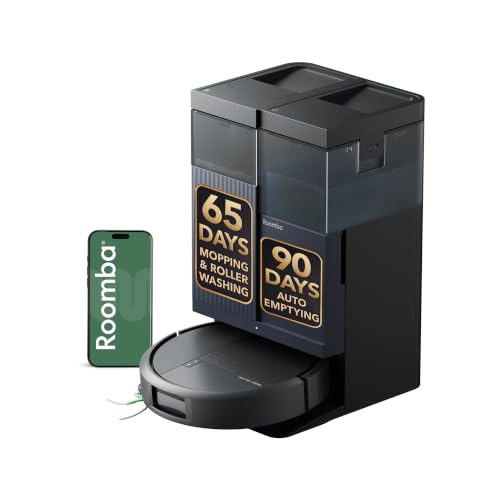


As an Amazon Associate we earn from qualifying purchases at no extra cost to you. Ratings are shown as listed on Amazon.
Best robot mops by household situation
| Household situation | Best fit | Why it makes sense | Likely compromise |
|---|---|---|---|
| Mostly hard floors, frequent daily cleaning | Roborock Saros 10R | Low-profile design, strong mapping, rotating mop pads and an automated dock | Premium purchase price and ongoing dock maintenance |
| Multiple rooms with raised thresholds | Dreame X50 Ultra | Its threshold-climbing system is designed for obstacles that stop many conventional robots | More moving parts and a large dock footprint |
| Stubborn kitchen and dining-room film | Ecovacs Deebot X8 Pro Omni | Continuous roller-mop design keeps bringing a rinsed section into contact with the floor | Roller cleaning and replacement are more involved than flat pads |
| Homes needing strong object recognition | Narwal Freo Z Ultra | Dual-camera obstacle recognition and a hands-off mop-washing dock | Less attractive if you have mostly carpet or want a compact base |
| Premium mopping with a floor-washing dock | Eufy Omni S1 Pro | Roller-style mop applies active contact rather than simply dragging a cloth | Higher cost and more attention to roller hygiene |
| Small budget or lightly soiled floors | Basic vacuum-and-mop robot with a removable water tank | Lower entry cost and simpler ownership | Usually no automatic pad washing, drying or detergent management |
Head-to-head: what separates the leading systems?
Roborock Saros 10R: best overall balance
The Saros 10R is a strong default for a home with hard floors, rugs and ordinary household clutter. Its rotating mop pads are better suited to dried splashes and footprints than a passive microfiber cloth, while the dock can wash and dry the pads and refill the robot. Its navigation package uses lidar and additional sensors to build detailed maps, and its low body is useful beneath beds and cabinets.
Its main advantage is balance: it does not depend on one unusual feature to be useful. It can lift or detach its mops for carpet zones, identify many common obstacles, and return to the dock for charging or cleaning. Nevertheless, small cables, transparent objects and fresh pet messes can still defeat any consumer robot. Floor-specific no-go zones remain worthwhile.
Dreame X50 Ultra: best for thresholds and complicated layouts
The X50 Ultra is the more compelling choice when door tracks, step-ups or room transitions are a recurring problem. Its ProLeap-style threshold system is intended to climb higher transitions than standard wheel designs, with the exact result depending on the threshold shape and surface. Measure before buying: a tall, sharp-edged or slippery transition can be harder than its advertised maximum suggests.
The dock handles mop washing, drying, water management and debris collection. The robot also combines lidar-based mapping with cameras and other sensors for navigation. Choose it over the Saros when crossing rooms is the decisive issue, not merely because the specification sheet lists more modes. A robot that reaches every room can be more useful than one with slightly stronger cleaning in a room it cannot enter.
Ecovacs Deebot X8 Pro Omni: best roller-mop approach
The X8 Pro Omni uses a continuously rinsed roller rather than two conventional circular pads. In principle, this gives the floor a succession of cleaner roller sections and can help with kitchen grease, drink marks and tracked-in dirt. The system is particularly appealing for homes that mop often and want active washing during the cleaning run.
A roller is not maintenance-free. Hair can collect at the ends, dirty water can remain in channels, and the roller must eventually be removed and replaced. Check whether the dock has enough clearance for its tanks and whether you are comfortable rinsing the dirty-water components. This is a good system for frequent users, but overkill for a home that only needs occasional dust removal.
Narwal Freo Z Ultra: best for obstacle recognition
Narwal’s Freo Z Ultra emphasizes camera-based recognition and a highly automated station. That is useful in homes with toys, shoes, pet bowls and furniture legs that change position throughout the week. Its mop strategy is designed to vary cleaning behavior according to detected dirt, rather than treating every room identically.
It still needs a prepared environment. A camera may recognize a shoe but cannot guarantee that a thin charging cable will not tangle in a brush. Privacy preferences also matter: buyers who do not want a camera-equipped robot should consider a lidar-focused alternative.
Eufy Omni S1 Pro: best premium active roller mop
The Omni S1 Pro is built around a floor-washing roller that applies more active contact than a cloth dragged behind a robot. This can be valuable on sealed tile, vinyl and other hard surfaces where a visible film develops quickly. Its station washes and dries the roller, reducing—but not eliminating—the need for manual cleaning.
It is less convincing as a universal choice for carpet-heavy homes. Confirm how the roller lifts, how high it lifts, and whether your rugs have fringes or thick edges. Active roller systems can deliver excellent hard-floor results, but they add consumable parts and more cleaning paths inside the dock.
Specifications that matter in daily use
| Feature | Why it matters | Useful target for a premium robot mop |
|---|---|---|
| Robot height | Determines whether it can clean beneath beds, sofas and cabinets | About 3.5 inches or less |
| Battery capacity | Influences uninterrupted cleaning, although water and mop washing can also cause returns to the dock | Approximately 5,000 to 6,400 mAh |
| Clean-water tank | Larger capacity means fewer refills for pad or roller washing | Roughly 3 to 4.5 liters in the dock |
| Dust bag | Determines how often debris must be emptied manually | About 2.5 to 3.5 liters |
| Mop washing temperature | Hotter washing can loosen greasy residue, but does not replace detergent or cleaning | Approximately 140°F to 167°F where specified |
| Drying | Warm-air drying reduces damp odors and mildew risk | Heated drying with an adjustable multi-hour cycle |
| Obstacle clearance | Determines whether the robot can move between rooms without help | Measure every threshold; advertised limits vary by design |
These figures are comparison benchmarks rather than guarantees of cleaning performance. Manufacturers measure capacities and runtime differently, and mopping, carpet detection, obstacle avoidance and repeated dock washing can reduce the area covered per charge.
Floor-surface compatibility
- Sealed tile: Almost any active mop system can work well, but textured grout benefits from rotating pads or a roller with meaningful downward contact.
- Luxury vinyl and sealed laminate: Use conservative water settings and avoid leaving the robot repeatedly wetting one area. Follow the flooring manufacturer’s care instructions.
- Sealed hardwood: Select a robot with controlled water delivery and reliable carpet or no-mop mapping. Do not assume “wood mode” makes every floor waterproof.
- Unsealed stone, unfinished wood and damaged laminate: Avoid automated wet cleaning unless the floor manufacturer specifically permits it.
- Rugs and carpet: Look for mop lifting or mop removal, carpet detection and room-specific settings. Thick rugs, fringe and black borders can still cause navigation errors.
Dock features: convenience with a maintenance bill
An all-in-one dock can empty dust, refill clean water, wash mop pads or rollers, add detergent and dry the wet components. Those functions reduce daily intervention, but they do not make the system self-cleaning. Dirty-water tanks develop odor if left for days, filters collect residue, and the washboard or roller channel eventually needs scrubbing.
A useful ownership calculation is simple. If a robot uses 0.5 liters of clean water per whole-home run and you run it five times weekly, it consumes about 2.5 liters per week before extra mop-washing cycles. A 4-liter clean-water tank therefore may last less than a week in practice. Homes with pets, kitchens and high mop-washing frequency will use more than the nominal tank capacity suggests.
Maintenance tasks that prevent disappointing results
- After each few runs: Empty the dirty-water tank, inspect the intake area and remove hair from the main brush and side brush.
- Weekly: Wipe sensors, clean the dock’s wash tray and check that the clean-water filter is not blocked.
- Every few weeks: Wash reusable filters as directed, inspect wheels and remove hair from wheel axles.
- When odor appears: Clean the dirty-water tank, seals, tray and roller or mop-pad housing. Do not mask the smell with excessive detergent.
- When performance falls: Replace worn mop pads, rollers, filters and brushes rather than increasing water or detergent settings.
The parts that usually wear first are mop pads or rollers, the main brush, side brush and filters. Keep a spare set before the original parts become unusable. Excess detergent is a common mistake: it can create foam, leave residue on floors and interfere with sensors or dock drainage unless the manufacturer specifically approves that product.
Final buying advice
Choose the Roborock Saros 10R if you want the safest all-round premium recommendation. Choose the Dreame X50 Ultra when thresholds or room access are the deciding problem. Choose the Ecovacs X8 Pro Omni or Eufy Omni S1 Pro when active roller mopping matters more than simple ownership. Choose the Narwal Freo Z Ultra if obstacle recognition is central to your decision.
Before ordering, measure the lowest furniture, every raised transition, the available dock space and the route to the nearest water supply or drain if you plan to connect a plumbed station. The best robot mop is not the one with the longest feature list; it is the one that can reach your floors, use a suitable wet-cleaning method and fit the maintenance routine you will actually follow.

Write Your Review
No reviews yet. Be the first to share your experience!