

Key takeaways
- Choosing maximum speed instead of controllable low-speed performance.
- Underestimating the space required for a queen or king frame.
- Assuming every machine includes a walking foot, ruler foot, or stitch regulator.
- Ignoring the cost and availability of compatible bobbins and presser feet.
- Buying a long-arm for large quilts without planning how quilts will be loaded, basted, and stored.
- Expecting stitch regulation to compensate for uneven fabric feeding or incorrect tension.
The best quilting machines for precise stitching are the JUKI TL-2010Q for value and control, the Janome Memory Craft 6650 for versatile piecing and quilting, the Brother PQ1600S for fast straight-line work, and a dedicated long-arm such as the BERNINA Q 16 or Grace Q’nique 15R for large quilts.
Our top picks


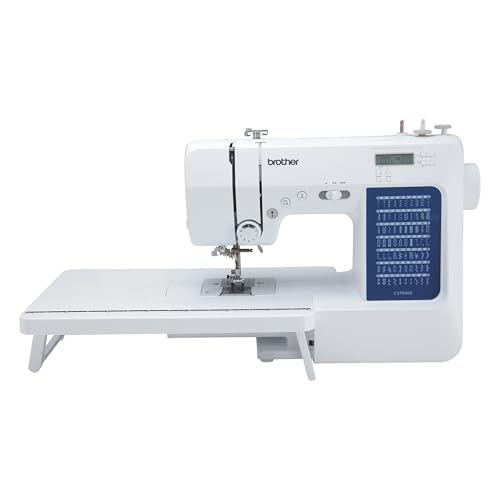

As an Amazon Associate we earn from qualifying purchases at no extra cost to you. Ratings are shown as listed on Amazon.
Quick comparison: the best quilting machines in 2026
| Machine | Throat space | Maximum speed | Stitch control | Best quilt size | Typical market range |
|---|---|---|---|---|---|
| JUKI TL-2010Q | Approximately 8.5 inches | 1,500 stitches/minute | Speed slider, needle up/down, knee lift | Lap to full size with table or frame | About $700–$1,000 |
| Brother PQ1600S | Approximately 8.6 inches | 1,500 stitches/minute | Speed control, needle stop position, thread trimmer | Lap to full size with careful rolling | About $800–$1,100 |
| Janome Memory Craft 6650 | Approximately 10 inches | 1,000 stitches/minute | Electronic speed control, needle up/down, memorized settings | Lap, twin, and many queen quilts | About $1,300–$1,800 |
| JUKI TL-18QVP | Approximately 8.5 inches | 1,500 stitches/minute | Speed slider, needle control, automatic thread trimming | Lap to queen with extension support | About $1,000–$1,400 |
| Grace Q’nique 15R | 15 inches | 1,800 stitches/minute | Manual or regulated modes, adjustable speed | Queen and king on a suitable frame | About $2,000–$3,000 with frame options |
| BERNINA Q 16 | 16 inches | 2,000 stitches/minute | Stitch regulation, cruise and precision modes | Queen and king on a frame; smaller projects on a table | About $6,000–$9,000 depending on configuration |
Specifications and package contents vary by bundle and region, so confirm whether an extension table, ruler foot, quilting feet, frame, or stitch-regulation accessory is included. The market ranges above are broad buying guides rather than fixed prices.
Which machine is right for your quilting situation?
| Your situation | Best fit | Why | Main compromise |
|---|---|---|---|
| First serious quilting machine, limited budget | JUKI TL-2010Q | Strong straight stitch, simple controls, excellent speed adjustment, and broad accessory support | Primarily a straight-stitch machine; less suitable for decorative sewing |
| You piece and quilt on the same machine | Janome Memory Craft 6650 | More stitch programs, a larger throat, adjustable presser-foot pressure, and useful piecing feet | Slower than the dedicated 1,500–2,000-stitch machines |
| You want fast, controlled straight lines | Brother PQ1600S | Large work area, strong feed system, speed limiting, and automatic thread cutting | Limited to utility and straight-stitch quilting |
| You regularly quilt queen or king-size projects | Grace Q’nique 15R | A 15-inch throat reduces the number of times the quilt must be advanced, while a frame supports the quilt weight | Requires dedicated floor space and more setup than a domestic machine |
| You want premium regulation and frequent long-arm use | BERNINA Q 16 | Large throat, refined stitch-regulation modes, strong lighting, and frame/table configurations | High initial cost and more expensive accessories |
Head-to-head: domestic quilting machines versus long-arms
JUKI TL-2010Q versus Brother PQ1600S
These machines are close competitors for straight-line quilting. Both have roughly 8.5 inches of throat space and reach about 1,500 stitches per minute. That is enough room for walking-foot quilting, outline quilting, stitch-in-the-ditch work, and many free-motion patterns on lap and twin quilts.
The JUKI is appealing when tactile control matters. Its speed slider and knee-operated presser-foot lift make it easy to keep both hands on the quilt. The Brother emphasizes efficient operation, with features such as speed control, needle-position adjustment, and automatic thread trimming depending on the package. Choose the JUKI for a simpler mechanical feel and choose the Brother if reduced hand movement and thread cutting are priorities.
Janome Memory Craft 6650 versus dedicated straight-stitch models
The Janome has a wider range of uses. It offers utility and decorative stitches, a larger approximately 10-inch throat, an extension table, and quilting-friendly feet. Its walking foot is useful for evenly feeding multiple layers, while the quarter-inch foot supports accurate piecing before quilting begins.
Its lower maximum speed is not a serious disadvantage for precision work. A controlled 700 to 900 stitches per minute is often easier to manage than running a machine at full speed. The trade-off is that the Janome has more controls, menus, and moving parts than a dedicated straight-stitch machine.
Grace Q’nique 15R versus BERNINA Q 16
A 15- or 16-inch throat changes the experience on large quilts. The extra space allows a broader quilting design before the quilt needs to be advanced. A frame also supports the quilt’s weight, so you are not repeatedly dragging a bulky project across a small domestic machine bed.
The Q’nique 15R is the more accessible route into frame-based long-arm quilting. It is suited to a quilter who wants practical stitch regulation and a large work area without moving directly into the highest-priced systems. The BERNINA Q 16 is aimed at frequent users who value refined controls, robust construction, lighting, and a choice of table or frame operation. Neither is automatically better for a beginner: a frame demands room, loading time, and practice with tension and movement.
What the specifications mean in actual use
Throat space
Throat space is the distance from the needle to the machine body. An 8.5-inch throat can handle small and medium quilts, but a rolled queen quilt becomes crowded quickly. A 10-inch throat provides a useful middle ground. Fifteen or 16 inches is more comfortable for dense free-motion designs and large quilts, particularly when combined with a frame.
Throat size does not determine stitch quality by itself. A well-adjusted 8-inch machine can produce excellent work; it simply requires more frequent quilt repositioning.
Stitch control and regulation
For free-motion work, a speed slider is more useful than an impressive maximum speed. It lets you limit the motor while you learn consistent hand movement. Needle up/down control is valuable when pivoting at corners, and a knee lift lets you raise the presser foot without removing your hands from the quilt.
Stitch regulation is different from ordinary speed control. Regulation senses machine or fabric movement and adjusts needle speed to help maintain a selected stitch length. It is particularly helpful on long-arms, although it cannot correct abrupt hand movements, poor tension, or an improperly balanced quilt sandwich.
Presser-foot options
At minimum, look for a walking foot, quarter-inch piecing foot, open-toe or darning foot, and free-motion quilting foot. A ruler foot is necessary for safe ruler work because its height helps keep the ruler away from the needle. Some machines use proprietary feet, while others accept common low-shank or high-shank accessories. Check compatibility before budgeting for specialty feet.
A practical setup sequence for precise stitching
- Clean the bobbin area. Remove lint around the feed dogs and bobbin case. Lint can increase drag and contribute to inconsistent tension.
- Install a fresh quilting needle. Use a size appropriate to the thread and batting. A dull or bent needle can cause skipped stitches and fabric damage.
- Wind and insert the bobbin consistently. Uneven winding changes tension. Use the bobbin type specified for the machine rather than assuming all metal or plastic bobbins are interchangeable.
- Make a test sandwich. Stitch through the same fabric, batting, and backing used in the quilt. Adjust upper tension only after confirming correct threading and needle choice.
- Reduce the speed while beginning. Start around 500–700 stitches per minute for free-motion practice. Increase speed only when stitch length and hand movement remain consistent.
- Support the quilt’s weight. Use an extension table for a domestic machine or load the quilt evenly on a compatible frame. Dragging a heavy quilt can distort seams and strain the needle area.
- Advance and check regularly. On a domestic machine, stop before the roll becomes too tight. On a frame, check that the layers remain square and that the backing is not developing pleats.
Ownership costs and durability realities
The first consumables to wear are usually needles, bobbins, thread, and walking-foot or free-motion-foot components rather than the machine body. Replace a quilting needle after roughly 8 to 12 hours of active stitching, or sooner if it strikes a pin, makes a popping sound, or begins skipping stitches. Dense cotton batting and adhesive sprays can create more lint or residue, increasing cleaning requirements.
Budget for an extension table, spare bobbins, quality needles, quilting feet, and a suitable light source. A frame-based setup also needs leaders, clamps or rails, rulers, pantograph tools if desired, and enough clearance to walk around the frame. The purchase price of a long-arm is therefore only part of the ownership cost.
A simple usage calculation illustrates the difference. If a $900 domestic machine is used for 30 quilts, the machine cost is about $30 per quilt before accessories and maintenance. A $2,500 long-arm setup used for 10 quilts has an equipment cost of about $250 per quilt; used for 100 quilts, that falls to $25 per quilt. The better value depends on frequency, available space, and whether the larger throat saves enough time to justify the investment.
Common buying mistakes
- Choosing maximum speed instead of controllable low-speed performance.
- Underestimating the space required for a queen or king frame.
- Assuming every machine includes a walking foot, ruler foot, or stitch regulator.
- Ignoring the cost and availability of compatible bobbins and presser feet.
- Buying a long-arm for large quilts without planning how quilts will be loaded, basted, and stored.
- Expecting stitch regulation to compensate for uneven fabric feeding or incorrect tension.
Final recommendation
For most quilters seeking precise stitching without a frame, the JUKI TL-2010Q is the clearest value choice, while the Brother PQ1600S is a strong alternative for fast, efficient straight-line quilting. Choose the Janome Memory Craft 6650 if piecing, decorative stitches, and quilting must share one machine. For frequent queen- and king-size work, move to the Grace Q’nique 15R or BERNINA Q 16, provided you have the room and budget for a frame-oriented setup.

Write Your Review
No reviews yet. Be the first to share your experience!