
Key takeaways
- Find the best mid drive electric mountain bikes with adjustable suspension for permitted recreational trails, with motor, fork and trail-access guidance.
A mid-drive electric mountain bike puts the motor at the crank, where it can use the bike’s gears. That matters on a trail: the motor stays in an efficient gear on a climb, the weight sits low and centred, and the bike keeps a more natural balance over roots and rocks than a heavy rear hub motor would. Add adjustable suspension, and the same bike can be firmed up for a smooth fire road and softened for a rough descent, which is what makes it useful across different permitted trails rather than only one kind of surface.
Trail access is the other half of the keyword. Not every recreational trail allows e-bikes, and the ones that do often limit them by class, motor power, and speed. Complete mid-drive mountain bikes are scarce among the models sold on Amazon, so the picks below include a complete mid-drive bike and mid-drive conversion kits that let you build a mid-drive trail bike from a hardtail you already own.
Disclosure: As an Amazon Associate, we earn from qualifying purchases.
How to Choose Mid Drive Electric Mountain Bikes With Adjustable Suspension for Permitted Recreational Trails
Mid-drive motor and gearing
A mid-drive motor drives the chain, so it benefits from the bike’s gears in the same way your legs do. On a steep climb, a low gear lets the motor spin faster and work more efficiently, which gives better torque and less heat than a hub motor in the same situation. Look for a motor with strong torque, a torque sensor where fitted, and a wide gear range, because those three together decide how the bike climbs.
Adjustable suspension
Adjustable suspension means you can change how the fork, and the rear shock where fitted, responds to the trail. The most useful adjustments are lockout, which firms the fork for smooth climbs and roads, preload, which sets the fork for your weight, and rebound, which controls how quickly the fork returns after a bump. A fork with 100mm to 140mm of travel suits most recreational trails. Before ordering, confirm on the listing exactly which adjustments the fork offers, because a fork described only as suspension may have no lockout or preload adjustment at all.
Hardtail or full suspension
A hardtail has suspension only at the front, which keeps the bike lighter, simpler, and easier to maintain. It suits smoother trails, fire roads, and riders who want a direct feel for the surface. A full-suspension bike adds a rear shock, which improves comfort and traction on rough descents but adds weight, cost, and maintenance. For permitted recreational trails, which are often smoother than bike-park trails, a hardtail with a good adjustable fork is a practical choice.
Battery, range, and weight
Trail riding uses more battery than road riding, because climbs are steeper and the motor works harder at low speed. A battery of around 600Wh or more gives useful margin for a longer loop, and a removable battery makes charging easier at home. Weight matters on a trail too: a mid-drive bike is usually lighter at the wheels than a hub-drive bike, which helps handling.
Brakes, tyres, and drivetrain
Hydraulic disc brakes are the right choice for a trail bike, because they give strong, consistent stopping on descents and in wet conditions. Wider tyres give grip on loose surfaces, and a 7- or 8-speed drivetrain with a wide range helps the mid-drive motor stay in its efficient gear.
Trail permission and e-bike class
Before you buy, check the trails you plan to ride. Many land managers allow Class 1 e-bikes, which provide pedal assist only up to 20 mph, on the same trails as non-electric bikes, while Class 2 and Class 3 access varies and throttle use is often restricted. Confirm the class the bike ships as and whether the trail’s rules mention motor power or throttle.
Our Top Picks
The picks below are mid-drive options sold on Amazon: one complete mid-drive electric mountain bike, and Bafang mid-drive conversion kits for riders who want to convert a hardtail they already own. With a kit, the suspension is the donor bike’s fork, so its adjustability depends on the fork you already have.
Heybike Alpha Mid-Drive Electric Mountain Bike
The Heybike Alpha is a complete mid-drive electric mountain bike with a motor listed at 1,500W peak, a 680Wh battery, and a claimed range of up to 70 miles. It has 26 x 4.0 inch fat tyres, an 8-speed drivetrain, a torque sensor, hydraulic brakes, and front suspension. The fat tyres give grip on loose, sandy, and snowy trails.
Best for: Riders who want a complete mid-drive trail bike with fat tyres and a large battery, without building from a kit.
Pros: Mid-drive motor with torque sensor for natural climbing; large 680Wh battery; hydraulic brakes and 8-speed gears; fat tyres for loose and soft surfaces.
Cons: The listing describes front suspension without detailing lockout or preload adjustment, so confirm those features on the listing before ordering; the fat-tyre layout is heavy and is not the best choice for every trail surface.
BAFANG BBS02B and BBS-HD Mid Drive Conversion Kit, 750W and 1000W

The Bafang BBS02B and BBS-HD conversion kit is a mid-drive motor kit in 500W, 750W, and 1,000W options, for 48V or 52V systems, with a battery and display available as options. It fits bottom brackets of 68 to 73mm, and the motor is mounted at the crank, so it drives the bike’s gears in the same way a factory mid-drive does.
Best for: Riders who own a hardtail with a good adjustable fork and want to convert it to mid-drive power.
Pros: Lets you keep a fork and frame you already know; motor power options to suit different trails; drives the gears for efficient climbing; battery and display can be chosen to suit the build.
Cons: Installation needs tools and mechanical skill, or a bike shop; the finished bike’s class, weight, and suspension depend on the donor bike; confirm bottom-bracket fit before ordering.
BAFANG BBS-HD 1000W Mid Drive Conversion Kit
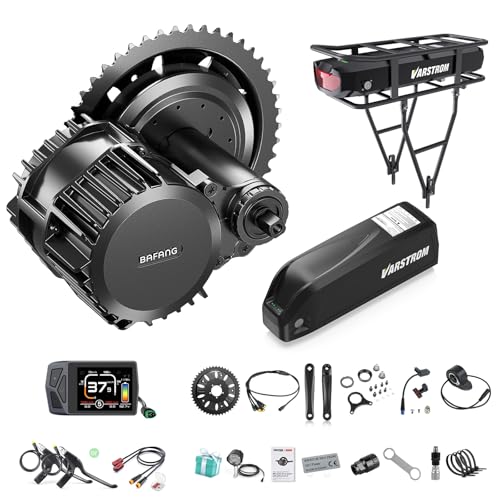
The Bafang BBS-HD 1000W conversion kit is the higher-power option in the Bafang mid-drive range, with 48V or 52V power, a 1,000W motor, and a battery and display available as options. It fits bottom brackets of 68 to 73mm, 100mm, and 120mm, and it is built for riders who want strong climbing power on steep trails.
Best for: Steep trail conversions where strong mid-drive climbing power is the priority.
Pros: Higher-power mid-drive for steep climbs; wider bottom-bracket fit than the standard kit; battery and display options to suit the build.
Cons: Higher power may not be permitted on some trails, so check local class and power limits first; installation and setup need care, and the donor bike’s brakes and fork must suit the extra power.
Permitted Recreational Trail Considerations
Start with the land manager, not the bike shop. Check the website or signs for the trails you plan to ride, and look for the e-bike class, motor power, and throttle rules. If the rules are unclear, contact the land manager before riding. A Class 1 bike, with pedal assist only and no throttle, is the most widely accepted type on multi-use trails, while throttle bikes and higher-power bikes are more often restricted to motorised trails.
Ride in a way that keeps trails open. Yield to walkers and horse riders where the rules require it, keep your speed down on blind corners and shared sections, and avoid riding on wet trails where tyres damage the surface. Carry a basic repair kit, a pump, and water, because a mid-drive trail bike is heavier to walk out than a standard bike if the battery runs out.
Finally, set the suspension for the trail you are riding that day. Firm the fork for a smooth climb or a fire road, and soften it for a rough descent, then check the sag and rebound after the first few rides. A fork that is set for your weight and the surface will give more grip and more comfort than a fork left at its factory setting.
Frequently Asked Questions
What is a mid-drive electric mountain bike?
A mid-drive electric mountain bike has its motor at the crank, between the pedals, where it drives the chain and uses the bike’s gears. This gives efficient climbing, a low centre of gravity, and balanced handling on trails.
What does adjustable suspension mean on a trail bike?
Adjustable suspension lets you change how the fork, and the rear shock where fitted, responds to bumps. Common adjustments are lockout, preload, and rebound, and they let you firm the bike up for climbs and soften it for descents.
Are e-bikes allowed on recreational trails?
It depends on the trail and the land manager. Many trails allow Class 1 e-bikes, while Class 2 and Class 3 access varies, and some trails allow no e-bikes at all. Check the rules for each trail before riding.
Can I convert my hardtail to a mid-drive e-bike?
Yes, with a mid-drive conversion kit such as the Bafang kits in this guide, if your bike’s bottom bracket fits the kit and its brakes, fork, and frame suit the extra power. Installation needs mechanical skill or a bike shop, and the finished bike must still meet local class and power rules.
Is a hardtail or a full-suspension bike better for permitted trails?
A hardtail is lighter, simpler, and easier to maintain, and it suits smoother trails and fire roads. A full-suspension bike gives more comfort and traction on rough descents, but it adds weight and maintenance. For most permitted recreational trails, a hardtail with a good adjustable fork is a practical choice.
Conclusion
A mid-drive electric mountain bike with adjustable suspension is a strong choice for permitted recreational trails, because the motor uses the gears for efficient climbing and the suspension can be set for the surface you are riding. The complete Heybike Alpha gives a ready-to-ride mid-drive option, while the Bafang kits offer a conversion route for a hardtail you already own. Whichever route you choose, confirm the fork adjustments on the listing and check the trail’s e-bike class and power rules before you ride.
More from Amazon
Programs that pair well with the guide above. Offers and eligibility are set by Amazon and may change.
Collect the home and kitchen items you want in one registry that guests can shop from.
Create a wedding registrySet up recurring deliveries of everyday items on eligible products. Terms and savings are set by Amazon.
Explore Subscribe & SaveFree shipping on eligible items, Prime Video and more. Eligible new members can start with a free trial.
Start a Prime free trialAudiobooks and podcasts to listen to on the go. Eligible new members can start with a free trial.
Try Audible freeAs an Amazon Associate we earn from qualifying purchases.
Write Your Review
No reviews yet. Be the first to share your experience!