
Our Short List of 3

- Best for: Riders whose training is app classes and who want the finest resistance steps in the segment.
- Resistance: magnetic, 100 levels
- Drive system: belt
- Maximum user weight: 330 pounds
- Assembled dimensions: 54.6 x 30.7 x 51.8 inches
- Best for: Riders who want back support and a complete console for longer seated sessions.
- Resistance: magnetic, 25 levels
- Display: 7-inch LCD
- Workout programs: 13 built in, per listing summaries
- Maximum user weight: 330 pounds

- Best for: Upright riders and shared households that want programs, adjustment and progression in one bike.
- Resistance: magnetic, 25 levels
- Display: 7-inch LCD
- Workout programs: 13 built in, per listing summaries
- Maximum user weight: 330 pounds
All 4 Picks at a Glance
| Product | Specs | Action |
|---|---|---|
| Schwinn Fitness IC4 Indoor Cycling Bike |
| Check price on Amazon |
| Schwinn Fitness 290 Recumbent Bike |
| Check price on Amazon |
| Schwinn Fitness 190 Upright Bike |
| Check price on Amazon |
 YOSUDA PRO Magnetic Exercise Bike |
| Check price on Amazon |
Our Top Picks
Shopping in the under 1000 segment is not really a search for the most features. It is a decision about where the money inside that segment should go: toward a studio-style bike built around app classes, toward a recumbent with a complete console, toward an upright with a wider resistance range, or toward a heavy frame with a simple display. Each direction spends the same segment very differently, and the wrong direction leaves you paying for capability you never open.
This guide is for home riders comparing serious mid-segment bikes, including buyers upgrading from an entry model and households where two riders will share one machine. Every model below was chosen from its name and specifications on its Amazon product page, and only listing information is quoted here.
Quick Picks
As an Amazon Associate we earn from qualifying purchases
| Product | Best for | Key spec from title |
|---|---|---|
| Schwinn Fitness IC4 Indoor Cycling Bike | App-class training in a studio position | 100 levels of magnetic resistance |
| Schwinn Fitness 290 Recumbent Bike | Back-supported riding with a full console | 7-inch LCD and 25 resistance levels |
| Schwinn Fitness 190 Upright Bike | Upright riding with room to progress | 25 magnetic levels, 330 lb capacity |
| YOSUDA PRO Magnetic Exercise Bike | A heavy frame and simple console with no account | 350 lb capacity and 40 lb flywheel, per the listing |
How to Choose
Decide What the Segment Buys You in Each Shape
In this segment, each bike shape spends its budget on something different. A studio bike spends it on the frame, the drive and fine resistance control, and expects you to supply the screen. A recumbent spends it on the seat, the backrest and the console. An upright spends it on programs and adjustment. A simple heavy bike spends it on steel and a flywheel and gives you a basic display. None of these is the correct answer on its own. The correct answer is the one whose spending matches the rides you actually do, week after week, rather than the longest feature list.
Count the Ongoing Costs Before You Compare Hardware
The purchase is only the first cost in this segment. App-class bikes assume a tablet you already own and a continuing membership for the classes that make the bike interesting. Console bikes with connected route features also place those features inside a membership after a trial. A bike with built-in programs and no account requirement costs nothing further to run as designed. Add the likely membership cost over the years you expect to keep the bike to your comparison, because a model that looks like the segment’s hardware bargain can become its most expensive option once the subscription is counted.
Treat Weight Capacity and Frame Weight as Quality Signals
Within one segment, the frame numbers separate the durable choices from the light ones. A higher maximum user weight, a heavier assembled weight and a longer frame warranty together suggest a bike built for daily use by full-size adults. In this group the listed capacities run from 330 to 350 pounds, and frame coverage runs as long as ten years on the Schwinn models. Do not read any single number alone: a high capacity on a very light frame deserves a second look, while capacity, weight and warranty pointing the same way is a consistent signal.
Match the Console to Your Real Routine
Decide where your workout content will live before choosing the display. If you already follow classes on a tablet, a small data display is enough and the bike’s job is resistance and stability. If you want to walk up, press start and follow a program, you need built-in workouts on the console itself, which the Schwinn upright and recumbent here provide. If you want numbers only, the YOSUDA approach of a simple monitor keeps the machine independent of accounts and updates. The mistake is paying for a connected console you will bypass, or buying a bare display and missing the programs you expected.
The 4 Best Options
Schwinn Fitness IC4 Indoor Cycling Bike
- Best for: Riders whose training is app classes and who want the finest resistance steps in the segment.
- Resistance: magnetic, 100 levels
- Drive system: belt
- Maximum user weight: 330 pounds
- Assembled dimensions: 54.6 x 30.7 x 51.8 inches
Riders whose training is app classes and who want the finest resistance steps in the segment.
The total cost of ownership includes the tablet and memberships, and the listing states the bike requires assembly.
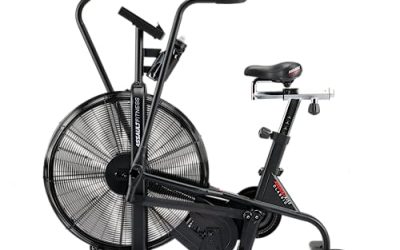
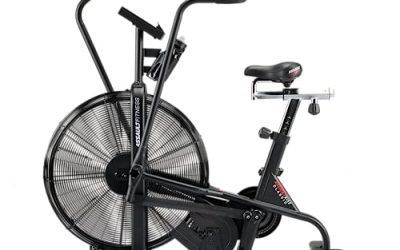
The IC4 is the segment’s studio option. Its 100 magnetic resistance levels are the finest control in this group, the belt drive keeps the ride quiet, and the listing names the major class and route apps it connects to through your own tablet. A Bluetooth heart rate armband is included according to the listing, and the warranty pairs a ten-year frame term with three years on parts. This is the right spend if classes are your training. It is the wrong spend if you wanted the bike itself to provide the workout, because the screen, the content and the subscriptions all sit outside the purchase.
Schwinn Fitness 290 Recumbent Bike
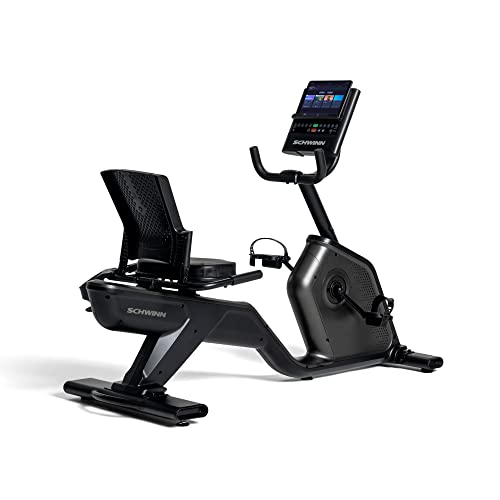
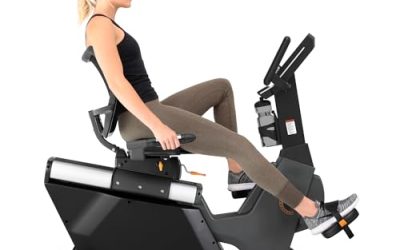
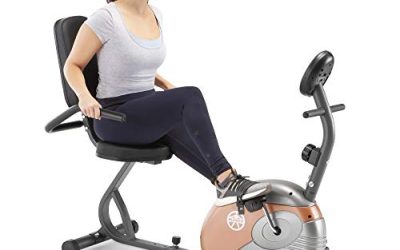
- Best for: Riders who want back support and a complete console for longer seated sessions.
- Resistance: magnetic, 25 levels
- Display: 7-inch LCD
- Workout programs: 13 built in, per listing summaries
- Maximum user weight: 330 pounds
Riders who want back support and a complete console for longer seated sessions.
It is the longest bike in this guide, and its connected route features require a membership after the trial.
The 290 is the segment’s comfort-and-console option. The step-through recumbent frame, padded seat and ventilated backrest support longer sessions, the seat slides on a rail for leg length, and the 7-inch console carries built-in programs plus a USB charging port. Connected route features are available through a membership after the included trial, but the programmed riding works on the console alone. For a rider who will genuinely use the back support every session, this is where the segment’s money does the most work. For a rider who wants standing intervals, the recumbent shape is simply the wrong tool.
Schwinn Fitness 190 Upright Bike
- Best for: Upright riders and shared households that want programs, adjustment and progression in one bike.
- Resistance: magnetic, 25 levels
- Display: 7-inch LCD
- Workout programs: 13 built in, per listing summaries
- Maximum user weight: 330 pounds
Upright riders and shared households that want programs, adjustment and progression in one bike.
Measure the width of your space carefully, and note the short 90-day labor term in the warranty summary.
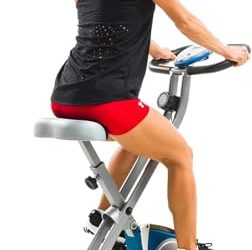
The 190 is the segment’s upright all-rounder. It combines 25 magnetic levels, a 7-inch display with built-in programs, and a saddle that adjusts vertically and horizontally, so it can be set up carefully for one rider or shared between two. The 330 pound user limit and ten-year frame coverage match the top of this group, and the connected features are an addition rather than the foundation, since the programmed console works without an account. Its one clear demand is space: at 32.3 inches wide it is broader than most uprights, so the room decides before the feature list does.
YOSUDA PRO Magnetic Exercise Bike
- Best for: Self-directed riders who want the strongest frame numbers in the segment and no ongoing account.
- Resistance: magnetic, 100 levels
- Flywheel: 40 lb, per the listing feature summary
- Maximum user weight: 350 pounds
- Assembled dimensions: 41 x 22 x 42.5 inches
Self-directed riders who want the strongest frame numbers in the segment and no ongoing account.
The display is a basic data monitor, so any class or route experience has to come from a separate device you supply.
The YOSUDA PRO is the segment’s hardware-first option. The listing describes a light-commercial build with a 350 pound capacity, a heavy flywheel and a steel frame, paired with a simple LCD that reports ride data including cadence. It is pedal powered, so there is no cord, no account and nothing to update, and its 100 resistance levels give fine control without any connected features. This is the right spend for a rider who trains by numbers and wants the frame to be the product. It is the wrong spend for anyone expecting guided workouts, because guidance is exactly what this design leaves out.
Which One Fits Your Situation
You Are Upgrading From an Entry Bike
Choose by the limitation that frustrated you. If the old bike ran out of resistance or felt unstable at effort, the IC4 or the YOSUDA PRO answers that directly. If the old bike’s saddle ended your sessions early, the 290 recumbent changes the position itself rather than cushioning the same problem. Naming the old bike’s real failure keeps the upgrade money pointed at the fix.
Two Adults Will Share the Bike
Choose the 190 upright. The two-direction saddle adjustment lets each rider set height and reach instead of splitting the difference, the built-in programs serve both riders without either one’s app account, and the user limit covers full-size adults. Write each rider’s seat settings down once they are found, and re-setting the bike becomes a ten-second job.
You Want No Ongoing Costs at All
Choose the YOSUDA PRO for zero running costs, since it is pedal powered and account free, or the 190 if you still want built-in programs from a console. Avoid building your routine around the IC4 in this situation: its listing is clear that the class experience runs on separate subscriptions, which is the opposite of a closed budget.
Your Sessions Are Long and Steady
Choose the 290 recumbent. Long steady riding is where back support and a seated position pay back their cost, and its console programs and charging port suit unhurried sessions. Confirm the room can take its length with space to walk around it, because at 66.4 inches it will define the layout of a small room.
Common Mistakes
- Comparing only the purchase and ignoring membership costs that continue for as long as you use connected features.
- Paying for a connected studio bike when your routine is steady solo riding that a simple console covers.
- Treating the highest resistance level count as the best bike, regardless of riding position.
- Skipping the assembled dimensions and discovering the segment’s bigger frames do not fit the planned room.
- Assuming a heavier flywheel or higher capacity alone guarantees the right fit for your body and routine.
Frequently Asked Questions
Is the under 1000 segment worth it over entry bikes?
For daily riders, generally yes, and the difference shows in the listing numbers: higher user weight limits, heavier frames, finer or wider resistance ranges, built-in programs and frame coverage as long as ten years. A casual rider may not use that headroom. A rider training most days will feel the stability and keep the bike longer.
Which type gives the most without a subscription?
The console-led models. The Schwinn 190 and 290 run their built-in programs with no account, and the YOSUDA PRO needs no power or account at all. The IC4 is the most subscription-dependent design here, because its class experience is delivered by separate services named in its listing.
How long should a bike in this segment last?
The warranty terms are the clearest published signal. Frame coverage of ten years on the Schwinn models suggests they are built for long home service, while shorter labor terms mean early setup problems are your time. Keep the assembly hardware, set the bike on a level floor, and check bolts periodically to give any of them their best service life.
Should I choose capacity or features if I cannot have both?
Choose capacity and fit first. A bike that safely supports you and adjusts to your leg length will be ridden; extra programs on a bike that feels strained or cramped will not be opened. In this group the YOSUDA PRO leads on capacity, while the Schwinn models balance slightly lower limits with richer consoles.
More from Amazon
Programs that pair well with the guide above. Offers and eligibility are set by Amazon and may change.
Collect the home and kitchen items you want in one registry that guests can shop from.
Create a wedding registrySet up recurring deliveries of everyday items on eligible products. Terms and savings are set by Amazon.
Explore Subscribe & SaveFree shipping on eligible items, Prime Video and more. Eligible new members can start with a free trial.
Start a Prime free trialAudiobooks and podcasts to listen to on the go. Eligible new members can start with a free trial.
Try Audible freeAs an Amazon Associate we earn from qualifying purchases.
Write Your Review
No reviews yet. Be the first to share your experience!