

Key takeaways
- Wipe handrails, controls and the frame after heavy use so sweat does not damage finishes or buttons.
- Vacuum around the motor compartment and beneath the treadmill according to the service manual.
- Inspect belt tracking and tension regularly. A belt that drifts, slips or squeaks should not be ignored.
- Use only the lubricant specified by the manufacturer. Some decks are pre-lubricated or use materials that should not receive extra silicone.
- Keep the treadmill level. An uneven floor can add side loading to the belt and rollers.
- Leave service clearance around the motor hood and rear roller instead of pushing the unit tightly against a wall.
The best commercial treadmills are the Matrix T75 for most gyms, the Precor TRM 600+ for heavy daily use, the Woodway 4Front for maximum belt durability, and a compact commercial-grade treadmill such as the Life Fitness Club Series Plus for a serious home studio.
“Commercial” does not automatically mean “best” for every space. A large fitness center needs a powerful motor, a high user-weight rating, a thick running deck and serviceable parts. A home studio may benefit more from a quieter frame, a smaller footprint and easier access to electrical power. The right choice depends on how many hours the treadmill will run, who will use it and how much room is available around it.
Our top picks


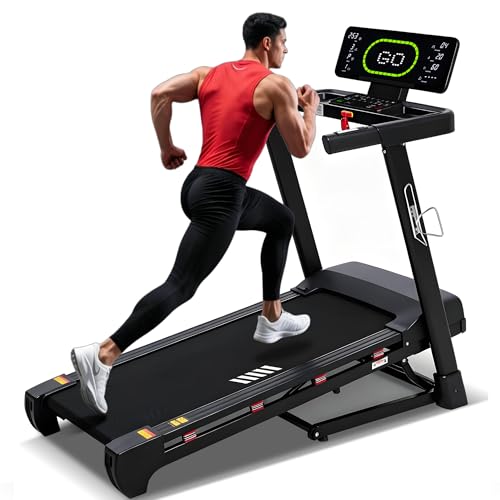
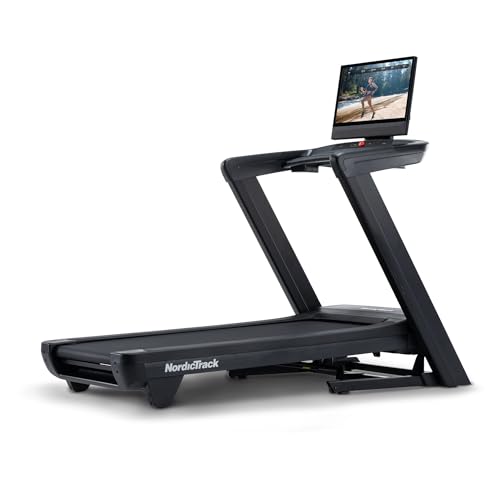
As an Amazon Associate we earn from qualifying purchases at no extra cost to you. Ratings are shown as listed on Amazon.
Best commercial treadmills by situation
| Situation | Best fit | What to prioritize | Typical market range |
|---|---|---|---|
| Busy gym with continuous daily use | Precor TRM 600+ or Life Fitness Integrity+ | Commercial AC motor, service access, reinforced deck, parts support | $8,000–$14,000 |
| General-purpose gym or apartment fitness room | Matrix T75 | Balanced power, 22 x 60-inch belt, cushioning and programming | $7,000–$11,000 |
| High-mileage running facility | Woodway 4Front | Slat belt, low belt friction, replaceable components and durability | $12,000–$18,000 |
| Premium home studio with regular use | Life Fitness Club Series Plus | Quieter operation, folding or space-efficient design, residential controls | $4,500–$8,000 |
| Small studio with limited floor space | Compact commercial-grade treadmill | At least a 20 x 55-inch deck, transport wheels, service clearance | $3,500–$7,000 |
Prices are broad equipment-market ranges and can change substantially with console options, installation, freight, warranty coverage and local service contracts.
Head-to-head: the strongest commercial choices
Matrix T75: best overall balance
The Matrix T75 is a practical choice when a facility wants a full-size treadmill without moving into the largest, most expensive category. Its 22 x 60-inch running surface suits walking, jogging and most running users, while the deck cushioning is designed to reduce the harsh feel of a rigid gym floor.
Its main advantage is balance: substantial frame construction, a commercial-oriented drive system and a broad console ecosystem without the extreme footprint of a premium slat-belt machine. Choose it for a hotel, condominium gym, training studio or home room where several people may use the treadmill each week.
The limitation is not necessarily performance but ownership. A treadmill in a busy public facility still requires scheduled cleaning, belt inspection and professional servicing. Optional entertainment consoles can also add cost without improving the machine’s mechanical durability.
Precor TRM 600+: best for demanding facility use
The Precor TRM 600+ is suited to fitness centers that value a refined running feel, durable construction and established commercial service support. Precor’s shock-absorbing deck approach is useful when many users walk or run for long sessions, because the deck must manage repeated impact without becoming excessively harsh.
This is a strong choice when uptime matters more than the lowest purchase price. Before buying, confirm that an authorized technician and replacement parts are available in your region. A premium treadmill can still become an expensive stationary object if the local service network is weak.
Woodway 4Front: best for belt durability
The Woodway 4Front uses a slat-belt design rather than a conventional continuous sheet belt. Individual slats can reduce belt-flexing losses and are replaceable, which can make the machine attractive for running clubs, performance facilities and gyms with exceptionally high mileage.
The trade-off is price, weight and a different maintenance profile. Slat systems are not maintenance-free, and the machine may be excessive for a household where two people each walk for 30 minutes a few times per week. It also needs a solid floor and careful delivery planning.
Life Fitness Club Series Plus: best premium home-studio option
The Club Series Plus is a better match for a home studio than a full institutional treadmill when the priorities are a polished user experience, reasonable noise levels and frequent personal use. It offers a more approachable ownership proposition while retaining a substantial deck and frame compared with basic residential models.
Check the exact version before purchase: console features, folding configuration, dimensions and warranty terms may differ by market. For a home runner, also verify that the ceiling height allows safe use. A tall user’s head position rises during running, and a low ceiling can make a technically suitable treadmill uncomfortable.
Specifications that matter more than the label
| Specification | Suitable baseline | Why it matters |
|---|---|---|
| Continuous-duty motor | 3.0–4.0 CHP for mixed gym use | Supports repeated acceleration and long sessions more reliably than a motor advertised only by peak horsepower |
| Running surface | 22 x 60 inches for runners; 20 x 55 inches for compact studios | Extra width and length reduce the chance of stepping off the belt during faster running |
| User-weight rating | At least 350 pounds for general commercial use | A higher rating usually indicates a stronger frame, rollers and deck; leave a safety margin rather than buying exactly to the user’s weight |
| Speed and incline | 10–12 mph and 12–15% incline | Covers walking, jogging, interval work and most general training programs |
| Frame weight | Approximately 300–450 pounds for a full commercial treadmill | More mass can improve stability, but increases delivery, floor-loading and relocation requirements |
| Electrical supply | Dedicated circuit sized to the manufacturer’s instructions | Reducing voltage drop and shared-circuit overload helps prevent nuisance shutdowns |
Motor horsepower should not be considered alone. Roller diameter, controller quality, belt tracking, deck construction and the manufacturer’s duty classification often tell you more about long-term performance. A 4.0 CHP claim on a light residential chassis is not equivalent to a commercial treadmill built for repeated public use.
How much deck and cushioning do you need?
For walking and moderate jogging, a 20 x 55-inch deck can work in a compact room. For taller users, frequent running or interval training, a 22 x 60-inch surface is the safer target. Users with a long stride should not choose a short deck merely because the treadmill fits the room on paper.
Cushioning should reduce excessive shock without feeling unstable. Too-soft decks can feel inefficient and may change how a runner lands; too-firm decks can feel unforgiving over longer sessions. In a shared facility, a medium, adjustable or multi-zone cushioning system is usually more versatile than a highly specialized running surface.
Durability and ownership realities
The belt and deck are commonly the first wear items, followed by rollers, drive components and incline mechanisms. Dust, carpet fibers and sweat can migrate beneath the motor hood and increase electrical and mechanical stress. A commercial treadmill does not eliminate these problems; it gives you stronger parts and, ideally, better access to service.
- Wipe handrails, controls and the frame after heavy use so sweat does not damage finishes or buttons.
- Vacuum around the motor compartment and beneath the treadmill according to the service manual.
- Inspect belt tracking and tension regularly. A belt that drifts, slips or squeaks should not be ignored.
- Use only the lubricant specified by the manufacturer. Some decks are pre-lubricated or use materials that should not receive extra silicone.
- Keep the treadmill level. An uneven floor can add side loading to the belt and rollers.
- Leave service clearance around the motor hood and rear roller instead of pushing the unit tightly against a wall.
As a simple ownership calculation, a $9,000 treadmill used for five years at 25 hours per week provides about 6,500 operating hours. Before service and electricity, that is approximately $1.38 per operating hour. The same machine used only five hours per week produces about 1,300 hours over five years, or nearly $6.92 per hour. High-use facilities can therefore justify commercial construction more easily than occasional home users.
Buying checklist for a gym or home studio
- Measure the treadmill footprint, ceiling height and every doorway or stairway on the delivery route.
- Choose the deck size from the tallest and fastest intended user, not from the smallest user.
- Confirm the continuous-duty motor specification, electrical requirements and maximum user weight.
- Ask who performs warranty repairs, how quickly common parts are supplied and whether preventative maintenance is available.
- Compare the base console with upgraded screens. Put mechanical durability and service coverage ahead of entertainment features.
- Budget for freight, installation, a dedicated circuit, floor protection and recurring maintenance.
Final recommendation
For most commercial gyms, the Matrix T75 is the sensible middle ground. Choose the Precor TRM 600+ when facility uptime, refined cushioning and service support carry more weight than purchase price. Select the Woodway 4Front for unusually high running mileage and replaceable slat-belt construction. For a home studio, the Life Fitness Club Series Plus or another compact commercial-grade model is usually more appropriate than installing a full institutional treadmill that the room and electrical system cannot comfortably support.

Write Your Review
No reviews yet. Be the first to share your experience!