

Key takeaways
- Controlled lowering instead of dropping weights.
- Rubber-coated or bumper plates where appropriate.
- A thick impact zone beneath the lifting area.
- Equipment feet that sit completely on the mat.
- Avoidance of early-morning or late-night high-impact sessions.
Best Gym Rubber Mats for Home Workouts
The best gym rubber mats for home workouts are usually 8–12 mm rubber rolls or interlocking tiles: 8 mm suits general strength training, while 12–19 mm is the safer choice for heavy weights, repeated impact, and better noise control.
The right mat depends less on its advertised “gym-grade” label than on four practical questions: what equipment will sit on it, how much impact and noise you create, whether the floor is vulnerable to staining, and whether you need a temporary or permanent installation.
Our top picks

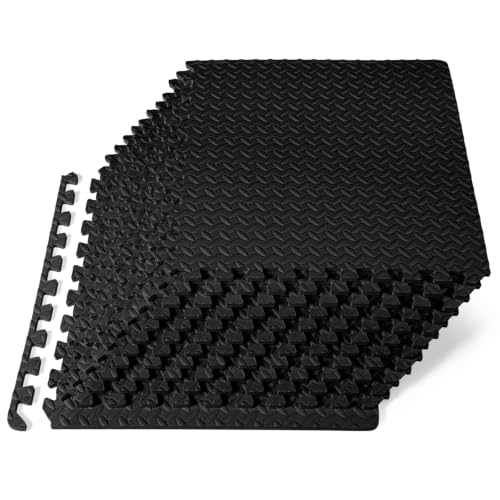


As an Amazon Associate we earn from qualifying purchases at no extra cost to you. Ratings are shown as listed on Amazon.
Quick comparison: which rubber mat specification fits your workout?
| Mat type | Typical thickness | Typical size | Best use | Main limitation |
|---|---|---|---|---|
| Rubber equipment mat | 6–10 mm | 3 x 4 ft to 4 x 6 ft | Treadmills, bikes, benches, compact home gyms | Limited protection from dropped weights |
| Interlocking rubber tile | 8–15 mm | 2 x 2 ft or 3 x 3 ft | Modular workout areas and rented homes | Seams can separate or collect dust |
| Rubber roll | 8–19 mm | Typically 4 ft wide, custom length | Full-room strength areas and frequent training | Heavy, difficult to carry and position |
| Heavy-duty lifting tile | 19–30 mm | 2 x 2 ft or 3 x 3 ft | Barbell drops, racks, deadlifts, high-impact training | More expensive and may require a transition ramp |
| Thin rubber exercise mat | 3–6 mm | About 2 x 6 ft | Stretching, bodyweight exercise, mobility work | Not intended for heavy equipment or dropped weights |
Thickness: the specification that matters most
Choose 3–6 mm for floor contact, not impact protection
Thin rubber mats are suitable beneath a yoga area, adjustable bench, resistance-training station, or exercise bike. They help prevent minor scuffs and provide a more stable surface than carpet, but they do little to absorb the force of a dumbbell or barbell landing.
Choose 8–12 mm for most home gyms
This is the practical range for dumbbells, kettlebells, resistance machines, benches, and controlled barbell work. An 8 mm mat can protect hard flooring from normal equipment movement, while 10–12 mm provides a larger margin for vibration, repeated loading, and imperfect lifting technique.
Choose 19 mm or more for impact and heavy loads
Thick lifting tiles are preferable beneath a power rack, platform, or deadlift area. They reduce transmitted vibration more effectively than thin mats and are less likely to compress permanently under concentrated feet or rack posts. They still cannot guarantee protection from every dropped weight: the subfloor, load, plate type, and landing surface also matter.
For especially heavy training, use a properly supported lifting platform or dedicated impact tiles rather than assuming a single soft mat can replace structural protection.
Decision matrix: the best mat by home-workout situation
| Your situation | Recommended choice | Why |
|---|---|---|
| Occasional workouts, limited budget | 8 mm interlocking tiles | Affordable coverage with reasonable equipment and floor protection |
| Daily training with a bench, dumbbells, and machines | 10–12 mm rubber roll or dense tiles | Fewer seams and better resistance to repeated compression |
| Apartment or upstairs room | 12–19 mm dense rubber, with impact-control habits | Helps reduce vibration, though it will not eliminate impact noise |
| Power rack and regular deadlifting | 19–30 mm heavy-duty tiles or a lifting platform | Better load distribution and impact resistance |
| Rented home or temporary setup | Interlocking tiles with loose-laid perimeter pieces | Easier to remove than glued rolls |
| Small room requiring frequent storage | Individual equipment mats or lightweight tiles | More practical to lift and store than a full rubber roll |
Odor: why some rubber mats smell stronger
New rubber often has a noticeable odor caused by manufacturing residues and volatile compounds released after packaging. The smell is usually strongest when a dense mat is unrolled in a warm, poorly ventilated room.
Before buying, look for a product described as low-odor, non-porous, and intended for indoor fitness use. Recycled tire rubber is often durable and economical but can have a stronger initial smell than virgin rubber or rubber-blend surfaces. “Non-toxic” marketing language is not a substitute for checking the manufacturer’s material and indoor-use information.
To reduce odor, unroll the mat outdoors or in a ventilated garage if possible, wipe it with diluted mild detergent, rinse lightly, and allow it to air out fully before installation. Do not saturate a roll that cannot drain or dry quickly. If a strong odor remains after several days of ventilation and cleaning, return or replace the product rather than placing it in a poorly ventilated bedroom or office.
Shock and noise absorption: rubber has limits
Rubber reduces vibration and cushions contact, but it does not make a home gym silent. A 10 mm mat can soften the sound of a dumbbell being set down; it is not designed to absorb the full impact of a loaded barbell dropped from height.
Noise also travels through walls, joists, and rigid equipment frames. For an upstairs room, combine a dense rubber surface with:
- Controlled lowering instead of dropping weights.
- Rubber-coated or bumper plates where appropriate.
- A thick impact zone beneath the lifting area.
- Equipment feet that sit completely on the mat.
- Avoidance of early-morning or late-night high-impact sessions.
Soft foam alone is usually a poor substitute for dense rubber beneath heavy equipment. It can compress, tear, and allow a rack to rock.
Floor protection and material compatibility
Rubber can protect concrete from scratches and minor impact, but some rubber products can stain vinyl, unfinished wood, painted floors, or certain coatings through dye transfer or plasticizer migration. This risk varies by material, age, heat, moisture, and the finish on the floor.
Check the mat’s compatibility statement before placing it on finished flooring. On a valuable or vulnerable surface, test a small concealed area first. A thin polyethylene vapor barrier may be useful in some situations, but it can also allow moisture to become trapped. Do not cover damp concrete or install over a floor with an existing moisture problem.
For concrete, inspect for cracks, dust, and dampness. For wood or laminate, verify that the floor is level and that the mat will not trap moisture. Heavy racks should sit on a firm, stable base rather than on a deeply compressible surface.
Edge fit, seams, and installation requirements
Interlocking tiles
Interlocking tiles are the easiest option for most temporary home gyms. Measure the area, plan the direction of the teeth, and assemble the center before trimming the outside edge. A 12 ft by 10 ft room requires 120 square feet of coverage. With a 5% allowance for cuts and mistakes, buy at least 126 square feet.
Tiles should meet tightly without raised lips. Heavy equipment can hold the field in place, but loose perimeter tiles may shift if the floor is uneven. Edge or border pieces create a cleaner finish and reduce trip hazards.
Rubber rolls
Rolls produce fewer seams and a more professional surface, but they are heavy and awkward. Allow the roll to relax flat before final positioning, particularly if it arrived tightly wound. Two people are often needed for a wide roll. Trim only after the material has settled and the room’s temperature is stable.
Adhesive installation is generally unnecessary for a normal home gym and makes future removal difficult. It may be appropriate in a permanent commercial-style installation, but follow the flooring and adhesive manufacturer’s instructions because some adhesives are incompatible with rubber or sealed subfloors.
Cleaning and ownership: what wears first?
Rubber mats are durable, but the first problems usually occur at edges, seams, high-traffic turning points, and areas under sharp equipment feet. Repeated dragging can tear corners. Concentrated rack loads can create permanent compression. Sweat, chalk, and dust can make a textured surface slippery or unpleasant if they are allowed to accumulate.
For routine care:
- Vacuum or sweep loose grit before mopping.
- Use warm water and a small amount of mild, pH-neutral detergent.
- Use a soft brush for textured surfaces, not an aggressive wire brush.
- Rinse away detergent residue and dry the surface completely.
- Lift equipment periodically to inspect trapped moisture and dust.
- Do not use petroleum solvents, bleach, or harsh degreasers unless the manufacturer permits them.
Avoid steam cleaning unless specifically approved. Heat and moisture can affect adhesives, seams, and sensitive subfloors. If the mat develops a persistent oily film, cracking, strong odor, or lifting edges, stop using the affected area until the material and floor have been assessed.
Our buying recommendation
For most home workouts, choose dense 10–12 mm rubber tiles or a rubber roll with a documented indoor-use specification. Select 19–30 mm heavy-duty tiles for regular deadlifts, rack work, or repeated impact. Choose thinner 3–6 mm mats only when your main goals are surface cleanliness, grip, and protection from light equipment.
Before ordering, confirm the actual thickness, tile or roll dimensions, total coverage, material composition, odor guidance, edge pieces, cleaning instructions, and whether the product can be laid over your particular floor. The cheapest mat is not the best value if it needs replacing after one season or leaves a permanent mark underneath.
Frequently asked questions
Are puzzle mats good for heavy weights?
They can be, but only when they are dense rubber and thick enough for the load. Lightweight foam puzzle mats are better for bodyweight exercise than for a rack or dropped weights.
How thick should a treadmill mat be?
About 6–10 mm is usually sufficient for floor protection and vibration reduction when the treadmill is stable and used normally. Check the equipment manufacturer’s clearance and ventilation requirements.
Should rubber gym mats be glued down?
Usually not in a home gym. Loose-laid tiles and rolls are easier to inspect, clean, and remove. Glue is a permanent-installation decision and should be made only after confirming compatibility with the subfloor.






Write Your Review
No reviews yet. Be the first to share your experience!