

Key takeaways
- Inversion chairs tilt you only part of the way back while you stay seated, while inversion tables let you lie flat and rotate toward fully upside down.
Inversion chairs tilt you only part of the way back while you stay seated, while inversion tables let you lie flat and rotate toward fully upside down. Chairs suit people who want a gentler, more controlled angle and easier getting in and out, and tables suit those who want a larger range of tilt and are comfortable with a more active setup.
This comparison is for shoppers who have already decided inversion equipment is worth considering and are choosing between the two formats. It is general information, not medical advice. Anyone with a back, neck, eye, heart or blood pressure condition, or who is pregnant, should talk with a doctor or physical therapist before using either type, because tilting the body has real physiological effects.
How Each Format Works
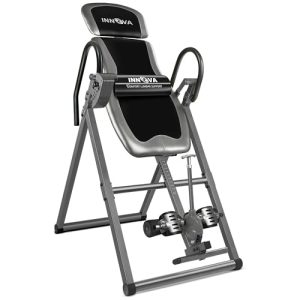
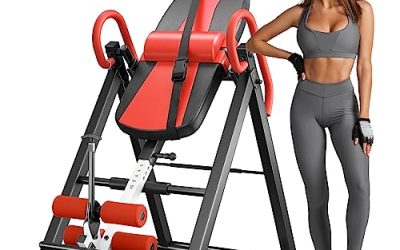
An inversion table is a frame with a padded bed, ankle clamps and a pivot. You lie on the bed, secure your ankles and shift your weight so the bed rotates backward around the pivot. Many tables let you set a stop for the angle, and the rotation depends on how you position your arms and where the pivot sits relative to your height. The experience is close to lying on a seesaw.
An inversion chair looks more like a recliner with a footrest. You sit in it, secure your ankles and lean back, and the chair rotates on a pivot, often reaching a moderate partial angle. Because the seat supports your hips and torso, the motion feels more like reclining than flipping. Some designs focus on the seated position to feel less intimidating, and they may be easier for people who dislike the idea of lying on a bed that flips.
Practical Differences That Matter
Angle Range and Control
Tables typically offer a wider range of angles, from a slight tilt up to a full vertical position if the user wants it. Chairs often emphasize partial angles and may limit the maximum. If you are new to inversion and prefer to start gently, a chair’s limited range can feel safer. If you want to progress to larger angles over time, a table gives more headroom, provided you build up slowly and your doctor approves.
Getting In, Out and Back Up
Entering a table means standing, clamping the ankles and then lying back, and returning to upright requires you to use your arms or a handle to rotate the bed. People with limited mobility, weak grip or balance issues may struggle. A chair lets you sit down first and lean back, which is easier for many users, though you still need to secure your ankles. In both cases, a practice run with a helper nearby is wise.
Space, Storage and Setup
Tables often fold, and several models are designed to tuck away, although a folded table is still a bulky item. Chairs are generally less compact and function as a permanent piece of furniture. Measure the room: you need clearance for the frame to rotate, including overhead space if the user will tilt to a steep angle. Also check that the floor is level, since an uneven surface changes how the equipment pivots.
Height, Weight and Adjustability
Both types have height and weight limits, and exceeding them can compromise stability. Look for a clearly listed maximum user weight and a height range, and compare it with your measurements. The pivot point should be adjustable so the device balances to your body, since a poor setting makes the rotation too jerky or too hard to control. Ankle holders should be padded, and their adjustments should be easy to operate while lying back.
Side by Side Comparison
| Factor | Inversion Chair | Inversion Table |
|---|---|---|
| Body position | Seated, reclined backward | Lying flat, rotating on a bed |
| Typical angle range | Moderate, often partial | Wide, from mild to near vertical |
| Ease of getting in | Often easier for limited mobility | Requires standing, then lying back |
| Feeling of control | Familiar, recliner-like | Active, requires balance practice |
| Storage | Bulky, often stays in place | Frequently foldable |
| Progression over time | Limited by design | Greater range available |
| Best for | Cautious beginners | Users wanting more tilt options |
Who Should Lean Which Way
A chair fits someone who is nervous about being upside down, who has mobility concerns that make lying down and rolling back awkward, or who wants a dedicated relaxation spot. A table fits someone who has already used inversion, wants a broader range of angles and has the space and agility to manage the setup. Neither format is suited to everyone, and some people with certain health conditions should avoid inversion altogether.
Consider who else will use the equipment. A shared household needs a pivot that adjusts quickly and clamps that fit different ankle sizes. If one user is much taller or heavier than another, make sure both fall within the listed limits. In 2026, many manufacturers publish detailed size charts, so use them rather than guessing.
Before You Buy Checklist
- Talk with a doctor or physical therapist about whether inversion is suitable for you.
- Compare your height and weight with the listed user limits.
- Measure the room, including ceiling clearance for rotation.
- Choose padded, easy-to-adjust ankle holders.
- Look for an adjustable angle stop or strap to limit the tilt.
- Check that the frame is stable on your floor and does not rock.
- Plan a trial session with a helper nearby.
- Read the assembly instructions and warranty terms.
Common Mistakes
New users often start at too steep an angle or stay in position too long. Gradual use, with short sessions, lets the body adjust, and a professional can advise on a schedule. Another mistake is buying based on price without checking the weight limit or pivot adjustability, which can make setup frustrating. Skipping the assembly instructions is also common, and loose bolts or poorly secured parts raise the risk of a fall. Finally, buyers sometimes choose a table for its range and then find it too intimidating to use regularly, defeating the purpose.
Related guides
- How To Use An Inversion Table For Beginners Angle Time And Safety
- How Often To Use A Massage Gun Duration And Recovery Guide
- Inversion Tables For Seniors With Limited Mobility
Frequently Asked Questions
Is an inversion chair safer than an inversion table?
Chairs usually limit the angle and are easier to enter, which many users find less intimidating. That does not make either option safe for everyone, and anyone with health concerns should consult a doctor. Following the manufacturer’s weight and use instructions matters for both.
Which is easier for beginners?
Many beginners find a chair easier because it feels like a recliner and has a more limited range. A table can be fine with practice, a gradual tilt and a helper. Start with small angles and short sessions either way.
Do inversion tables take more space than chairs?
Not necessarily. Tables often fold, though the folded frame can be bulky. Chairs usually do not fold and occupy floor space permanently. Check dimensions for both open and stored positions.
Can both types be adjusted for different heights?
Most models include a height adjustment, often at the pivot or ankle holders, but ranges vary. Compare your height with the listed range, and make sure each person in the household falls within it.
More from Amazon
Programs that pair well with the guide above. Offers and eligibility are set by Amazon and may change.
Collect the home and kitchen items you want in one registry that guests can shop from.
Create a wedding registrySet up recurring deliveries of everyday items on eligible products. Terms and savings are set by Amazon.
Explore Subscribe & SaveFree shipping on eligible items, Prime Video and more. Eligible new members can start with a free trial.
Start a Prime free trialAudiobooks and podcasts to listen to on the go. Eligible new members can start with a free trial.
Try Audible freeAs an Amazon Associate we earn from qualifying purchases.

Write Your Review
No reviews yet. Be the first to share your experience!