

Key takeaways
- Compare the best eye drop guides on bottle fit, lid support, squeeze help and cleaning to land every drop in the eye instead of on your cheek.
As an Amazon Associate we earn from qualifying purchases.
The real decision with an eye drop guide is not which plastic gadget looks cleverest; it is which part of the routine defeats you today. Some people aim well but blink the moment the bottle hovers into view. Others hold a bottle steady yet cannot summon the pinch strength to release a single drop. A guide that solves the wrong problem simply adds a step, so the honest first move is naming your own failure point before choosing a shape.
This roundup serves older adults managing daily drops at home, people recovering from eye surgery who must dose on a schedule, and anyone whose hands shake, stiffen, or tire partway through the routine. Every pick below was chosen from the names and specifications published on its Amazon product page, then matched to a distinct barrier: aiming, blinking, squeezing, bottle shape, or cleaning.
Quick Picks
Disclosure: This article contains affiliate links. If you buy through these links, we may earn a commission at no extra cost to you.
| Product | Best for | Key spec from title |
|---|---|---|
| Remedic Eye Drop Guide with Silicone Adapter | Most standard round and oval bottles | Soft silicone ring adapts to most standard bottles |
| EziDrops Eye Drop Dispenser for Wide/Flat Head Bottles | Wide or flat-head bottles | Designed so you do not see the drop coming |
| Autodrop Eye Drop Guide by Ableware | Keeping the lower lid held down | Pinhole directs your gaze upward and away |
| Autosqueeze Eye Drop Bottle Squeezer by SP Ableware | Weak pinch strength | Winged grips add leverage around the bottle neck |
| GentleDrop Eye Drop Guide | Tremor steadying on the nose bridge | Silicone sleeve rests on the bridge of the nose |
How to Choose
Match the Guide to the Step That Fails
Watch yourself take a normal dose and note the exact moment things go wrong. If the bottle wanders off target, you need positioning help from a cup, sleeve, or nose-bridge rest. When the drop never leaves the bottle because your fingers give out, only a squeeze aid changes anything. If blinking ruins an otherwise steady attempt, look for a design that hides the approaching drop or occupies your gaze elsewhere. Buying for the wrong failure is the most common reason these small tools end up abandoned in a drawer.
Check Your Actual Bottle Before Anything Else
Guides are built around bottle geometry, and bottles vary more than their labels suggest. Measure the bottle you use now: its capacity, whether the head is a narrow nozzle or a wide flat top, and whether the body is round, oval, or an unusual prescription shape. Several guides in this roundup publish firm exclusions, such as small glaucoma bottles, glass bottles, or single-use vials. A guide that fits a spare artificial-tears bottle but not your daily prescription bottle is useless, so confirm fit against the medication container that matters most.
Decide How the Guide Meets Your Face
Each design touches you differently, and comfort decides whether you will use it twice a day for months. A cup-style guide sits around the eye and can hold the lower lid down, which suits blinkers but feels enclosing to some people. A nose-bridge sleeve never covers the eye at all, anchoring the bottle from the side instead. A finger-free squeeze frame never approaches your face; it only wraps the bottle. Think about glasses, sensitive skin, and how still you can hold your head before preferring one contact style.
Plan the Cleaning Routine Up Front
Anything that sits beside your eye, dose after dose, collects skin oil, bathroom dust, and stray medication. Silicone guides tolerate soap, warm water, and in the Remedic case even a short boil, which makes them forgiving for daily rinsing. Hard plastic clip-on guides wipe clean quickly but hide residue in their hinges and pinholes if you never look closely. Pick a material whose washing routine you will actually follow, keep the guide stored somewhere cleaner than an open countertop, and replace the habit of rinsing it only when it looks dirty.
The 5 Best Options
Remedic Eye Drop Guide with Silicone Adapter

Remedic takes the flexible route: a soft silicone ring stretches over the bottle opening, so one guide adapts across the round and oval bottles most households already own. The funnel shape holds the lower eyelid open while keeping the bottle tip at a fixed distance, which removes both the aiming guesswork and the fear of touching the eye. Because the whole piece is soft, it packs flat beside a medication bottle and survives being dropped, sat on, or boiled clean without cracking.
Specs
- Item model number EDA02
- Product dimensions 5.33 x 4.32 x 8.89 cm; 23 g
- Soft silicone ring adapts to most standard round and oval bottles
- BPA-free, non-toxic material
- Cleaning by rinsing or sanitizing in boiling water
- Designed for one-handed application
Best for: Households juggling several standard bottles that change brand or shape from month to month.
Watch out for: Confirm your bottle is a standard round or oval shape first; unusual prescription containers may not seat securely in the ring.
ASIN: B08B632R4Y
EziDrops Eye Drop Dispenser for Wide/Flat Head Bottles

EziDrops attacks the blink reflex rather than the aim. Its applicator is shaped so the drop falls without you watching it approach, which removes the visual trigger that makes many people flinch at the last second. This wide-head version exists for a specific frustration: bottles with broad, flat tops that refuse to fit nozzle-style guides. The piece is small, washable, and light enough to live in a travel wash bag, and it asks nothing of your grip beyond holding the bottle you already know.
Specs
- Item model number EziDrops Eye Drop Applicator V2 WideHead
- Fits wide and flat-head eye drop bottles only
- Designed to stop the involuntary blink reflex
- Reusable and washable construction
- Lightweight, portable applicator for all ages
Best for: People whose drops fail because they blink, and whose bottles carry wide or flat heads.
Watch out for: This version does not fit standard nozzle-head bottles; EziDrops sells a separate nozzle-head variant, so check your bottle top before ordering.
ASIN: B0CQ31V2YH
Autodrop Eye Drop Guide by Ableware

The Autodrop is the long-running clip-on design from Ableware, built around two simple ideas. A small lip catches the lower eyelid and holds it down, while a pinhole in the cup gives your eye a target to look up at, away from the descending drop. It clips onto the bottle and angles it for you, so the hand only has to squeeze. There are no soft parts to stretch or wear, and the rigid cup keeps its shape through years of twice-daily use.
Specs
- Manufacturer Ableware; model number 61313
- Listed dimensions 8 x 7 x 5 inches; weight 0.634 ounces
- Clips onto compatible eye drop bottles
- Pinhole directs eyesight upward and away from the drops
- Lower-lid lip holds the eyelid open during application
Best for: Blinkers with standard bottles who want a rigid, clip-on guide that also manages the eyelid.
Watch out for: The listing warns it does not work with small glaucoma bottles, so measure a small prescription bottle before relying on it.
ASIN: B07BHXMW13
Autosqueeze Eye Drop Bottle Squeezer by SP Ableware
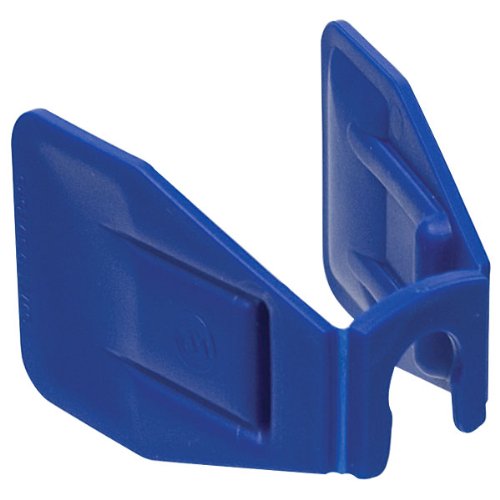
Autosqueeze ignores aiming entirely and fixes the other half of the problem: force. The frame fits around the bottle neck and presents two broad wings, turning a fingertip pinch into a whole-hand press that releases a drop with far less effort. That makes it the natural partner for arthritic or post-stroke hands, and it can work alongside a separate guide such as the Autodrop when both squeezing and aiming are hard. It adds bulk to the bottle, though, so it suits a bathroom-shelf routine better than a pocket.
Specs
- Product type: eye drop bottle squeezer, model 786770050
- Fits around the bottle neck and adds leverage through winged grips
- Designed for limited hand strength and arthritis
- Bottle cap must be removed before use
- Can be used with the Ableware Eye Drop Guide 78677-0000
Best for: Anyone who can aim a bottle but cannot squeeze out a drop without strain or a second hand.
Watch out for: Fit is not guaranteed across every bottle size, and it offers no aiming or blink help on its own.
ASIN: B00I5PVCBI
GentleDrop Eye Drop Guide

GentleDrop replaces hand steadiness with a physical anchor: its soft silicone sleeve slips over the bottle, then rests on the bridge of your nose, so small tremors move the whole head-and-bottle unit together instead of scattering the drop. It was invented by ophthalmologists, keeps the bottle tip from ever contacting the eye, and squeezes from the bottom edge of the sleeve. The trade-off is a strict compatibility list, because the sleeve must grip the bottle body closely to hold that anchored position.
Specs
- Medical-grade silicone sleeve; BPA-free
- Rests on the bridge of the nose to steady aim
- Fits 5, 10, and 15 ml traditionally shaped cylindrical bottles
- Also fits oblong 2.5 ml bottles
- Washable and reusable; does not cover the eye
Best for: People with tremor or low vision who want the bottle physically anchored rather than hovered.
Watch out for: It does not fit traditional 2.5 ml bottles, glass bottles, or several named brands, so read the exclusion list against your exact bottle.
ASIN: B0BQBHRKV1
Which One Fits Your Situation
You Blink Every Time the Bottle Appears
Choose between the EziDrops wide-head applicator and the Autodrop, based on your bottle. EziDrops hides the falling drop from view entirely, while the Autodrop gives your gaze a pinhole target and holds the lower lid down with its lip. Either approach breaks the flinch cycle; the deciding factor is whether your bottle has a wide flat head or a standard body that a rigid cup can clip onto.
Your Hands Cannot Squeeze the Bottle
Start with the Autosqueeze frame, because no aiming guide releases a drop your fingers cannot push out. Its wings convert a weak pinch into a broader press. If aiming also troubles you once squeezing improves, pair it with the Autodrop guide, which the Autosqueeze listing notes it can accompany. Solve strength first; accuracy aids only matter once a drop reliably leaves the bottle on the first attempt.
You Juggle Several Different Bottles
The Remedic guide earns its place when a household rotates between artificial tears, allergy drops, and a prescription bottle of a different shape. Its silicone ring adapts across standard round and oval bodies, and it boils clean between users or bottles. Keep one beside each daily bottle if shapes differ widely, and test the fit on the prescription bottle first, since that dose is the one that cannot be wasted.
Your Hands Shake or Your Vision Is Poor
Anchor the bottle instead of hovering it. GentleDrop rests on the bridge of the nose, turning head and bottle into one steady unit, and its sleeve keeps the tip off the eye even when positioning is approximate. Confirm the bottle against its published fit list first. Where a bottle falls outside that list, the Remedic ring on a standard bottle is the gentler fallback for unsteady hands.
Common Mistakes
- Buying a guide for aiming when the real problem is squeeze strength, or the reverse; watch one full dose and name the failing step first.
- Assuming a guide fits because the bottle capacity matches, while ignoring head shape, shoulder width, and the published exclusion list.
- Letting the bottle tip touch the eye, lashes, or the guide itself, which contaminates the medication for every later dose.
- Leaving a reusable guide unwashed on an open counter for weeks, then pressing it against freshly dosed eyes.
- Forcing a bottle into a clip or sleeve that resists, cracking the guide or loosening the bottle cap seal.
Frequently Asked Questions
Will an eye drop guide fit my prescription bottle?
Sometimes, and the only reliable answer comes from your bottle’s shape and size rather than its brand name. Compare its capacity, head style, and body shape against the guide’s stated fit and exclusion lists. Small glaucoma bottles and single-use vials are the most common misfits, so check those containers first before ordering any guide.
Can I use a squeeze aid and a guide together?
Yes, when both problems exist. A squeeze frame such as Autosqueeze supplies the force, while a clip-on guide handles aim and eyelid position; the Autosqueeze listing itself notes it works in conjunction with the Ableware eye drop guide. Fit both pieces on your bottle at home first and practise with artificial tears before using prescription medication.
How do I clean an eye drop guide?
Follow the material. Silicone sleeves and rings wash with mild soap and warm water, and the Remedic guide can also be sanitized in boiling water for a few minutes. Rigid plastic guides need a wipe and a check of hinges and pinholes where residue collects. Let everything dry fully before storing it away from bathroom dust.
What if drops still miss with a guide fitted?
Slow the routine down and change one variable at a time: sit rather than stand, rest the bottle hand against your forehead or the guide against your face as designed, and look where the guide directs your gaze. If misses continue, show your pharmacist or eye clinician your exact bottle and guide together; the pairing, not your technique, may simply be wrong.
More from Amazon
Programs that pair well with the guide above. Offers and eligibility are set by Amazon and may change.
Collect the home and kitchen items you want in one registry that guests can shop from.
Create a wedding registrySet up recurring deliveries of everyday items on eligible products. Terms and savings are set by Amazon.
Explore Subscribe & SaveFree shipping on eligible items, Prime Video and more. Eligible new members can start with a free trial.
Start a Prime free trialAudiobooks and podcasts to listen to on the go. Eligible new members can start with a free trial.
Try Audible freeAs an Amazon Associate we earn from qualifying purchases.
Write Your Review
No reviews yet. Be the first to share your experience!