

Key takeaways
- Compare five hamstring stretchers for home use, from the IdealStretch frame device to loop straps and a padded foot cradle, with lengths and loops.
Tight hamstrings make everyday movement feel short and stiff. Bending to tie a shoe or standing up after a long sit asks the backs of the thighs to lengthen, and when they will not, the lower back often takes over the job. A dedicated hamstring stretcher gives the leg a fixed point to work against, so the stretch comes from the muscle itself rather than the spine.
This guide covers tools built around the hamstring: frame devices that hold the leg in a knee-extension position, foot-cradle straps that anchor the foot while you pull, and long loop straps sized for lying hamstring work. That focus sets it apart from the full leg-stretching machines on this site, which drive a wide split, from the slant boards here, which target the calves, and from the general stretching-straps guide, which covers straps for the whole body. This guide is general buying information, not medical advice. A hamstring stretcher is a wellness product, not a medical device, and it does not diagnose or treat any condition. If pain is severe, sudden, or comes with numbness, weakness, or pain running down a leg, talk to a clinician before starting any stretching routine.
As an Amazon Associate, we earn from qualifying purchases.
Quick Answer
For most tight hamstrings, the IdealStretch Original is the pick: a steel-frame device that holds the leg for a controlled knee-extension stretch, with an instruction card included. The Zakdbbry device is the runner-up for guided positioning, the Comness foot cradle is the budget pick, the Acozycoo strap is the longest loop strap here, and the DMoose strap is the most padded pick.
How to Choose a Hamstring Stretcher
Frame device or strap
The first choice is the format. A frame device such as the IdealStretch or Zakdbbry pick holds the leg in position with a rigid rail and a foot support, so the stretch is guided and repeatable without arm strength doing the work. A strap puts you in charge: you loop it around the foot and pull, which is lighter, cheaper, and easier to pack, but it asks more of your grip and your attention to form. If a stiff back makes it hard to reach the foot at all, a frame device earns its place. If you already stretch on the floor, a strap is enough.
Length and loop count
For straps, length decides what you can reach. An 86-inch strap reaches the foot from a lying position for most adults, while a 52-inch strap suits seated work and packs smaller. Loop count is the tracking tool: ten numbered loops, as on the Acozycoo pick, let you move one loop closer as flexibility improves and return to that depth next session. A foot-cradle strap trades loop count for a shaped hold that keeps the ankle comfortable during a long hold.
Non-elastic webbing and a secure foot hold
A hamstring strap should not stretch. Non-elastic woven nylon or polyester webbing holds its length under tension, so the position you set is the position you hold. An elastic band rebounds, which makes a held stretch harder to control. The foot hold matters just as much: a cradle or padded loop spreads pressure across the arch and heel, while a thin strap can dig in during a long hold. Check the stitching at every loop before each session, and retire a strap that frays or slips.
Guidance and fit
A device is only useful if you know how to set it up. The IdealStretch and DMoose picks include an instruction card or exercise guide, which helps a beginner place the leg correctly instead of guessing. On a frame device, check the published size and the maximum weight recommendation before buying. On a strap, check the width: a strap around an inch and a half wide spreads pressure across the foot and hand, while a narrower strap can dig in.
Safety and the recall record
No federal recall covers hamstring stretchers as a class, and none of the five picks here appears in any recall notice. The closest records in search results are hospital transport stretchers and patient lifts, which are wheeled medical equipment, not home stretching tools. Before each session, check the frame joints and locking pins on a device and the stitching on a strap, and keep the pull gentle: a stretch should feel steady, never sharp.
The 5 Best Hamstring Stretchers
1. IdealStretch Original — Best Overall
The IdealStretch Original is the default pick because it is the only dedicated frame device here built around the hamstring from the outset. A steel frame holds the leg for a knee-extension stretch while the foot rests in the device, so the hamstring lengthens without the lower back bending forward. The maker frames it for athletes, seniors, and recovery work, and the included instruction card shows leg positions for hamstrings, calves, hips, and the lower back. At 16 inches long and just over two pounds, it stores on a shelf and needs no partner.
Specs
– Frame: Alloy steel per IdealStretch
– Size: 16 x 8 x 7 inches per IdealStretch
– Weight: 2.29 pounds per IdealStretch
– Max weight recommendation: 220 pounds per IdealStretch
– Guide: Instruction card included per IdealStretch
– Tier: Premium
Choose it for the most guided hamstring stretch here. Skip it if the premium tier is more than the budget allows.
2. Zakdbbry Adjustable Hamstring Stretcher — Best Adjustable

The Zakdbbry device is the adjustable pick, and its sliding rail is the reason to choose it. The rail changes the length of the device, so one frame fits different leg lengths and stretch depths, and locking pins hold the setting while you stretch. The stainless steel frame carries a maximum weight recommendation of 300 pounds, the highest here, with a one-year warranty from the maker. Like the IdealStretch, it treats the hamstring stretch as a knee-extension movement, and the same device also stretches the calves, hips, and lower back.
Specs
– Material: Stainless steel per Zakdbbry
– Design: Adjustable length with sliding rail and locking pins per Zakdbbry
– Max weight recommendation: 300 pounds per Zakdbbry
– Package size: 15.8 x 11.5 x 7.25 inches per Zakdbbry
– Warranty: 1 year per Zakdbbry
– Tier: Mid-range
Choose it for adjustable length and the highest weight recommendation here. Skip it if you want the longest track record, which belongs to the IdealStretch pick.
3. Comness Foot and Calf Stretcher, Black — Best Budget
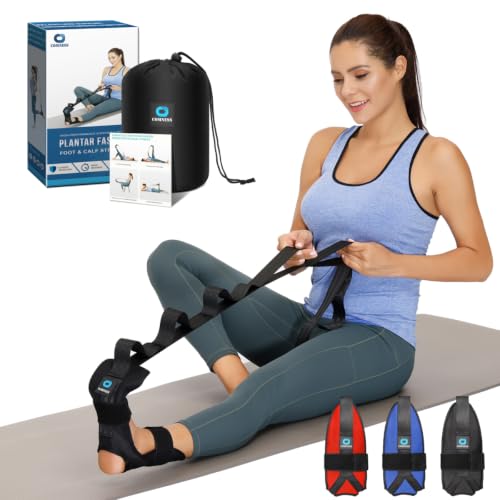
The Comness stretcher is the budget pick, earning its spot with a foot cradle rather than a plain strap. The foot sits in a shaped cradle with padded neoprene handles, so the pull goes through the arch and heel without the webbing digging in, and six loops along the strap give several grip positions for adjusting the depth. The listing frames it for the foot, calf, and hamstring together, and a carrying pouch is included, so it packs small for a trip. The black colorway is the listing this pick refers to.
Specs
– Loops: 6 loops per Comness
– Design: Foot cradle with padded neoprene handles per Comness
– Material: Cotton, neoprene, nylon and polyester per Comness
– Carry: Carrying pouch included per Comness
– Colorway: Black per Comness
– Tier: Budget
Choose it for the lowest tier here with a comfortable cradled foot hold. Skip it if you want a long strap for lying stretches, and take the Acozycoo pick instead.
4. Acozycoo Stretching Strap with 10 Loops, Blue — Best Long Strap
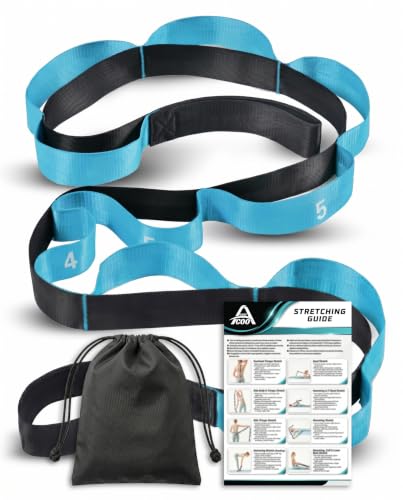
The Acozycoo strap is the longest loop strap here. At 86 inches with ten numbered loops, it reaches the foot from a lying position for most adults. The numbered loops are the tracking tool: move one loop closer as flexibility improves. The non-elastic nylon strap is an inch and a half wide, so it holds its length under tension and spreads pressure across the foot and hand. The blue colorway is the listing this pick refers to.
Specs
– Length: 86 inches per Acozycoo
– Width: 1.5 inches per Acozycoo
– Loops: 10 numbered loops per Acozycoo
– Material: Non-elastic nylon per Acozycoo
– Colorway: Blue per Acozycoo
– Tier: Budget
Choose it for the longest reach and the clearest progress tracking here. Skip it if you want a rigid frame that holds the leg for you, and take one of the two device picks instead.
5. DMoose Fitness Foot and Calf Stretcher — Best Padded
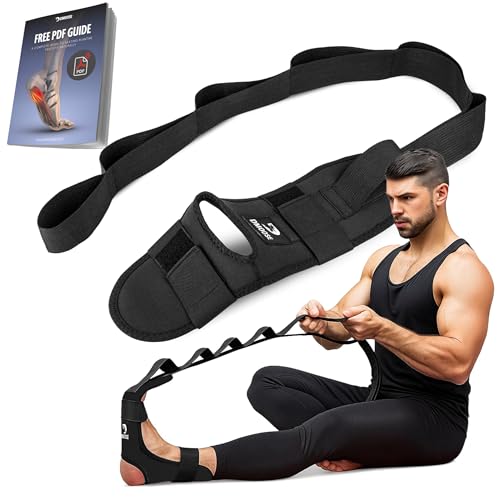
The DMoose stretcher is the most padded pick here. Eight millimeters of neoprene padding cushion the foot and the hands, and seven loops along a 52-inch strap give several grip positions for calf, hamstring, and foot work. Hook-and-loop closures adjust the fit around the foot, and an exercise e-guide is included. The shorter length packs smaller than the Acozycoo strap, though taller users who stretch from the floor should take the longer Acozycoo pick instead.
Specs
– Length: 52 inches per DMoose Fitness
– Width: 2 inches per DMoose Fitness
– Loops: 7 loops per DMoose Fitness
– Padding: 8 mm neoprene padding per DMoose Fitness
– Guide: Exercise e-guide included per DMoose Fitness
– Tier: Mid-range
Choose it for the most comfortable grip during long holds. Skip it if you need a long reach for lying stretches, and take the Acozycoo pick instead.
Who Should Skip These Hamstring Stretchers
Skip a hamstring stretcher entirely if pain is severe, sudden, or comes with numbness, weakness, or pain running down a leg; see a clinician first. Skip the frame devices if floor space or storage is tight, and take a strap pick instead. Skip any strap whose stitching frays, skip a device whose locking pins do not hold, and skip aggressive pulling: a stretch should feel like a gentle pull, never a sharp pain.
Frequently Asked Questions
How is a hamstring stretcher different from a leg stretching machine?
A hamstring stretcher works on one leg at a time in a knee-extension position, with the goal of lengthening the back of the thigh. A leg stretching machine drives both legs into a wide split, a different movement aimed at the inner thighs and hips. The two tools overlap on flexibility, but they do not do the same stretch.
How long should I hold a hamstring stretch?
Hold each stretch for about 20 to 30 seconds, breathe normally, and repeat two or three times per side. A gentle, steady pull beats a hard, short one, and the leg should stay relaxed while the tool holds the position.
Are frame devices better than straps for tight hamstrings?
Frame devices are better when reaching the foot is hard, because the frame holds the leg in position without arm strength doing the work. Straps are better when you want a light, packable tool and already stretch on the floor. Both formats work when the pull stays gentle and the position is held steadily.
Can I use a hamstring stretcher every day?
Yes, daily gentle stretching is the usual guidance from makers, as long as the pull stays gentle. If a muscle feels sore the next day, rest it and stretch more lightly.
Final Verdict
Buy on format first, then on fit. Most tight hamstrings should take the IdealStretch Original for its guided steel-frame knee-extension stretch. Choose the Zakdbbry device for adjustable length and the highest weight recommendation here, the Comness cradle for the lowest tier with a comfortable foot hold, the Acozycoo strap for the longest reach with numbered loops, and the DMoose strap for the most padding.

More from Amazon
Programs that pair well with the guide above. Offers and eligibility are set by Amazon and may change.
Collect the home and kitchen items you want in one registry that guests can shop from.
Create a wedding registrySet up recurring deliveries of everyday items on eligible products. Terms and savings are set by Amazon.
Explore Subscribe & SaveFree shipping on eligible items, Prime Video and more. Eligible new members can start with a free trial.
Start a Prime free trialAudiobooks and podcasts to listen to on the go. Eligible new members can start with a free trial.
Try Audible freeAs an Amazon Associate we earn from qualifying purchases.


Write Your Review
No reviews yet. Be the first to share your experience!