

Key takeaways
- Six best hyperextension benches for back extensions compared on capacity, angle and height adjustment, folding design, and proper pad setup.
The Lifepro SculptTrainer is the most clearly specified bench on this list and our top pick for most home gyms: its listing states a 330 lb capacity, 10 height positions and a folding frame, and it covers back extensions, hip thrusts and sit-ups on one station. A hyperextension bench, often called a Roman chair, locks your feet under rollers and supports your hips on a pad so you can hinge forward and raise your torso, training the lower back, glutes and hamstrings. The other five benches below are more budget-minded or more narrowly adjustable, so each is matched to a particular buyer.
Quick List
- Multi-Function Roman Chair – best for adding crunches and core work to back extensions
- OLIXIS Roman Chair – best for lifters who want both angle and height adjustment
- VEVOR Roman Chair – best for lighter-weight home use with a stated 250 lb limit
- Lifepro SculptTrainer Roman Chair – best for the highest stated capacity and the widest exercise variety
- SIRHOME Adjustable Roman Chair – best for glute and core training in a shared household
- NEWBULIG Roman Chair – best for a foldable bench aimed at the lower back and glutes
Which One Is Right for You?
| If you… | Choose |
|---|---|
| Want a single station for back extensions, sit-ups and hip work with a 330 lb rating | Lifepro SculptTrainer Roman Chair |
| Care about changing both the pad angle and the height | OLIXIS Roman Chair |
| Are a lighter user or beginner and want a stated 250 lb limit | VEVOR Roman Chair |
| Plan to add crunches and abdominal moves | Multi-Function Roman Chair |
| Share the bench between users of different sizes | SIRHOME Adjustable Roman Chair |
| Need to fold the bench away after each session | NEWBULIG Roman Chair |
The main decision is capacity and adjustability. Check your body weight plus any plate you plan to hold against the stated limit, then think about whether you will be the only user. A bench with simple height adjustment is fine for one person; households with different leg lengths benefit from more positions and an adjustable angle.
All 6 Picks in Detail
1. Multi-Function Roman Chair – Best for adding crunches and core work to back extensions
As an Amazon Associate we earn from qualifying purchases at no extra cost to you.

This bench is described as a multi-function back extension station for the home gym, with adjustable height and angle and targets in the back, abdominals and core, plus crunches. That extra range makes it attractive if you want one piece of equipment that covers hyperextensions and core work. It suits general fitness users who plan to do bodyweight sets and want variety without buying separate stations.
- Type: Roman chair with adjustable height and angle
- Exercises named: back extensions, hip work, abdominal crunches
- Foldability: not stated in the name; confirm on listing
- Weight capacity: confirm on listing
- Frame and pad materials: confirm on listing
Fit note: set the hip pad so the top edge sits just below your hip creases, otherwise the bench will block you from hinging. If the listing does not state a weight limit, treat the bench as a bodyweight tool until you confirm one.
Who should look elsewhere: heavy lifters who want to hold plates and need a published capacity should favor a bench with a stated rating.
Setup tip: before your first set, sit on the bench and check each lock by pushing down on the frame with your hands. Everything should feel solid and equal on both sides. Bodyweight sets of back extensions, followed by slow crunches on the same station, make a simple twenty-minute routine that suits beginners who want to build a base before adding any load.
Pros:
- Adjusts for height and angle
- Covers back and core exercises
Cons:
- Load rating is not stated in the name
- Generalist design may feel less specialized
Compared with the Lifepro, it has a similar multi-exercise scope but fewer verifiable specifications.
2. OLIXIS Roman Chair – Best for lifters who want both angle and height adjustment

OLIXIS markets a roman chair with dual adjustment for angle and height, a foldable frame, and heavy-duty build, with glutes and hamstrings called out as targets. Angle adjustment lets you shift between a gentler 45-degree-style setup and steeper positions, which changes how hard the movement feels at the top. It suits intermediate trainees who want to progress without buying a heavier machine.
- Type: adjustable roman chair, angle and height
- Foldable: yes, per the listing
- Target muscles named: glutes and hamstrings, plus back
- Weight capacity: confirm on listing (heavy-duty is stated, no number visible)
- Footprint and weight: confirm on listing
Fit note: a steeper angle makes the exercise harder because you raise your torso against more gravity at the top. Start with the easiest setting, aim for a straight line from head to heels and avoid arching at the end of each rep.
Who should look elsewhere: anyone who wants a clear weight limit in the title should compare with the VEVOR or the Lifepro.
Setup tip: because the angle can be changed independently of the height, adjust height first so that the pad sits correctly, then change the angle. Changing both at once makes it hard to tell which setting made a set easier or harder, and keeping notes of your preferred numbers saves time on the next session.
Pros:
- Dual adjustment for progression
- Folds for storage
Cons:
- No weight limit shown in the name
- Adjustment levels are not enumerated
It is closer to the NEWBULIG in design, with the added emphasis on heavy-duty construction.
3. VEVOR Roman Chair – Best for lighter-weight home use with a stated 250 lb limit

The VEVOR roman chair states a 250 lb capacity, is adjustable and foldable, and is marketed for glutes, hamstrings and multi-function exercise. A published limit helps you plan: if you and the weight you hold stay under that number, it can serve as a simple, space-saving station. It suits beginners and lighter users building basic posterior-chain strength.
- Type: adjustable, foldable roman chair
- Stated capacity: 250 lb, per the listing
- Targets named: glutes, hamstrings, and general multi-function use
- Height and angle positions: confirm on listing
- Dimensions and weight: confirm on listing
Fit note: count your own body weight plus any plate against the 250 lb rating, and leave a margin. Because the rating is lower than the Lifepro’s, do not add heavy resistance without confirming the load rating applies to dynamic use.
Who should look elsewhere: larger or stronger lifters who want headroom should choose a bench with a higher stated capacity.
Setup tip: smaller capacity benches reward careful progression. Build reps first, then slow the tempo, and only then think about holding a light plate. If you notice flex in the frame or hear creaks, lower the load or stop using the bench until you have checked every bolt.
Pros:
- Capacity is clearly stated
- Foldable for small spaces
Cons:
- Lower limit than the Lifepro
- Adjustment range is not shown in the name
It sits one tier below the Lifepro in stated capacity but follows a similar foldable layout.
4. Lifepro SculptTrainer Roman Chair – Best for the highest stated capacity and the widest exercise variety
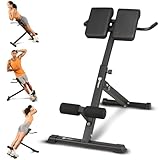
The Lifepro SculptTrainer is the best-documented bench here. Its listing mentions 20-plus exercises, a foldable design, a 330 lb capacity and 10 height settings, and it names hyperextensions, hip thrusts, sit-ups and back extensions. The manufacturer describes a powder-coated steel frame, padded rollers and a click-lock knob for height changes. It suits households that share one bench and want the most flexibility.
- Capacity: 330 lb, per the listing and manufacturer
- Height positions: 10, per the listing
- Foldable: yes
- Exercises: hyperextensions, hip thrusts, sit-ups, back extensions
- Dimensions and weight: vary between sources; confirm on the listing you buy
Fit note: set the height so the pad sits at the hip crease, then keep the movement controlled. The extra exercises, such as hip thrusts, are only as useful as your form, so learn the hinge first.
Who should look elsewhere: shoppers who want a steeper or adjustable angle should check whether the model offers one, since the name stresses height rather than angle.
Setup tip: with ten height positions, take a minute on day one to find your number and write it down. A good check is to stand beside the bench, lift one leg to the roller and check that the pad edge falls just beneath the hip bone. Re-check whenever someone else adjusts the bench.
Pros:
- Highest stated capacity in the group
- Ten height settings suit different users
Cons:
- Angle adjustment is not mentioned in the name
- Folded and unfolded sizes differ by source
Next to the VEVOR, it adds capacity and positions; against the OLIXIS, it offers fewer clear angle options.
5. SIRHOME Adjustable Roman Chair – Best for glute and core training in a shared household

The SIRHOME roman chair is described as adjustable and multifunctional for men and women, with emphasis on hips, glutes and core. A bench pitched at both sexes usually signals a broad adjustment range, which matters when people of different heights share it. It suits couples and families with a spare corner of a home gym.
- Type: adjustable roman chair
- Target areas named: hips, glutes, core
- Adjustability: described as adjustable; positions and angle: confirm on listing
- Foldable and weight capacity: confirm on listing
- Pad and roller materials: confirm on listing
Fit note: when two people share a bench, change the roller position every time so that the pad sits below your hip crease rather than at the stomach. Mark your settings with tape if the frame allows it.
Who should look elsewhere: anyone who needs a documented weight rating or a fold-flat design should compare the VEVOR, the Lifepro and the NEWBULIG.
Setup tip: shared benches get loose over time as bolts vibrate. Once a month, check the fasteners with the supplied tool, and wipe down the pads after use. Keeping a small towel across the pad can also make it more comfortable for different clothes and body shapes.
Pros:
- Broad appeal for shared use
- Focus on glutes and core
Cons:
- Few specifications visible in the name
- Capacity unknown without checking the page
It is the least documented of the group, closest in intent to the multi-function chair.
6. NEWBULIG Roman Chair – Best for a foldable bench aimed at the lower back and glutes

NEWBULIG advertises adjustable height and angle, foldability, and a design for the lower back and glutes in a home gym. It echoes the OLIXIS in features and suits people who want a straightforward bench that folds away. Lower back work is the headline use, so it is a fit for people who want to add controlled extensions to a routine.
- Type: foldable roman chair with adjustable height and angle
- Targets named: lower back and glutes
- Weight capacity: confirm on listing
- Exercises: back extensions; other uses on the product page
- Dimensions and folded size: confirm on listing
Fit note: lower back extensions should be smooth and limited to a neutral spine at the top. Stop when your body forms a straight line and do not swing, as bouncing adds stress to the spine.
Who should look elsewhere: if you need a published load rating or a long exercise list, choose the Lifepro.
Setup tip: foldable benches need a clean fold line. Before closing it, make sure the locking pins are free of dust and that the foot rollers cannot snag on the frame. Open it fully and engage every lock before putting weight on it, which is the most common place for mistakes with folding gear.
Pros:
- Height and angle adjustment
- Folding design
Cons:
- No capacity in the listing name
- Limited detail on adjustment steps
Compared with the OLIXIS, it is similar in feature set but less emphatic about heavy-duty construction.
Specs Compared
| Product | Adjustment | Foldable | Stated capacity | Exercises named |
|---|---|---|---|---|
| Multi-Function Roman Chair | Height and angle | Confirm on listing | Confirm on listing | Back extensions, crunches, hip work |
| OLIXIS Roman Chair | Height and angle (dual) | Yes | Confirm on listing | Glute and hamstring work, back extensions |
| VEVOR Roman Chair | Adjustable (steps: confirm on listing) | Yes | 250 lb | Glute, hamstring, multi-function |
| Lifepro SculptTrainer Roman Chair | 10 height positions | Yes | 330 lb | Hyperextensions, hip thrusts, sit-ups, back extensions |
| SIRHOME Adjustable Roman Chair | Adjustable (steps: confirm on listing) | Confirm on listing | Confirm on listing | Hip, glute and core work |
| NEWBULIG Roman Chair | Height and angle | Yes | Confirm on listing | Lower back and glute extensions |
How We Chose These
We began with the six roman chairs in the current catalog and read each listing name and specification field. We prioritized a stated weight capacity, adjustability in height and angle, whether the frame folds, and how well the listing describes the exercises the bench supports. Where the name omits capacity, number of positions or dimensions, we mark the item for confirmation rather than guess. We also read manufacturer pages for the better-documented models and general exercise guidance on pad height, angle and form. This is a research-based comparison, not a report of personal use.
What to Look For
Capacity and frame stability
Stated capacity typically ranges from about 250 lb to 330 lb on benches in this price class. Add your body weight and any plate you plan to hold against your chest, then leave a margin of at least 10 to 15 percent for dynamic movement. Look for a wide base, non-slip feet and a locking mechanism for height adjustments. A wobbly frame is more than annoying: it changes your bar path and can tip when you rise.
Angle and height adjustment
Many roman chairs sit at about 45 degrees, which is easier on beginners because gravity gives less resistance at the top. A flatter, more horizontal setup is harder. Height adjustment moves the hip pad and foot rollers to match your leg length; the pad should end just below your hip crease so your hips can hinge freely. If you share a bench, count the number of positions: ten steps give finer control than three.
Pads, rollers and foot placement
Dense foam pads resist compressing and keep the hip area comfortable under bodyweight sets. Rollers should hold your heels and ankles without squeezing the Achilles tendon. A foot plate or platform adds stability. If you wear slippery socks or smooth soles, use shoes with grip. Check whether the rollers can be moved closer or farther apart to suit different calf lengths.
Form rules and a simple progression
Lower your torso by hinging at the hips with a neutral spine, then lift until head, shoulders, hips and legs form a straight line. Stopping there keeps you from over-arching the lower back. Rounding the lower back slightly turns the move into a spine-focused exercise, which is fine only at light loads. A worked example: start with two sets of eight to ten bodyweight reps at the easiest angle, add a rep or two per week up to about fifteen, then hold a light plate across your chest or move to a steeper angle.
Stop if you feel sharp pain, pinching or tingling that moves into a leg. People with recent injuries, disc problems or osteoporosis should get advice before loading the spine.
Space, folding and assembly
A folding bench saves floor space but only if the hinge locks firmly. Measure the width and length of the bench in use, plus the room for your body to extend behind it. Expect a short assembly job with bolts and a wrench, and check that a tool kit is included. Keep the bench on a flat, hard surface or a mat to avoid sliding.
Hyperextension benches also differ in how they treat the spine. Some training programs prefer slow, controlled hip hinges for the glutes and hamstrings, with the lower back working isometrically to keep the torso straight. Others emphasize spinal extension. Either way, the bench is only a tool. If you are new to strength training, a few sessions with a coach or physical therapist to learn the hinge pattern is worth more than any particular piece of equipment, and it helps you set up the pad height correctly on your first day.
Questions
Is a roman chair good for lower back strength?
Back extensions train the muscles along the spine, the glutes and the hamstrings, which support your trunk and hips. They are a common part of back-strengthening programs, but good form and gradual loading matter more than the equipment.
What angle is best for beginners?
Most people start with the 45-degree style or the easiest setting because gravity offers less resistance. As you gain strength you can move to a flatter angle or add a light weight.
Should I round my back or keep it flat?
Keep a neutral spine for most sets, with the hips doing most of the work. A slight, controlled rounding is sometimes used to bias the spinal muscles, but it is best left to light loads and experienced lifters.
How high should the pad be set?
The top edge of the pad should sit just under your hip bones so that your torso can fold forward freely. If the pad blocks your belly, lower it or move forward.
Can I use a roman chair every day?
Most people do better with two to three sessions per week and rest in between. Daily sets with heavy load do not give the muscles time to recover.
Do these benches support hip thrusts and sit-ups?
Some do, especially those that advertise those exercises, such as the Lifepro. Others are primarily for back extensions, so check the exercise list and the capacity before using a bench for another movement.
Update History
- October 20, 2026 – Initial publication; product set drawn from current catalog listings.
- Check the product page for current specifications and availability before buying.
Sources
- Manufacturer product and specification pages for Lifepro
- Retailer listing titles and specification fields for all six benches
- General published exercise guidance on back extension form, pad height and 45-degree versus horizontal benches



Write Your Review
No reviews yet. Be the first to share your experience!