
Key takeaways
- Find the best exercise bike for bad knees with a recumbent seat, smooth magnetic resistance and easy adjustment, plus setup tips for gentle home rides.
As an Amazon Associate we earn from qualifying purchases.
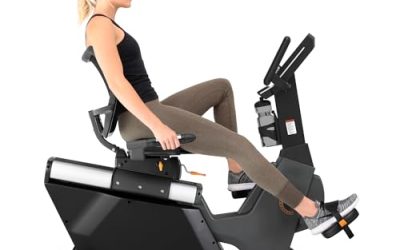
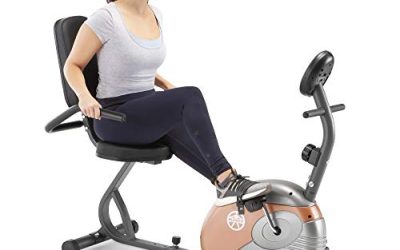
When knees complain, the exercise bike question changes. It stops being about intensity and starts being about position, smoothness, and control: a seat that supports your back while you pedal, resistance that starts gently and changes gradually, and a frame you can get onto without climbing or swinging a leg over a high bar. That is why the recumbent bike dominates this brief. In a recumbent position you sit in a chair-style seat with your legs extended forward, your weight spread across a wide cushioned base instead of balanced on a narrow saddle, and the pedalling motion stays smooth and seated from start to finish.
This guide is written for adult riders of any age whose knees prefer that gentler arrangement for everyday home cardio. It is not a medical guide, and nothing here replaces advice from your own clinician or physiotherapist about what exercise suits your joints. What it does is narrower and more practical: it identifies the bike features that make pedalling easier to manage with sensitive knees, verifies one Amazon US recumbent bike page by page against those features, and explains the setup details, especially seat position, that decide whether a recumbent bike feels kind or cranky in daily use.
Disclosure: This article contains affiliate links. If you buy through these links, we may earn a commission at no additional cost to you.
The pick: Sunny Health & Fitness SF-RB420031 Smart Magnetic Recumbent Bike
The Sunny Health & Fitness SF-RB420031 is a recumbent exercise bike whose product page covers the knee-relevant bases in plain specifications. It uses smooth, adjustable magnetic resistance with 8 levels, so the lightest setting is available from the first pedal stroke and each step up is a deliberate choice rather than a jump. Magnetic systems change load without a friction pad pressing on the flywheel, which keeps the pedal feel even through the stroke, and even pedal feel is what lets a rider hold a steady, comfortable cadence instead of pushing through a sticky spot on every revolution.
The seat is the second reason this bike fits the brief. The page describes a large padded seat with over 2 inches of cushioning, measuring 16.7 inches wide and 12.6 inches long. A wide, well-padded base spreads your weight, supports longer seated sessions, and pairs with the recumbent riding position so your legs work in front of you rather than underneath a saddle. Seat position itself adjusts across an inseam range the page gives as a minimum of 26 inches to a maximum of 35 inches, which is the adjustment that matters most for knees, for reasons explained in the setup section below.
Feedback and control stay simple. The digital monitor shows time, speed, distance, calories, odometer, and pulse, with a scan function, and two seat-level pulse sensors sit on the handles beside the seat, easy to grip while riding. Seat-level grips also give your hands somewhere steady to rest while you settle into position or pause mid-ride. Bluetooth connects the bike to the maker’s SunnyFit app, which displays live metrics and workout plans on your own device for riders who like guided sessions.
Practical figures from the page: assembled dimensions of 57.1 inches long, 26.6 inches wide, and 42.9 inches high; a product weight of 64.3 pounds; a maximum user weight of 265 pounds; a belt drive; battery power for the console; and a warranty of 3 years on the structural frame and 180 days on other parts and components. The bike also includes resistance bands on three placement hooks for upper-body work. Treat those bands as an optional extra rather than part of knee-friendly riding: they are useful only on days when your legs need complete rest while your arms do something, and they can be left untouched entirely.
One honest limitation belongs here. At 57.1 inches long, a recumbent bike takes more floor than an upright bike, and this model does not fold. Measure the room before ordering, including space to approach the seat from the side, because side access is how a recumbent bike is mounted.
Why recumbent, in plain terms
Three features of the recumbent layout do the work. First, the seat carries you: a chair-style base with back support means your body weight rests on the seat rather than pressing down through your legs into the pedals, so pedalling force comes from your muscles at the level you choose with the resistance control, not from standing weight. Second, the motion is fully seated and circular, with no impact phase: your feet stay on the pedals, and there is no stepping, landing, or jolting anywhere in the movement. Third, the low, stable frame and side approach make mounting and dismounting calm events, which matters on days when a knee feels stiff before the ride even begins.
Upright bikes and indoor cycles ask more of the rider: a narrow saddle, weight through the legs, and often standing efforts. None of that is wrong for healthy knees, but it is the opposite of what this keyword asks for. Under-desk pedal machines go to the other extreme: they are gentle, but they provide no back support, no real seat adjustment, and resistance ranges too small for a structured cardio routine. The recumbent sits in the middle, and for sensitive knees that middle is the point.
Seat setup: the detail that decides everything
A recumbent bike set up badly can bother knees that the same bike, set up well, would treat kindly. The governing idea is leg extension. Sit on the bike, place the ball of your foot on a pedal, and push that pedal to its farthest point from the seat. In that position your knee should keep a soft bend rather than locking straight or staying deeply bent. If the knee locks out, the seat is too far back and every stroke ends with a jolt through the joint. If the knee stays sharply bent at the closest point of the stroke, the seat is too far forward and the joint works through a compressed angle on every revolution.
The SF-RB420031 adjusts across a 26-to-35-inch inseam range, so work through the positions methodically: change one notch at a time, ride for a few minutes at the lightest resistance, and note where pedalling feels smoothest. Write the winning position down. Recumbent seat rails make it easy for a seat to drift or be moved by another household member, and returning to a recorded setting is faster than rediscovering it.
Resistance discipline matters as much as position. Start every ride at the lowest level and spend the first minutes simply turning the pedals while the joint warms into the motion. Raise resistance only when the current level feels easy to sustain smoothly, and prefer a slightly faster, lighter pedal rhythm over a slow, heavy push. Grinding at high resistance and low cadence loads the knee far more than spinning lightly, even when total effort feels similar. The 8 magnetic levels on this bike are enough for that approach: the early levels are where knee-friendly riding lives, and the upper levels exist for stronger days, not as a daily obligation.
Session length follows the same logic. Begin with short rides and add time before adding resistance. If a knee feels worse the day after a ride, shorten the next session and lower the resistance rather than abandoning the bike; consistency at a gentle level builds the habit and the fitness that make longer rides possible later.
Daily riding habits that protect sensitive knees
Beyond setup, a few habits keep recumbent riding knee-friendly over months rather than days. Keep your feet flat and relaxed on the pedals, with the strap or pedal surface supporting the middle of the foot rather than the toes; pushing through the toes shifts work into the front of the knee. Let your knees track in line with your feet instead of drifting inward or outward, and if they drift, lower the resistance until the alignment comes back on its own. Finish rides the way you started them, with a few easy minutes at the lightest level, so the joint leaves the session as calmly as it entered it.
Footwear is simpler than many riders expect. Ordinary trainers with a firm sole suit recumbent pedals well, because the seated position does not demand the locked-in connection that upright performance riding uses. What matters is that the shoe does not slip on the pedal and that the sole does not fold around it.
Finally, keep the bike somewhere you will actually use it. A recumbent bike that lives in a cold garage or behind stored boxes quietly stops being exercise equipment. The SF-RB420031 needs a fixed home of roughly 57 by 27 inches plus side access, and in return it asks for nothing else: the console runs on battery power, so no cable dictates its position, and the seat and monitor are ready the moment you sit down. For a rider managing sensitive knees, that zero-friction start, repeated daily, is worth more than any single specification.
Who this bike suits, and its limits
This bike suits an adult rider within the 265-pound page-stated limit whose priority is supported, seated, low-impact cardio at home, with simple controls and the option of app-guided sessions. The wide cushioned seat, seat-level pulse grips, and 8 smooth magnetic levels match that job description closely.
Check the limits before ordering. Riders above the stated weight capacity need a higher-capacity model. Riders whose inseam falls outside the stated adjustment range may not reach the soft-bend position described above. Anyone whose clinician has advised a specific rehabilitation device should follow that advice over a general buying guide. And riders who mainly want virtual racing or standing interval work are shopping for a different machine entirely; the smart-bike guide on this site covers that separate brief.
Bottom line
For bad knees, the winning formula is a recumbent seat that supports you, magnetic resistance that starts light and changes smoothly, and seat adjustment wide enough to find the soft-bend pedalling position. The Sunny Health & Fitness SF-RB420031 states each of those on its Amazon US page: a large padded seat with over 2 inches of cushioning, 8 levels of smooth magnetic resistance, a 26-to-35-inch inseam adjustment range, seat-level pulse grips, and clear size and capacity figures. It is the verified pick for this keyword, presented as a comfort-and-control choice rather than a medical promise, and it rewards careful setup more than any other buying decision in this category.
More from Amazon
Programs that pair well with the guide above. Offers and eligibility are set by Amazon and may change.
Collect the home and kitchen items you want in one registry that guests can shop from.
Create a wedding registrySet up recurring deliveries of everyday items on eligible products. Terms and savings are set by Amazon.
Explore Subscribe & SaveFree shipping on eligible items, Prime Video and more. Eligible new members can start with a free trial.
Start a Prime free trialAudiobooks and podcasts to listen to on the go. Eligible new members can start with a free trial.
Try Audible freeAs an Amazon Associate we earn from qualifying purchases.
Write Your Review
No reviews yet. Be the first to share your experience!