
Our Short List of 3
All 3 Picks at a Glance
| Product | Specs | Action |
|---|---|---|
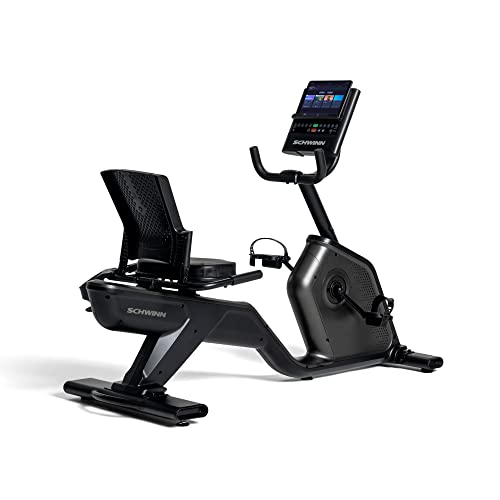 Schwinn 290 Recumbent Bike | Check price on Amazon | |
 Nautilus R616 Recumbent Bike | Check price on Amazon | |
 Sunny Health and Fitness SF-RB4616 Magnetic Recumbent Bike | Check price on Amazon |
Our Top Picks
Rebuilding strength after a knee injury, surgery, or a long period of joint pain usually starts with movement that is controlled, repeatable, and easy to stop the moment something feels wrong. A stationary exercise bike fits that description well, because the pedals move in a fixed circular path, the rider stays seated, and resistance can be kept very low while range of motion slowly returns. Among stationary bikes, recumbent models are the most commonly chosen for knee rehabilitation at home, since the seat supports the back, the pedals sit out in front of the body rather than underneath it, and a step-through frame removes the need to lift a leg high over a saddle.
This guide explains what makes an exercise bike suitable for knee rehabilitation, how to set one up so the knee tracks safely through each pedal stroke, and which design details matter most during the early, middle, and later stages of recovery. It also presents four recumbent exercise bikes sold on Amazon US that match the needs of a home rehabilitation routine, each with a different balance of resistance range, seat design, and console features.
As an Amazon Associate we earn from qualifying purchases.
Why a Recumbent Bike Suits Knee Rehabilitation
A knee that is recovering needs motion without impact. Walking delivers a small impact with every step, and running multiplies that load. Pedaling, by contrast, keeps the foot supported on the pedal through the whole circle, so the joint is loaded smoothly rather than struck. That smooth loading is why stationary cycling appears so often in rehabilitation programs for knee replacement recovery, ligament repair recovery, meniscus care, and general strengthening around the joint.
The recumbent position adds three further advantages. First, the wide seat and backrest carry much of the rider’s weight, so less force passes through the knee simply to hold the body upright. Second, the legs extend forward, which changes the angle at the hip and often makes the first part of the pedal stroke feel less compressed for riders who struggle with deep knee bend. Third, the low seat height and open frame design make mounting and dismounting calmer, which matters when balance is still returning and a fall would be a serious setback.
None of this replaces guidance from a surgeon, doctor, or physical therapist. The right time to start pedaling, the amount of knee bend to aim for, and the resistance to use are clinical decisions that depend on the individual procedure and healing stage. The role of the bike is to make the prescribed movement practical at home, day after day, without a trip to a clinic gym.
The Features That Matter Most for a Recovering Knee
Step-Through Access
During early recovery, simply getting onto the bike can be the hardest part of the session. A step-through frame, where the middle of the bike dips low or is absent entirely, lets the rider walk into position and sit down without swinging a leg over a high bar or saddle. Every model in the product section below uses an open or low access design, and this should be treated as a near-essential feature rather than a convenience.
Seat Adjustment Range and How It Is Made
Seat position controls knee bend. If the seat is too close to the pedals, the knee bends deeply at the top of the stroke, which can irritate a healing joint. If the seat is too far away, the leg overreaches at the bottom and the pelvis rocks from side to side. A rehabilitation-friendly bike therefore needs a seat that slides through a generous range and, ideally, can be adjusted in small steps. Bonus value goes to designs that let the rider adjust the seat while seated, because standing up, moving the seat, sitting down, and checking the fit repeatedly is tiring when mobility is limited.
Low Starting Resistance and Fine Steps
A recovering knee often begins with almost no resistance at all, sometimes with partial pedal rotations only, rocking back and forth before a full circle is possible. The bike therefore needs a genuinely light first resistance level. After that, small steps between levels are more useful than a huge top-end range, because progress during rehabilitation is gradual. Magnetic resistance is the standard choice here: it is smooth, quiet, and does not depend on friction pads that can grab or wear unevenly.
Pedal and Foot Security
Weighted pedals with adjustable straps keep the foot placed consistently on the pedal, which keeps the knee tracking in the same line on every revolution. Consistency matters because a foot that slips inward or outward changes the angle at the knee thousands of times in a single session. Large pedal surfaces also help riders who pedal in soft rehabilitation footwear or socks during the earliest sessions at home.
A Console That Tracks Time and Revolutions Simply
Rehabilitation sessions are usually prescribed by time and by gentle effort, not by speed. A clear console that shows time, distance, and pedaling pace at a glance helps the rider follow a plan such as ten minutes at a conversational effort. Pulse sensors on the handlebars beside the seat can add a simple heart rate reference, although they should be treated as an estimate rather than a medical measurement.
The Recumbent Bikes in This Guide
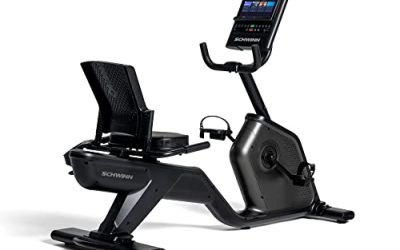
Schwinn 290 Recumbent Bike
The Schwinn 290 is the most fully featured option in this group and suits riders whose rehabilitation will progress into general fitness training on the same machine. Published specifications list 25 resistance levels, which gives a long ladder of small steps between the lightest pedaling and a genuinely demanding workout, and a maximum user weight of 330 pounds. Transport wheels are included, so the bike can be tilted and rolled rather than lifted when a room needs to be rearranged.
For rehabilitation use, the appeal is the combination of that wide resistance range with a large console and a reading shelf, which make longer, slow sessions easier to structure and to pass comfortably. A rider following a program that adds a few minutes each week can keep the resistance fixed at a gentle level and let the console track the growing session time, then use the higher levels months later when the focus shifts from recovery to conditioning. The ventilated style of seat back used on Schwinn recumbent models is also helpful for riders who overheat during long, slow work.
The trade-off is size and complexity. This is a substantial machine that asks for a permanent space, and its console offers more programs than a rehabilitation rider strictly needs. Buyers who want the simplest possible bike should look further down this list, while buyers who expect one bike to serve both recovery and later training will appreciate the headroom.
Nautilus R616 Recumbent Bike
The Nautilus R616 sits in the middle of this group, pairing a broad set of console programs with the reclined, back-supported position that knee rehabilitation calls for. It has been sold on Amazon US for many years under this listing, which makes replacement information and user documentation easy to find, a practical point for a machine that may be used daily for months.
In a rehabilitation setting, programmed workouts are best treated as optional extras. The core value of the R616 is its smooth magnetic pedaling feel, its adjustable padded seat with a backrest, and a console layout that keeps the main session numbers large and readable. Riders who are motivated by variety can use gentle preset profiles later in recovery, varying the effort slightly across a session instead of holding one flat level, which can help maintain interest once the early, cautious phase has passed.
As with the Schwinn above, the R616 is a stay-in-place machine rather than something to store in a closet. Plan a floor position with room to approach the seat from the side, because side access is how a rider with a stiff knee will naturally mount the bike.
Sunny Health and Fitness SF-RB4616 Magnetic Recumbent Bike
The Sunny Health and Fitness SF-RB4616 focuses on the essentials, and its listing describes exactly the features a rehabilitation rider uses most: 8 levels of magnetic resistance, pulse sensors, an extra-wide cushioned seat with a backrest, and a maximum user weight of 300 pounds. The seat adjustment is a standout detail for this purpose, because the design allows the seat position to be changed while the rider remains seated, removing the repeated standing and sitting that fine-tuning a seat normally requires.
Eight resistance levels are fewer than the larger machines offer, but for rehabilitation the bottom few levels do most of the work, and this bike keeps its controls simple enough that a rider can change effort with one knob without navigating menus. The digital monitor covers the standard session measures, including time, speed, distance, calories, and pulse, which is enough to follow a timed plan and record progress in a notebook or app.
The SF-RB4616 also suits smaller rooms better than the full-size console bikes. It still needs a clear approach path to the seat, but its simpler frame and transport wheels make occasional repositioning realistic in a spare room or living room corner.
Exerpeutic 900XL Recumbent Exercise Bike with Pulse
https://www.amazon.com/dp/B005OU4E1M
The Exerpeutic 900XL is built around comfort and easy access. Its listing describes a step-through design intended to make getting on and off easier and to reduce unnecessary stress on the back and knees, an oversized seat cushion with a backrest, 8 levels of magnetic tension, hand pulse sensors in the handlebars beside the seat, and a maximum user weight of 300 pounds. The stated rider height range runs from 5 feet 3 inches to 6 feet 6 inches, which covers most adults without needing a special tall-rider model.
The large LCD shows time, speed, distance, calories burned, and heart rate, and the pedals are oversized with straps, supporting the consistent foot placement described earlier. A smooth torque cranking system and V-belt drive are listed among its features, both aimed at an even pedal feel rather than a pulsing one, which is what a sensitive knee prefers.
The 900XL does not offer built-in workout programs, and its resistance range is modest. For a rider whose plan is simply to pedal gently, daily, for a set number of minutes, those omissions are largely irrelevant, and the straightforward controls can be a genuine advantage during a tiring recovery period.
Setting Up the Bike for a Healing Knee
Correct setup matters more than which model is chosen. Start with the seat far enough back that, with the heel resting on the pedal at its lowest point, the leg is nearly straight without the pelvis tilting. Then, with the ball of the foot on the pedal, the knee should keep a soft bend at the bottom of the stroke rather than locking out or staying deeply flexed. If a full pedal circle is not yet comfortable, many rehabilitation programs begin with partial back-and-forth rocking, gradually widening the arc over days until a full, slow revolution is possible; the bike should be chosen and positioned so that this progression feels controlled, with no need to force the joint through a painful point.
Handlebar and seat-side grip positions should be used when sitting down and standing up, rather than pulling on the console mast. Keep a stable chair or walking aid within reach if balance is still developing, and place the bike on a level floor, ideally on a mat that prevents the frame from creeping during longer sessions.
Structuring a Rehabilitation Riding Routine
A typical home routine, as directed by the rider’s own clinician, tends to follow a simple arc. Sessions begin short, sometimes only a few minutes, at the lowest resistance, with the goal of moving the joint rather than tiring the muscles. Duration usually grows before resistance does: minutes are added first, and only when the knee tolerates the longer motion without lingering swelling or pain is a small resistance increase considered. Many riders keep a simple log of session length, resistance level, and how the knee felt later that day and the following morning, because the delayed response is often more informative than how the ride itself felt.
Warning signs to stop and seek advice include sharp pain rather than mild effort discomfort, swelling that increases noticeably after sessions, the knee giving way, or any wound or surgical-site problem for post-surgical riders. A buying guide cannot judge those situations; the treating clinician can.
How to Choose Among These Four Bikes
Choose the Schwinn 290 if the bike will carry the rider from rehabilitation into regular training and a wide resistance range with a large console is worth the floor space. Choose the Nautilus R616 for a similar long-term role with a long-established listing and a program-rich console in a slightly simpler package. Choose the Sunny Health and Fitness SF-RB4616 if seated seat adjustment and a compact, simple control scheme matter most during recovery itself. Choose the Exerpeutic 900XL if easy step-through access, a wide seat, and the tallest stated rider height range are the priorities.
Whichever model is selected, confirm the current listing details, dimensions, and availability on the Amazon product page before ordering, because specifications and stock can change. Measure the intended floor space and the doorway path as well; a recumbent bike is wide at the seat and is far easier to assemble in the room where it will be used.
Final Thoughts
The best exercise bike for knee rehabilitation is rarely the most powerful one. It is the one that lets a rider sit down safely, pedal smoothly at almost no resistance, adjust the seat without a struggle, and repeat that session tomorrow. Recumbent design, step-through access, magnetic resistance, and a supportive seat are the four pillars, and each bike above delivers them in a different balance of size, console features, and simplicity. Matched with a clinician-guided plan and patient progression, a home recumbent bike turns knee rehabilitation from an occasional clinic activity into a calm daily habit, which is where most recovery is actually built.
More from Amazon
Programs that pair well with the guide above. Offers and eligibility are set by Amazon and may change.
Collect the home and kitchen items you want in one registry that guests can shop from.
Create a wedding registrySet up recurring deliveries of everyday items on eligible products. Terms and savings are set by Amazon.
Explore Subscribe & SaveFree shipping on eligible items, Prime Video and more. Eligible new members can start with a free trial.
Start a Prime free trialAudiobooks and podcasts to listen to on the go. Eligible new members can start with a free trial.
Try Audible freeAs an Amazon Associate we earn from qualifying purchases.
Write Your Review
No reviews yet. Be the first to share your experience!