
Our Short List of 3
- https://www.amazon.com/dp/B01LYFWKMH
- https://www.amazon.com/dp/B002KV1MJU
- https://www.amazon.com/dp/B00467H5YW
All 3 Picks at a Glance
| Product | Specs | Action |
|---|---|---|
| 1. XTERRA Fitness FB150 Folding Exercise Bike |
| Check price on Amazon |
| 2. Marcy Recumbent Exercise Bike with Resistance ME-709 |
| Check price on Amazon |
| 3. Sunny Health and Fitness SF-B1002 Indoor Cycling Bike |
| Check price on Amazon |
Key takeaways
- Find the best beginner bike for exercise at home, from folding upright and recumbent picks to a simple indoor cycling bike, with setup tips.
The best beginner bike for exercise is not the most advanced bike, the heaviest bike, or the bike with the biggest screen. It is the bike you can set up correctly in a few minutes, pedal comfortably from your very first session, and adjust gradually as your fitness improves. Beginners quit home exercise equipment for predictable reasons: the seat hurts, the resistance starts too hard, the bike wobbles or makes noise, or the machine is such a project to unfold, plug in, and log into that skipping a session feels easier than starting one. A good first bike removes all of that friction.
This guide focuses on three proven beginner-friendly styles: a folding upright bike that stores in a closet, a recumbent bike with a supportive seat and backrest, and a simple indoor cycling bike for people who already know they want a studio-style ride. Each model below is a real, currently listed exercise bike, and the surrounding advice will help you decide which style fits your body, your space, and your patience.
As an Amazon Associate we earn from qualifying purchases.
What Makes an Exercise Bike Beginner Friendly
A seat you can adjust and tolerate. Seat comfort decides whether a beginner rides for five minutes or thirty. Look for a padded seat that adjusts at least up and down, and ideally forward and back as well. A correct setup puts a slight bend in your knee at the bottom of the pedal stroke. If the seat cannot get into that position for your height, no other feature will rescue the bike.
Resistance that starts genuinely easy. Beginners need a lowest setting that feels almost effortless, so warm-ups are possible and confidence builds. Magnetic resistance is the friendliest system for new riders because it is smooth, quiet, and repeatable: the level you choose today feels the same next week, which makes progress easy to measure. Friction resistance, adjusted with a knob and a felt or leather pad, works well too, though the feel can drift slightly as the pad wears.
Stability without bulk. A first bike should feel planted when you sit down and start pedaling, without needing a dedicated gym room. Wide stabilizer feet, a sensible weight capacity for the rider, and a frame that does not flex side to side all matter more than cosmetic features.
A simple console. Time, speed, distance, and calories burned are genuinely all a beginner needs. A clear display of those four numbers supports the habit that actually builds fitness: riding a little longer or a little harder than last time. Screens, subscriptions, and app ecosystems can come later, or never.
Quiet operation. A bike you can use early in the morning or during a television show in a shared room is a bike that gets used. Belt drives and magnetic resistance are the quiet combination; chain drives and fan bikes make more noise.
The Best Beginner Exercise Bikes
1. XTERRA Fitness FB150 Folding Exercise Bike
- https://www.amazon.com/dp/B01LYFWKMH
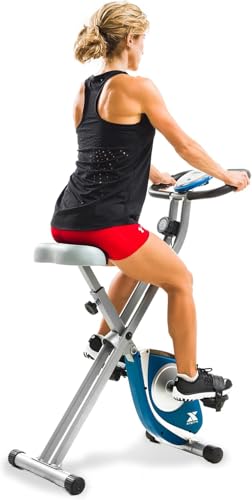
The XTERRA FB150 is the classic first exercise bike for small homes. Its solid X-frame design folds down to roughly 18 inches square, so it can live in a closet or against a wall and roll out when you want to ride. It is cordless and battery powered, which means there is no cable to route and no need to park it next to an outlet.
The listing gives the FB150 a weight capacity of 225 pounds, eight levels of resistance, a padded seat and handlebars, adjustable foot straps, and a small flywheel of about 3.3 pounds. Resistance is magnetic and adjusted with a dial, and the LCD monitor covers the essential session numbers, with hand pulse grips on the handlebars for heart rate checks. Eight resistance levels is a modest range, and that is honestly well matched to a beginner: the steps are easy to understand, the lowest settings are gentle, and there is enough headroom to make sessions harder over the first months of riding.
The trade-offs are the ones you would expect from a folding frame. The weight capacity is lower than on fixed-frame bikes, the small flywheel gives a lighter pedal feel than a heavy studio bike, and taller or heavier riders may find the frame less settled at hard efforts. For a first bike in an apartment, a bedroom, or a shared living space, those are reasonable compromises in exchange for a machine that disappears when the workout ends.
2. Marcy Recumbent Exercise Bike with Resistance ME-709
- https://www.amazon.com/dp/B002KV1MJU
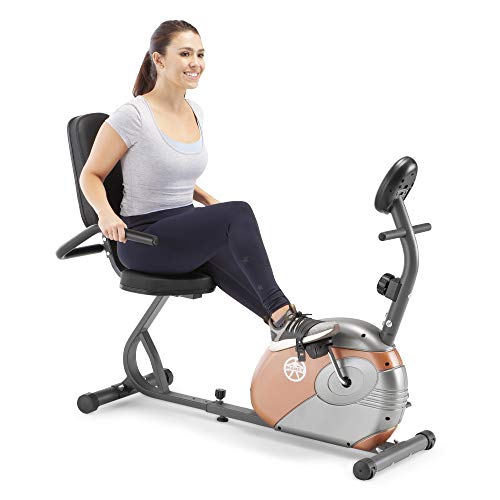
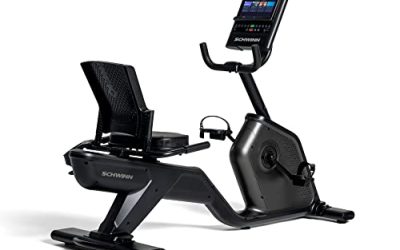
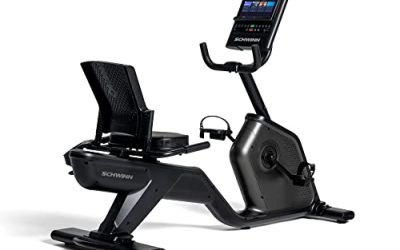
If the idea of a standard bike saddle puts you off before you start, a recumbent design is the friendlier way in. The Marcy ME-709 places you in a reclined position on a padded seat with a backrest, with the pedals out in front of you. That posture takes pressure off your wrists, shoulders, and lower back, and the step-through style frame makes getting on and off easy, which is why recumbent bikes are such a common recommendation for new riders, older adults, and anyone returning to exercise after a break.
The ME-709 uses adjustable magnetic resistance, so sessions stay quiet and the effort changes smoothly as you turn the control. The listing notes that the bike is equipped with transport wheels, so despite being a fixed-frame machine it can be tipped and moved to store or to clean around. The console covers the standard workout readouts, and the seat adjusts to position riders of different heights correctly in front of the pedals.
A recumbent bike takes more floor space than a folding upright, and the relaxed position is less suited to the standing, high-effort riding of a cycling class. What it gives a beginner instead is comfort over longer sessions, and longer comfortable sessions are what build the exercise habit in the first place. If you plan to ride while reading or watching television for thirty minutes at a time, this is the style that supports it.
3. Sunny Health and Fitness SF-B1002 Indoor Cycling Bike
- https://www.amazon.com/dp/B00467H5YW
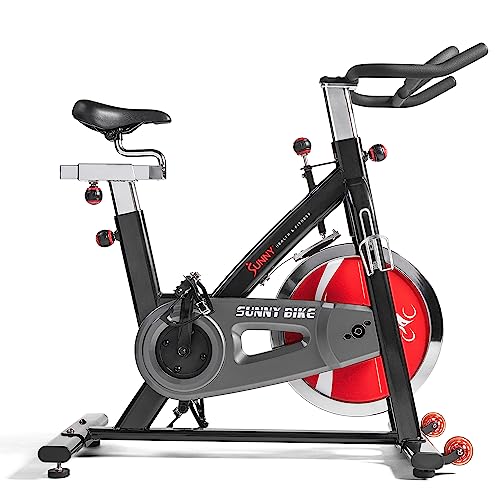
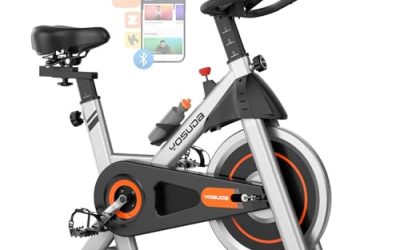
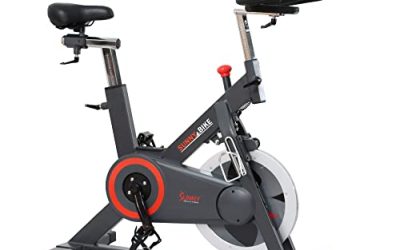
Some beginners do not want a gentle starter bike; they want the indoor cycling experience from day one, with a heavy flywheel and the option to stand on the pedals during harder efforts. The Sunny Health and Fitness SF-B1002 is the long-running entry point to that style. Its listing highlights a heavy-duty flywheel of 49 pounds, a belt drive for smooth and quiet pedaling, a four-way adjustable seat, and a two-way adjustable handlebar, with a maximum user weight of 275 pounds.
Resistance is micro-adjustable through a tension knob pressing a leather pad on the flywheel, and pressing the knob down acts as a brake, a simple system with no electronics to learn. The fully adjustable fit is the real beginner feature here: with the seat moving in four directions and the handlebar in two, most riders can dial in a posture close to a road bike setup, which protects knees and backs during harder riding. Transportation wheels make the bike movable despite its weight of about 110 pounds, and a bottle holder is included.
Be clear about what this style demands. An indoor cycling bike has a firmer, narrower saddle than the comfort bikes above, the riding position is more athletic, and there is no console-led program to follow unless you bring your own device and content. Beginners who are motivated by energetic, music-driven sessions tend to thrive on it. Beginners who want relaxed, seated cardio are better served by the folding or recumbent picks.
How to Set Up Your First Bike Correctly
Setup takes five minutes and decides how every ride feels. Start with seat height: stand next to the bike and raise the seat to roughly hip height, then sit and pedal slowly. At the bottom of the stroke your knee should keep a slight bend, never fully straight and never deeply bent. If you are rocking side to side to reach the pedals, the seat is too high.
Next, seat fore and aft position, if your bike offers it. With the pedals level, your front knee should sit roughly above the ball of your foot. Then set the handlebar. Beginners usually do best with the handlebar at or slightly above seat height, which keeps weight off the wrists and the back in a neutral curve. You can lower it later as flexibility and confidence grow.
For your first sessions, choose a resistance level where you can pedal smoothly while still being able to speak in full sentences. Ride for a short, fixed time, and finish feeling like you could have done a little more. That restraint is deliberate: the goal of the first two weeks is a repeatable routine, not exhaustion. Add a few minutes, or one resistance level for part of the ride, each week.
A Simple First Month Plan
In week one, ride three times for ten to fifteen minutes at an easy resistance, concentrating on smooth pedaling and good posture. In week two, extend one ride and keep the others short, so the week has a shape rather than three identical efforts. In week three, introduce short harder intervals: one minute at a resistance that makes conversation difficult, followed by two easy minutes, repeated a few times. In week four, combine the longer ride and the intervals on different days, with rest days between harder sessions.
Warm up for the first few minutes of every ride at the easiest setting, and finish the same way. Keep a simple record of time and resistance level; watching those numbers climb is the most reliable motivation a beginner can get, and it costs nothing.
Mistakes New Riders Should Avoid
The most common mistake is starting too hard, riding once at a punishing resistance, and associating the bike with misery. The second is a seat set far too low, which overloads the knees and is often blamed on the bike rather than the setup. The third is gripping the handlebars tightly and hunching the shoulders; relax your hands, keep your elbows soft, and let your legs do the work.
Also check the basics before each ride: pedals and seat post tight, feet secured in the straps or cages, and the bike standing on a level surface. On folding models, confirm the frame is fully opened and locked. A minute of checking prevents most of the wobbles and clicks that frustrate new owners.
Final Thoughts
The best beginner bike for exercise is the one matched to your space, your body, and the kind of riding you will honestly repeat. Pick the XTERRA FB150 if you need a quiet folding bike that stores away between sessions. Pick the Marcy ME-709 if comfort, back support, and easy mounting matter most. Pick the Sunny Health and Fitness SF-B1002 if you want a heavier flywheel and a studio-style ride from the start. Set it up carefully, begin easier than you think you should, and let consistency do the rest.
More from Amazon
Programs that pair well with the guide above. Offers and eligibility are set by Amazon and may change.
Collect the home and kitchen items you want in one registry that guests can shop from.
Create a wedding registrySet up recurring deliveries of everyday items on eligible products. Terms and savings are set by Amazon.
Explore Subscribe & SaveFree shipping on eligible items, Prime Video and more. Eligible new members can start with a free trial.
Start a Prime free trialAudiobooks and podcasts to listen to on the go. Eligible new members can start with a free trial.
Try Audible freeAs an Amazon Associate we earn from qualifying purchases.
Write Your Review
No reviews yet. Be the first to share your experience!