
Our Short List of 3

- Link: https://www.amazon.com/dp/B07WZXSDKW
- Specs: 100 levels of magnetic resistance; belt drive; Bluetooth connectivity for JRNY, Peloton, and Zwift; full-colour LCD display; dual-sided pedals with toe cages and SPD clips; included Bluetooth heart-rate armband; USB charging port; two 3-pound dumbbells included; item weight 112 pounds; dimensions 54.6 x 30.7 x 51.8 inches; maximum rider weight 330 pounds; warranty 10 years frame, 3 years parts, 1 year labour
- Pros: 100 resistance levels give precise control over cardio intensity, from easy spins to hard climbs; magnetic resistance is quiet enough for early-morning sessions; Bluetooth app connection supports structured classes and virtual rides; the included heart-rate armband helps you train in the right zone; dual-sided pedals suit both trainers and cycling shoes
- Cons: Heavier and larger than a budget bike, so it needs a dedicated space; the seat is firm and may need a padded cover for long rides; app subscriptions for JRNY, Peloton, and Zwift are sold separately

- Link: https://www.amazon.com/dp/B0BVHN3D72
- Specs: Magnetic resistance; 300-pound maximum rider weight; LCD monitor showing time, speed, distance, calories, and pulse; tablet holder; exclusive fitness app with guided courses; adjustable seat and handlebars; low-noise ride
- Pros: Magnetic resistance keeps the ride quiet and smooth for home use; the app and tablet holder support guided cardio classes at no extra hardware cost; 300-pound capacity suits a wide range of riders; the LCD monitor tracks the key cardio metrics; good value for a first indoor bike
- Cons: Fewer resistance levels than the Schwinn IC4, so fine-tuning intensity is less precise; the flywheel is lighter, which can feel less smooth at very high resistance; assembly takes time and care to get the bike stable
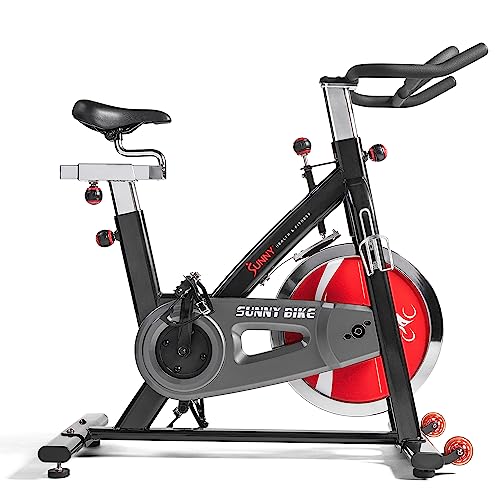
- Link: https://www.amazon.com/dp/B00467H5YW
- Specs: 49-pound chrome flywheel; belt drive; micro-adjustable resistance; 4-way adjustable seat; multi-grip handlebar with pulse sensors; caged pedals; bottle holder; maximum rider weight 275 pounds; 3-year warranty on frame, 180 days on parts
- Pros: The heavy flywheel delivers a smooth, stable ride that suits long cardio sessions; belt drive is quiet and needs little maintenance; micro-adjustable resistance lets you set the effort precisely; the multi-grip handlebar supports different riding positions for climbs and sprints; a proven design with a long sales history
- Cons: No Bluetooth or app connectivity, so training is manual; no built-in heart-rate monitor beyond handlebar pulse sensors; the 275-pound capacity is lower than the other two picks; the saddle is firm for long rides
All 3 Picks at a Glance
| Product | Specs | Action |
|---|---|---|
| 1. Schwinn IC4 Indoor Cycling Bike — Best Overall for Cardio Training |
| Check price on Amazon |
| 2. YOSUDA Magnetic Indoor Cycling Bike — Best Budget Cardio Bike |
| Check price on Amazon |
| 3. Sunny Health & Fitness SF-B1002 Belt Drive Indoor Cycling Bike — Best for Smooth, Heavy-Flywheel Riding |
| Check price on Amazon |
Our Top Picks
The best exercise bike for cardio is the one that lets you raise your heart rate, hold it there, and recover safely, day after day, without leaving the house. Indoor cycling is one of the most effective forms of home cardio because it is low impact, easy to scale from gentle to intense, and simple to fit into a busy schedule. You control the resistance, the pace, and the duration, so the same bike works for a steady thirty-minute ride and for a hard interval session.
This guide explains how to choose an indoor exercise bike for cardio, compares three verified bikes suited to heart-rate training, and answers the questions riders ask most before buying. All three picks are indoor cycling bikes, the style best suited to serious cardio work, and each one is available on Amazon US.
How to Choose an Exercise Bike for Cardio
Resistance type decides how the ride feels
Magnetic resistance is the best choice for most home cardio riders. It is quiet, smooth, and adjustable in fine steps, so you can hold a steady effort or jump between easy and hard intervals without a jarring change. Friction resistance, where a pad presses on the flywheel, is cheaper but louder and wears over time. Air resistance, found on fan bikes, increases automatically as you pedal harder, which suits all-out intervals but is noisy. For cardio training in a shared home, magnetic resistance is the easiest to live with.
Flywheel weight affects smoothness
A heavier flywheel stores more momentum, which smooths out the dead spots in your pedal stroke and makes the ride feel more like a real road bike. Flywheels in the 30 to 50 pound range give a stable, road-like feel that suits sustained cardio. Lighter flywheels feel choppier at high resistance. If you plan long steady-state sessions, prioritise a heavier flywheel. If you mostly do short, sharp intervals, flywheel weight matters less than the resistance range.
Look for a wide resistance range
Cardio training needs contrast: easy spinning for warm-ups and recovery, and hard resistance for intervals and climbs. A bike with 100 resistance levels, like the Schwinn IC4 below, lets you fine-tune the effort precisely. A bike with fewer levels still works well if the steps between levels are even. What matters is that the hardest setting is genuinely hard and the easiest setting lets you spin freely.
Adjustability protects your knees
Your seat and handlebars should adjust in several directions, not just up and down. Four-way adjustment lets you set the saddle height and fore-aft position so your knee tracks correctly over the pedal, which reduces strain during long sessions. If more than one person in the household will use the bike, quick-release adjustment levers make changeovers fast. A poorly fitted bike causes knee pain long before it improves your fitness.
Consider the console and app connection
A clear display showing time, speed, distance, calories, and heart rate helps you train in the right zone instead of guessing. Bluetooth connectivity adds more: it lets the bike sync with training apps such as Zwift, Peloton, and JRNY for structured classes and virtual rides. App classes are a strong motivator for cardio because an instructor sets the intervals for you. If you prefer to train without a screen, a simple LCD console is enough, but check that it at least shows your heart rate or cadence.
Check weight capacity and footprint
Indoor bikes are heavy, typically 90 to 115 pounds, and they need a stable floor. Check the maximum rider weight in the listing and leave a margin. Measure your space before ordering: most spin-style bikes need a footprint of roughly 55 inches long by 30 inches wide, plus room to mount and dismount. A mat underneath protects the floor and reduces vibration.
Top Picks
1. Schwinn IC4 Indoor Cycling Bike — Best Overall for Cardio Training
- Link: https://www.amazon.com/dp/B07WZXSDKW
- Specs: 100 levels of magnetic resistance; belt drive; Bluetooth connectivity for JRNY, Peloton, and Zwift; full-colour LCD display; dual-sided pedals with toe cages and SPD clips; included Bluetooth heart-rate armband; USB charging port; two 3-pound dumbbells included; item weight 112 pounds; dimensions 54.6 x 30.7 x 51.8 inches; maximum rider weight 330 pounds; warranty 10 years frame, 3 years parts, 1 year labour
- Pros: 100 resistance levels give precise control over cardio intensity, from easy spins to hard climbs; magnetic resistance is quiet enough for early-morning sessions; Bluetooth app connection supports structured classes and virtual rides; the included heart-rate armband helps you train in the right zone; dual-sided pedals suit both trainers and cycling shoes
- Cons: Heavier and larger than a budget bike, so it needs a dedicated space; the seat is firm and may need a padded cover for long rides; app subscriptions for JRNY, Peloton, and Zwift are sold separately
The Schwinn IC4 is the most complete cardio bike in this guide. It combines 100 levels of magnetic resistance with a belt drive, Bluetooth connectivity for JRNY, Peloton, and Zwift, and a full-colour LCD console. It is the bike to choose if you want structured, app-led cardio sessions at home.
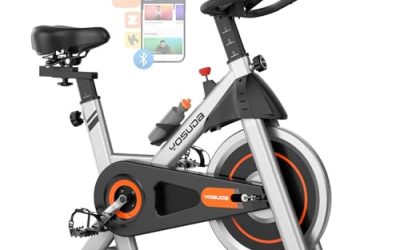
2. YOSUDA Magnetic Indoor Cycling Bike — Best Budget Cardio Bike
- Link: https://www.amazon.com/dp/B0BVHN3D72
- Specs: Magnetic resistance; 300-pound maximum rider weight; LCD monitor showing time, speed, distance, calories, and pulse; tablet holder; exclusive fitness app with guided courses; adjustable seat and handlebars; low-noise ride
- Pros: Magnetic resistance keeps the ride quiet and smooth for home use; the app and tablet holder support guided cardio classes at no extra hardware cost; 300-pound capacity suits a wide range of riders; the LCD monitor tracks the key cardio metrics; good value for a first indoor bike
- Cons: Fewer resistance levels than the Schwinn IC4, so fine-tuning intensity is less precise; the flywheel is lighter, which can feel less smooth at very high resistance; assembly takes time and care to get the bike stable
The YOSUDA magnetic indoor cycling bike is a strong budget pick for home cardio. It offers magnetic resistance, a quiet belt-style ride, a tablet holder, and an exclusive app with guided fitness courses, covering the essentials for regular cardio training without the cost of a premium bike.
3. Sunny Health & Fitness SF-B1002 Belt Drive Indoor Cycling Bike — Best for Smooth, Heavy-Flywheel Riding
- Link: https://www.amazon.com/dp/B00467H5YW
- Specs: 49-pound chrome flywheel; belt drive; micro-adjustable resistance; 4-way adjustable seat; multi-grip handlebar with pulse sensors; caged pedals; bottle holder; maximum rider weight 275 pounds; 3-year warranty on frame, 180 days on parts
- Pros: The heavy flywheel delivers a smooth, stable ride that suits long cardio sessions; belt drive is quiet and needs little maintenance; micro-adjustable resistance lets you set the effort precisely; the multi-grip handlebar supports different riding positions for climbs and sprints; a proven design with a long sales history
- Cons: No Bluetooth or app connectivity, so training is manual; no built-in heart-rate monitor beyond handlebar pulse sensors; the 275-pound capacity is lower than the other two picks; the saddle is firm for long rides
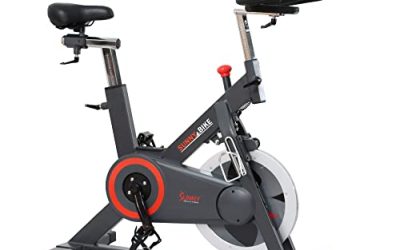
The Sunny SF-B1002 is a long-running favourite among home cyclists, built around a heavy 49-pound chrome flywheel and a belt drive. That combination gives a smooth, road-like ride that suits long steady-state cardio sessions, where momentum and consistency matter more than a screen full of features.
Comparison Table
| Bike | Resistance | Drive | Flywheel | Max Rider Weight | Display | App Connection |
|---|---|---|---|---|---|---|
| Schwinn IC4 | Magnetic, 100 levels | Belt | Heavy | 330 lb | Full-colour LCD | JRNY, Peloton, Zwift |
| YOSUDA Magnetic | Magnetic | Belt-style | Standard | 300 lb | LCD | Exclusive app |
| Sunny SF-B1002 | Magnetic, micro-adjustable | Belt | 49 lb | 275 lb | Basic | None |
How to Structure Cardio Sessions on an Exercise Bike
A good cardio week mixes three kinds of session. Steady-state rides of 30 to 45 minutes at a moderate pace build your aerobic base and burn calories without exhausting you. Interval sessions alternate short hard efforts of 30 to 90 seconds with easy recovery pedalling; these raise your fitness fastest and fit into 20 minutes. Finally, a longer easy ride of 45 to 60 minutes once a week builds endurance and is gentle on the joints.
Warm up for five minutes at easy resistance before every session, and cool down for five minutes afterwards. Use a heart-rate monitor, such as the armband included with the Schwinn IC4, to check you are in the right zone: you should be able to speak in short sentences during moderate work, and only a few words during hard intervals. If you are new to exercise, start with three 20-minute sessions a week and add five minutes per session each week.
FAQ
How long should I ride an exercise bike for cardio?
Aim for 30 minutes of moderate cycling on most days, or 20 minutes of vigorous intervals three times a week. Beginners should start with 15 to 20 minutes and add five minutes each week. Consistency matters more than any single session: three or four rides a week will improve your cardio fitness faster than one long ride.
Is an exercise bike good for weight loss?
Yes, when combined with a sensible diet. Cycling burns calories while being gentle on the knees, which makes it easier to sustain than running. Interval sessions burn more calories in less time, while longer steady rides are easier to repeat daily. The bike that helps you lose weight is the one you use regularly, so comfort and convenience matter as much as the calorie count.
Magnetic or friction resistance: which is better for cardio?
Magnetic resistance is better for most home cardio riders. It is quieter, smoother, and lets you change intensity in small steps, which suits interval training. Friction resistance is cheaper but louder and the pads wear out. If you train early in the morning or share your home, magnetic resistance is the clear choice.
Do I need a heart-rate monitor for cardio training?
It helps a great deal. A heart-rate monitor tells you whether you are working hard enough to improve fitness or so hard that you will burn out. The Schwinn IC4 includes a Bluetooth armband, and handlebar sensors on the Sunny SF-B1002 give a rough reading. A chest strap is the most accurate option if you want to train in precise zones.
Can I do HIIT on an exercise bike?
Yes. Indoor bikes are ideal for high-intensity interval training because you can change resistance quickly and there is no traffic or terrain to worry about. A typical session is a five-minute warm-up, then eight rounds of 30 seconds hard pedalling followed by 90 seconds easy, then a five-minute cool-down. Start with fewer rounds and build up over several weeks.
Conclusion
The best exercise bike for cardio depends on how you like to train. The Schwinn IC4 is the strongest all-rounder, with 100 levels of magnetic resistance, Bluetooth app support, and a heart-rate armband for zone training. The YOSUDA magnetic bike is the best budget route into guided home cardio, with an app, a tablet holder, and a quiet ride. The Sunny SF-B1002 suits riders who want a smooth, heavy-flywheel bike for long steady sessions without apps or subscriptions.
Whichever you choose, measure your space, check the weight capacity, and set the saddle height so your knee keeps a slight bend at the bottom of each stroke. Then build the habit: three or four sessions a week, a mix of steady rides and intervals, and a warm-up and cool-down every time. That is how an exercise bike turns into real cardio fitness.
Disclosure: As an Amazon Associate, we earn from qualifying purchases.
More from Amazon
Programs that pair well with the guide above. Offers and eligibility are set by Amazon and may change.
Collect the home and kitchen items you want in one registry that guests can shop from.
Create a wedding registrySet up recurring deliveries of everyday items on eligible products. Terms and savings are set by Amazon.
Explore Subscribe & SaveFree shipping on eligible items, Prime Video and more. Eligible new members can start with a free trial.
Start a Prime free trialAudiobooks and podcasts to listen to on the go. Eligible new members can start with a free trial.
Try Audible freeAs an Amazon Associate we earn from qualifying purchases.
Write Your Review
No reviews yet. Be the first to share your experience!