

Key takeaways
- Compact or bullpup crossbows: choose a short, light scope and confirm that the ocular bell does not interfere with the string, cocking aid, or safety controls.
- Traditional long-stock crossbows: a 1.5–5× or 2–7× scope usually offers enough mounting flexibility, but measure the rail before buying.
- High-speed crossbows: verify that the reticle’s speed range includes the manufacturer’s claimed velocity, then confirm actual impact at multiple distances.
- Older crossbows: check whether the rail is truly Picatinny or Weaver-compatible and whether the included rings match its slot width.
- Crossbows with integrated optics: avoid adding a second optic unless the manufacturer specifically provides a suitable rail and clearance.
Best Crossbow Scopes for Accuracy and Low Light
The best crossbow scopes for most hunters are the Hawke XB30 Pro 1.5–5×32 for versatile magnification, the Vortex Crossfire II 2–7×32 Crossbow for a practical all-around setup, and the Burris Oracle X for hunters who want electronic range compensation rather than a conventional reticle.
A crossbow scope is not simply a compact rifle scope. Crossbows launch bolts at a lower velocity, lose trajectory more quickly, and often require multiple aiming marks for different distances. The right optic therefore depends on your crossbow’s speed, rail height, shooting distance, mounting length, and how well the reticle remains visible in dim woods.
Our top picks


As an Amazon Associate we earn from qualifying purchases at no extra cost to you. Ratings are shown as listed on Amazon.
Quick comparison of leading crossbow scope types
| Scope or type | Magnification | Objective | Reticle approach | Approximate weight | Best suited to |
|---|---|---|---|---|---|
| Hawke XB30 Pro | 1.5–5× | 32 mm | Illuminated crossbow ballistic reticle | About 18 oz | Hunters wanting flexible magnification and a conventional optic |
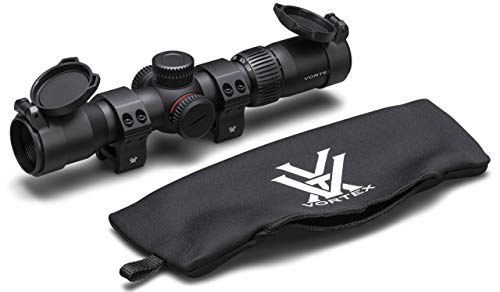
| Vortex Crossfire II Crossbow | 2–7× | 32 mm | Illuminated, speed-calibrated crossbow reticle | About 19 oz | Longer-range practice and users who value a strong warranty |
| Burris Oracle X | Digital aiming system | Integrated electronic display | Laser rangefinding with holdover guidance | About 30 oz | Hunters who prefer automatic aiming-point calculation |
| Fixed-power 4×32 crossbow scope | 4× | 32 mm | Multi-line or illuminated ballistic reticle | About 12–16 oz | Budget buyers and short-to-moderate hunting distances |
| Compact 1.5–5×32 scope | 1.5–5× | 32 mm | Illuminated multi-reticle | About 16–20 oz | Dense cover, moving targets, and varied shooting distances |
Weights and dimensions can vary slightly by production version and included rings. Check the manufacturer’s current specifications before ordering, especially if your crossbow has a short top rail or a narrow stock profile.
Best overall balance: Hawke XB30 Pro 1.5–5×32
The Hawke XB30 Pro is a strong choice when you want more versatility than a fixed 4× scope without adding excessive bulk. Its 1.5× setting provides a wider field of view at close range, while 5× helps with target identification and careful practice at longer distances. The 32 mm objective keeps the package compact enough for most hunting crossbows.
Its illuminated ballistic reticle is useful in shaded timber, where a black reticle can disappear against dark bark or brush. Red illumination is typically preferable in low light because excessive brightness can obscure the target. Use the lowest setting that makes the aiming marks visible; illumination does not create light and cannot compensate for poor glass or a dark target.
This scope is most attractive for a shooter who will confirm point of impact at several distances rather than relying on the printed speed-calibration marks without verification.
Best for adjustable magnification: Vortex Crossfire II 2–7×32 Crossbow
The Vortex Crossfire II Crossbow offers a wider magnification range than most dedicated crossbow optics. At 2×, it is easier to acquire a nearby target quickly. At 7×, small aiming marks and distant targets appear larger, although high magnification also narrows the field of view and makes movement more noticeable.
This scope makes sense for a hunter who practices beyond the typical 20-yard zero distance or wants one optic that can serve both hunting and deliberate range work. Its illuminated reticle helps in variable light, and the 32 mm objective avoids the front-heavy feel of larger rifle-style optics.
The main limitation is that magnification changes can alter how naturally the reticle aligns with the target. Before hunting, confirm your point of impact at the exact magnification you intend to use. A scope that is zeroed at 7× should not be assumed to have identical holdover behavior at 2×.
Best electronic option: Burris Oracle X
The Burris Oracle X takes a different approach by combining a crossbow optic with an electronic rangefinding and aiming system. Instead of estimating distance and selecting a corresponding reticle mark, the user ranges the target and follows the displayed aiming guidance.
This can simplify aiming for people who find multi-line reticles confusing, particularly when the crossbow’s actual speed differs from the nominal speed printed on the box. It also reduces the need to mentally match a target distance to a lower aiming mark.
Electronic systems have trade-offs. They are heavier, more expensive, dependent on batteries, and more sensitive to setup errors than a basic glass scope. Carry spare batteries, learn the controls before hunting, and confirm that the rangefinder reads reliably through the type of brush and rain you expect in the field. A digital aiming point is an aid, not a substitute for confirming bolt impact.
How magnification, reticle design, and eye relief affect accuracy
Magnification
Most crossbow hunting takes place at relatively short distances, so maximum magnification is less important than a usable low-power setting. A 1.5–5× or 2–7× scope provides flexibility, but a fixed 4× scope can be faster to use and lighter. Higher power also magnifies wobble from an unsupported shooting position.
For dense cover and shots under 30 yards, choose a low end near 1.5× to 2×. For open terrain and careful practice at 40 yards or more, a scope reaching 5× to 7× can be helpful, provided your local regulations and ethical shooting limits allow those distances.
Reticle type
A multi-line ballistic reticle uses separate marks for different distances. It is simple, lightweight, and does not require batteries, but each mark must be confirmed with your own crossbow, bolt weight, broadhead, and actual velocity.
An illuminated reticle improves contrast in dim conditions. It does not automatically improve precision, and a setting that is too bright can cause glare or hide a small target. Select a scope with several brightness levels rather than a single high-output setting.
Electronic range-compensating optics can be quicker for changing distances, but they require more setup and battery management. They are best for users willing to read the manual and verify the displayed aiming point at the range.
Eye relief
Choose a scope with approximately 3 inches or more of eye relief whenever possible. A crossbow stock can move sharply during firing, and placing your eye too close to the ocular lens is uncomfortable and potentially unsafe. Mount the scope so you obtain a full, circular sight picture in your normal cheek-weld position without stretching your neck forward.
Mounting fit by crossbow model and rail
Most modern crossbows use a Picatinny or Weaver-style top rail, but rail length, height, and clearance differ. A short rail may not provide enough adjustment for a large scope with a long eye-relief position. Compact 32 mm optics are generally easier to fit than 40 or 50 mm rifle scopes.
- Compact or bullpup crossbows: choose a short, light scope and confirm that the ocular bell does not interfere with the string, cocking aid, or safety controls.
- Traditional long-stock crossbows: a 1.5–5× or 2–7× scope usually offers enough mounting flexibility, but measure the rail before buying.
- High-speed crossbows: verify that the reticle’s speed range includes the manufacturer’s claimed velocity, then confirm actual impact at multiple distances.
- Older crossbows: check whether the rail is truly Picatinny or Weaver-compatible and whether the included rings match its slot width.
- Crossbows with integrated optics: avoid adding a second optic unless the manufacturer specifically provides a suitable rail and clearance.
After mounting, tighten ring screws evenly in an alternating pattern. Do not overtighten, because excessive torque can distort the scope tube or damage the rail. A small torque driver is worthwhile; many scope-ring manufacturers specify values in inch-pounds, commonly around 15–20 inch-pounds for ring screws, but follow the instructions supplied with the rings.
Decision matrix: which scope fits your situation?
| Your situation | Recommended choice | Why |
|---|---|---|
| First crossbow, limited budget, shots under 30 yards | Fixed 4×32 illuminated scope | Simple controls, low weight, and usually the lowest cost |
| One scope for woods and open-country practice | 1.5–5×32 variable scope | Wide field of view at low power with useful detail at higher power |
| Frequent practice at varied distances | 2–7×32 variable scope | More magnification for careful aiming and trajectory confirmation |
| Difficulty estimating range or selecting holdover marks | Electronic range-compensating optic | Reduces manual holdover selection after proper setup |
| Short rail or a lightweight hunting setup | Compact 32 mm scope | More mounting clearance and less front-heavy handling |
Low-light clarity: what matters beyond magnification
A larger objective lens can admit more light, but it also adds weight and may sit too high above the rail. A 32 mm objective is a sensible compromise for most crossbows. Fully multi-coated lenses, good internal baffling, and a reticle that remains visible at low brightness often matter more than simply choosing a larger front lens.
Keep both lens caps available and clean the lenses with a blower followed by a lens-safe cloth. Do not use a shirt sleeve or household glass cleaner. Water spots, dust, and oily fingerprints reduce contrast most noticeably at dawn and dusk.
Zeroing and maintenance mistakes to avoid
- Start at 10 yards with a safe backstop, then move to 20, 30, and farther distances only after the group is consistent.
- Use the same bolt, insert, point, and broadhead configuration that you will hunt with.
- Record which reticle mark corresponds to each distance and confirm it after changing magnification.
- Check screw tightness after the first 10–20 shots and again after transporting the crossbow.
- Store electronic optics with fresh or removed batteries when they will not be used for an extended period.
The first components to show wear are commonly ring screws, battery contacts, lens coatings from poor cleaning, and illuminated-reticle batteries—not the main optical tube. Reconfirm zero after a hard case impact, a major temperature change, or replacing bolts with a different model.
Final recommendation
For most users, the Hawke XB30 Pro 1.5–5×32 offers the best balance of field of view, magnification, illuminated aiming marks, and manageable size. Choose the Vortex Crossfire II 2–7×32 Crossbow if you prioritize higher magnification and frequent distance practice. Choose the Burris Oracle X when electronic range compensation is more valuable to you than low weight, low cost, and battery-free operation. Whichever scope you select, accurate mounting and multi-distance zeroing matter more than the highest advertised magnification.

Write Your Review
No reviews yet. Be the first to share your experience!