

Key takeaways
- Talk with your doctor before using light therapy, especially if you take prescription arthritis medicines. One roundup notes that some medications increase photosensitivity.
- Avoid shining light at the eyes. Use any goggles the maker includes.
- Do not use over areas of unexplained lumps, active skin conditions or tattoos without checking the manual, since dark pigment absorbs more light and heat.
- Pregnancy, implanted electronic devices and a history of skin cancer all call for a conversation with a clinician first.
- Stop use if skin becomes hot, red or painful, and follow the session times in the manufacturer’s instructions.
- Pain that persists, worsens or comes with swelling and fever needs a medical assessment, not a longer session.
For arthritis-related joint discomfort, a dual-wavelength wearable wrap or pad (660 nm red plus 850 nm near-infrared) suits most people who want to treat one or two joints, while a full-body panel or mat suits people with several affected areas and room for a larger device. Whichever route you take, light therapy is a supportive wellness tool, not a replacement for medical care, and anyone with arthritis should talk with a doctor or rheumatologist before relying on it.
Our top picks


As an Amazon Associate we earn from qualifying purchases at no extra cost to you.
Quick answer
Reviewers who cover red light devices for joint pain keep returning to the same advice: choose a device that lists both red and near-infrared output, check the stated irradiance at the skin, and match the shape to the joint. Wraps and pads sit on knees, hands, elbows and backs. Panels cover hips and shoulders from a distance. Mats let you lie down. Nearly all of the published roundups come from sellers or affiliate sites, so this guide attributes numbers to the outlet or maker that states them and treats them as claims.
At a glance: devices reviewers name
| Device | Format | Best for | Key stated specs | Limits |
|---|---|---|---|---|
| Novaa Light Pad | Flexible wearable pad | Knees, elbows, shoulders | 660 and 850 nm, 450 LEDs, listed as FDA Class II (per Red Light Therapy Digest) | Treats one area at a time |
| Novaa Back Pad | Cordless back wrap | Lower back and spine area | 660 and 850 nm, 80 LEDs, 8 vibration points | Smaller LED count; back-focused |
| Bestqool Redot M | Wearable wrap | Knees and limbs | 660 and 850 nm, 220 triple-chip LEDs, 52 mW/cm2 (per the same roundup) | Lower stated power than panels |
| Celluma PRO | Flexible battery panel | Users who want a cleared device | 415, 640 and 880 nm; listed as FDA-cleared for arthritis pain | Different wavelength set; premium-tier cost |
| Kineon MOVE+ Pro | LED plus laser pods | Targeted joints, modular use | 660 nm LED and 808 nm laser; three modular units | Laser component means closer attention to eye safety |
| Hooga ULTRA 1500 | Standing full-body panel | Several joints at once | 630, 660, 810 and 850 nm; 165 mW/cm2; 300 quad-chip LEDs | Large, needs space and a stand |
| MitoMAT | Full-body lay-on mat | Lying down for whole-body sessions | 660, 810 and 830 nm; 3,740 LED chips; IEC 60601 electrical certification | Pricing not stated in the sources |
What the evidence says, honestly
Red Light Therapy Digest cites meta-analyses and a 2024 systematic review covering 542 people with knee osteoarthritis, and describes reductions in pain, stiffness and disability. A practitioner blog and other sellers repeat similar claims. These are secondary sources with a commercial interest, so the sensible reading is that photobiomodulation has a research base for knee osteoarthritis in particular, with variable protocols and device settings, and that the results of one study do not transfer automatically to a consumer gadget with different power and wavelengths. For rheumatoid arthritis and other inflammatory forms, treatment is directed by a specialist, and a light device should be discussed with that doctor rather than added on its own.
Nothing here should be read as a cure or as a promise of relief. If you have new swelling, a hot red joint, fever, or sudden loss of movement, see a doctor promptly.
How to choose: the specs that matter
Wavelength
Seller guides describe 660 nm red as better for superficial tissue and smaller joints, and 850 nm near-infrared as reaching deeper, which is why knees, hips and shoulders are usually matched to near-infrared. Most arthritis-oriented devices carry both. A few use 880 nm instead of 850 nm, and the Celluma PRO lists 415, 640 and 880 nm. A single-wavelength device is a narrower choice.
Irradiance and dose
One roundup says an output of at least 30 mW/cm2 at 850 nm gives a reasonable chance of reaching the 4 to 8 J/cm2 dose range cited in many positive studies within a 10 to 20 minute session, while another source suggests 50 to 100 mW/cm2 or more. Those are vendor-side rules of thumb. The practical takeaway is to read the number at the treatment surface and the distance at which it was measured, because a figure measured touching the skin can look far larger than one measured at a distance.
Contact versus distance
Wraps and pads press against the joint, so the light hits at a consistent distance and your hands stay free. Panels put out more light overall but depend on how far you sit from them. Pick the format you will actually use consistently.
Fit and flexibility
Stiff joints and swollen fingers do not always bend neatly around a rigid pad. Look for flexible silicone or fabric shells, adjustable straps and a wrap length that matches your knee or elbow circumference. If you have hand arthritis, check how easy the controller, clasp or hook-and-loop closure is to operate with limited grip strength.
Battery and cordless use
Cordless wraps such as the Novaa Back Pad allow use while seated, but battery runtime is a trade-off with output. Corded panels deliver steadier power.
Heat
Some pads add a warming function. Warmth can feel soothing for stiff joints but should follow the maker’s instructions, and anyone with reduced skin sensation should be careful. Auto shut-off and temperature limits should be confirmed in the manual only if the maker states them.
Budget tiers
| Tier | What to expect | Trade-off |
|---|---|---|
| Budget | Generic wraps and belts with 660 and 850 nm LEDs, often thousands of tiny chips | Few independent measurements; support and durability vary |
| Mid-range | Branded pads and wraps such as Novaa and Bestqool, plus smaller panels | Single-area treatment; moderate stated power |
| Premium | Cleared devices like Celluma PRO, full-body panels like Hooga ULTRA, and certified mats | Higher cost and larger size; often more documentation |
Pick X if…
| If you… | Pick | Why |
|---|---|---|
| Have knee or elbow discomfort and want hands-free use | Novaa Light Pad or Bestqool Redot M | Wearable, dual 660/850 nm output |
| Mostly feel it in your lower back | Novaa Back Pad | Cordless wrap shaped for the back, with vibration points |
| Want a device with a stated clearance for arthritis pain | Celluma PRO | Listed as FDA-cleared for that indication; ask the maker for the document |
| Have several joints affected | Hooga ULTRA 1500 or a similar full-body panel | Wider coverage per session |
| Prefer to lie down and rest | MitoMAT | Whole-body mat with certified electronics |
| Want targeted treatment with modular pieces | Kineon MOVE+ Pro | Pods combine LED and laser; follow eye-safety rules |
Safety and who should be careful
- Talk with your doctor before using light therapy, especially if you take prescription arthritis medicines. One roundup notes that some medications increase photosensitivity.
- Avoid shining light at the eyes. Use any goggles the maker includes.
- Do not use over areas of unexplained lumps, active skin conditions or tattoos without checking the manual, since dark pigment absorbs more light and heat.
- Pregnancy, implanted electronic devices and a history of skin cancer all call for a conversation with a clinician first.
- Stop use if skin becomes hot, red or painful, and follow the session times in the manufacturer’s instructions.
- Pain that persists, worsens or comes with swelling and fever needs a medical assessment, not a longer session.
Realistic expectations and routines
The roundup source suggests protocols of three to five sessions per week maintained for eight to twelve weeks, but that is one seller’s suggestion and not a medical prescription. Makers publish their own session lengths, and those should override any generic advice. A simple way to judge whether a device helps you is to note pain and stiffness on a consistent scale before you start and again after several weeks, then share that record with your doctor. If nothing changes, the money may be better spent on physical therapy, supportive footwear, bracing or other care your clinician suggests.
Alternatives to consider
- Heat and cold: a heating pad or cold pack is inexpensive and commonly used for stiff or sore joints.
- Physical therapy and exercise: guided strengthening and low-impact movement are standard parts of arthritis management.
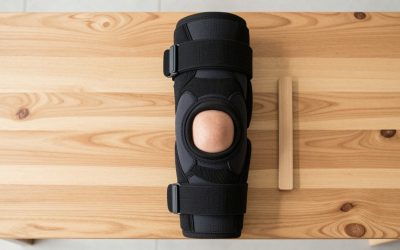
- Bracing and supports: knee sleeves and hand supports help some people with daily tasks.
- Massage tools: gentle handheld massagers can ease surrounding muscle tension, but should not be used over inflamed joints without clinical advice.
Frequently Asked Questions
Can red light therapy cure arthritis?
No source reviewed makes a credible claim that it cures arthritis. Reviews describe possible reductions in pain and stiffness, mostly in knee osteoarthritis, while joint damage is managed through medical care. Treat any device as an add-on you discuss with your doctor.
Which wavelengths are best for joint pain?
Seller and review sites most often recommend a combination of 660 nm red and 850 nm near-infrared, with the near-infrared band linked to deeper joints. Some devices use 810, 830 or 880 nm instead, which fall in the same near-infrared family.
Is a wrap better than a panel?
A wrap is easier for one or two joints and keeps the light at a fixed distance. A panel covers more area and suits several joints, but needs space and consistent positioning. Your choice depends on which joints bother you and how you prefer to sit or lie during a session.
How long until I notice a difference?
Sources that give timelines mention several weeks of regular use, and results vary from person to person. Because that advice comes from sellers, keep a simple pain diary and review it with your clinician.
Is it safe to use with arthritis medication?
That depends on the medication. Some drugs increase sensitivity to light, so ask your doctor or pharmacist before you start. Do not change or stop any prescribed treatment because of a light device.
What does FDA-cleared mean on a light device?
It means the agency reviewed that specific device for a specific stated use and found it substantially equivalent to an existing one. It is not a guarantee of results. Ask the maker for the clearance letter and read exactly what it covers.






Write Your Review
No reviews yet. Be the first to share your experience!