

Key takeaways
- The best car diagnostic tools for DIY repairs are the BlueDriver for an easy phone-based experience, the Innova 5610 for a dedicated handheld with service resets, the Autel MaxiCOM MK808S for deeper all-system work, and a basic OBD-II code reader…
The best car diagnostic tools for DIY repairs are the BlueDriver for an easy phone-based experience, the Innova 5610 for a dedicated handheld with service resets, the Autel MaxiCOM MK808S for deeper all-system work, and a basic OBD-II code reader for inexpensive check-engine-light diagnosis.
Our top picks



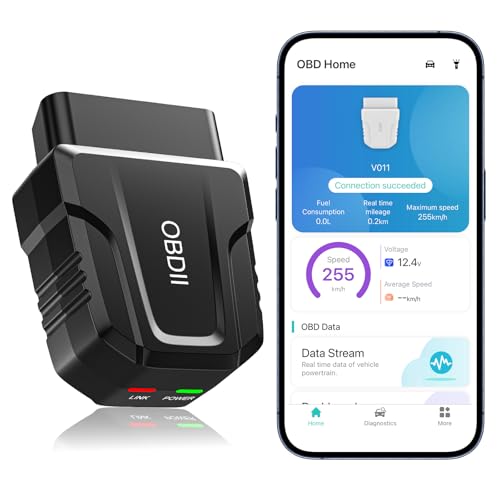
As an Amazon Associate we earn from qualifying purchases at no extra cost to you. Ratings are shown as listed on Amazon.
Best car diagnostic tools at a glance
| Tool | Best for | Typical price range in 2026 | Approx. screen or device size | Typical update policy | Main limitation |
|---|---|---|---|---|---|
| Basic OBD-II code reader | Occasional check-engine-light checks | $25–$80 | 2–4 inch wired display | Often free or limited | Usually engine-only; few reset functions |
| BlueDriver | Phone users who want clear repair information | $90–$130 | About 2.5 × 1.5 × 1 inches; under 3 oz | App updates generally included | Requires a compatible phone and app |
| Innova 5610 | DIY owners wanting a dedicated tool and common resets | $250–$350 | Approximately 5-inch color display | Typically included for a limited period, then varies | Less extensive than a professional all-system scanner |
| Autel MaxiCOM MK808S | Frequent repairs and broad module access | $400–$600 | About 7-inch tablet display; roughly 1.5–2 lb | Usually subscription-based after the included term | Higher ownership cost and a steeper learning curve |
Dimensions, weight, and pricing can vary slightly by revision, regional bundle, and included accessories. Treat them as buying ranges rather than guaranteed specifications.
Which tool should you buy?
Choose a basic OBD-II reader for one or two cars
A simple reader is enough if your goal is to retrieve and clear generic powertrain codes, view a small selection of live data, and determine whether a car is ready for an emissions inspection. It is the lowest-cost option and normally draws power directly from the vehicle, so there is no battery to maintain.
Its weakness is limited coverage. Many inexpensive readers cannot communicate with body, airbag, ABS, transmission, or all-wheel-drive modules. They may also display a code such as P0301 without explaining the likely diagnostic path. Clearing the code does not repair the underlying fault and can erase useful freeze-frame information.
Choose BlueDriver for the easiest interpretation
BlueDriver combines a small Bluetooth adapter with a mobile app. It is particularly useful for owners who want plain-language code descriptions, reported fixes, repair reports, and live-data graphs without buying a tablet-style scanner.
Coverage is broader than a generic reader on many supported vehicles, but it is not universal. The available systems and reset functions depend on the make, model, year, and the app’s current support. It is best for diagnosis and information, not for advanced coding or module programming. A phone or tablet with Bluetooth, adequate storage, and a reliable connection is required.
Choose the Innova 5610 for a dedicated DIY scanner
The Innova 5610 is a good middle ground for someone who works on vehicles regularly but does not want a professional subscription platform. Its wired handheld design avoids pairing problems and keeps the display available even when a phone is being used for a repair manual or parts lookup.
Depending on vehicle support, it can provide ABS and airbag information as well as functions such as oil-life, battery, or steering-angle-related resets. Confirm the exact coverage for your vehicle before buying: “full system” access is not the same on every model year. Its repair guidance is useful, but it still requires testing with a multimeter, wiring diagram, or service procedure.
Choose the Autel MaxiCOM MK808S for frequent, deeper repairs
The MK808S is aimed at serious DIY users and small garages. It can typically scan multiple control modules, show richer live data, perform numerous maintenance resets, and run active tests on supported vehicles. Active tests let the scanner request an action—such as commanding a fan, relay, or actuator—rather than merely reading stored information.
This capability makes it more powerful, but it also increases the risk of an incorrect command. Follow the on-screen conditions and manufacturer procedures, especially around brakes, electronic parking brakes, steering systems, and airbag circuits. Its major ownership issue is update cost: the tool may remain functional after the included update period, but newer vehicle coverage and bug fixes can require a paid renewal.
Head-to-head buying criteria
Code coverage
Generic OBD-II tools primarily cover emissions-related engine and transmission data. Enhanced tools may access ABS, supplemental restraint systems, body electronics, and manufacturer-specific modules. If your repair question involves an airbag warning, wheel-speed sensor, electronic parking brake, or automatic transmission, verify system coverage before purchase rather than relying on the phrase “full diagnostic.”
Live data
Look for graphing, recording, and the ability to display several parameters at once. Useful examples include short- and long-term fuel trim, oxygen-sensor readings, coolant temperature, mass-airflow rate, engine load, commanded throttle position, and misfire counters.
A scanner that merely lists numbers is less useful than one that shows trends. For example, a fuel-trim value that rises at idle but improves at higher engine speed can point the investigation toward an intake-vacuum problem. The scanner does not prove the fault; it helps decide what to test next.
Reset and service functions
Common functions include oil-service reset, battery-registration support, electronic parking-brake service mode, steering-angle calibration, diesel particulate filter procedures, and throttle or idle relearn. These functions are vehicle-specific. A tool may support an oil reset on one model but not a battery registration or brake service mode on another.
Repair information
The most valuable tools explain likely causes, show code definitions, provide freeze-frame data, and distinguish symptoms from confirmed failures. Be cautious with “most likely fix” lists. They are starting points, not permission to replace the first part mentioned. A proper diagnosis compares scan data with electrical tests, physical inspection, and the vehicle’s service information.
Decision matrix for different DIY owners
| Your situation | Best fit | Why | What to give up |
|---|---|---|---|
| Under $80 and used fewer than three times per year | Basic OBD-II reader | Low purchase cost and no subscription | Limited module coverage and explanations |
| One household vehicle; prefers phone guidance | BlueDriver | Portable, clear reports, useful live-data presentation | Phone dependence and vehicle-specific coverage limits |
| Two or more vehicles; wants a physical handheld | Innova 5610 | Dedicated screen and broader DIY service functions | Not as deep as a professional tablet |
| Frequent repairs involving several modules | Autel MaxiCOM MK808S | Wide system access, active tests, and many resets | Higher price, updates, and learning time |
| Vehicle is newer, European, hybrid, or heavily networked | Current-generation tablet scanner with confirmed coverage | Better chance of supporting newer modules and procedures | Coverage and subscription costs must be checked carefully |
Calculate the real cost before buying
Compare ownership cost rather than purchase price alone. Suppose a $60 reader is used twice a year for four years: $60 divided by eight uses equals $7.50 per use. A $500 tablet used for 30 repair sessions over the same period costs $16.67 per use before any renewal fee. If the tablet requires a $150 update renewal after the first year, its four-year cost becomes $650, or $21.67 per use.
The tablet can still be the better value if it prevents several unnecessary parts purchases or supports repairs that the basic reader cannot diagnose. For occasional code checks, however, its extra capability may never repay the difference.
How to use a diagnostic tool without creating new problems
- Confirm the vehicle. Record the year, make, model, engine, and relevant module before purchasing or selecting a scan profile.
- Inspect first. Check the fuel cap, battery voltage, visible wiring, connectors, fluid leaks, and obvious mechanical damage.
- Scan before clearing. Save stored codes, pending codes, freeze-frame data, and mileage. Clearing codes can remove clues and reset emissions monitors to “not ready.”
- Check live data under the right conditions. Compare readings at cold start, warm idle, and during a road test when safe. A single number without operating context can mislead.
- Test before replacing. Use a wiring diagram, multimeter, smoke test, pressure gauge, or mechanical inspection when the code points to a system rather than a failed part.
- Clear and retest only after repair. Confirm that the warning does not return and that the relevant monitor completes its drive cycle.
Ownership details people often overlook
On wired tools, the cable and connector are usually the first parts to suffer from being pulled or left under a dashboard. Store the cable loosely, avoid hanging the tool from it, and keep the connector dry. Bluetooth adapters have no display and may be misplaced; remove one from the diagnostic port if it remains powered after the vehicle is parked.
Keep tablet batteries above roughly 20% before a long scan, and install updates over stable Wi-Fi. Never interrupt a module reprogramming procedure because of low power or an automatic shutdown. For phone-based tools, maintain app permissions for Bluetooth and local network access as required by the operating system.
Finally, do not treat a code as a parts order. A P0420, for example, can involve exhaust leaks, sensor behavior, fueling problems, or a worn catalytic converter. The best car diagnostic tools narrow the possibilities; they do not replace a complete repair diagnosis.
Final recommendation
Buy a basic reader for occasional engine-code checks, BlueDriver when understandable phone reports matter most, the Innova 5610 for a practical dedicated DIY device, and the Autel MaxiCOM MK808S when frequent multi-system diagnosis justifies its cost and update policy. Before purchasing, enter your exact vehicle details into the manufacturer’s coverage list and confirm the specific reset functions you expect to use.



Write Your Review
No reviews yet. Be the first to share your experience!