

Key takeaways
- Vibrating rollers and foot rollers. The Theragun Wave and Power Plate DualSphere add gentle vibration to a roller. The reviewer describes the Wave as a supplement to a regular roller instead of a replacement.
- Cold immersion. The Plunge, a chilled tub, is listed with a temperature range of 37 to 103 degrees Fahrenheit and a roughly 100 gallon capacity. It is a very high tier outlay, and the reviewer reports reduced perceived soreness only. Cold exposure is not suitable for everyone, so speak with a doctor if you have heart or blood pressure issues.
- Topical rubs. Tiger Balm lists camphor and menthol and gives a warming or cooling feel. It does not repair tissue, and you should avoid broken skin and follow the label.
- Recovery footwear. OOFOS slides use cushioned foam and are a comfort pick for tired feet.
- Sleep support. The same roundup lists a sleep supplement and stresses sleep quality as a major recovery factor. Speak with a doctor or pharmacist before taking any supplement.
- Epsom salt baths. The reviewer says research suggests the benefit may be psychological, but a warm bath is relaxing.
The best muscle recovery tool for most people is a foam roller such as the TriggerPoint GRID, with a percussion massage gun like the Theragun Prime as the next step, and compression boots like the Hyperice Normatec reserved for those who train hard and can afford a premium extra. Recovery gear helps you feel looser and more comfortable, but sleep, food and a sensible training load do the heavy lifting, so spend in that order: simple manual tools first, powered tools second, premium devices last.
Our top picks


As an Amazon Associate we earn from qualifying purchases at no extra cost to you.
Recovery Tools at a Glance
The comparison below draws on Garage Gym Reviews’ recovery roundup, Men’s Journal, RepReturn and Pain Cave’s list for cyclists, and uses stated specifications where the sources give them.
| Tool | Type | Best for | Stated specs | Limits |
|---|---|---|---|---|
| TriggerPoint GRID foam roller | Manual roller | Quads, back, calves, first purchase | 13 in long, 5.5 in wide, 500 lb capacity | Too wide for the feet, bulky to carry |
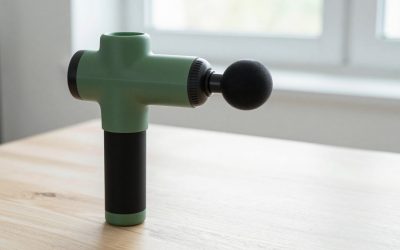
| Theragun Prime | Massage gun | All-round muscle work at home | 16 mm amplitude, 30 lb stall force, 1,750 to 2,400 PPM, 2 hour battery | Not very portable, moderate noise |
| Hypervolt Go 2 | Mini massage gun | Travel and gentle use | About 10 mm amplitude, 3 hour battery per roundup | Lower stall force, two attachments |
| Hyperice Normatec 2.0 boots | Compression | Tired legs after long sessions | 7 pressure levels, several sizes | Premium tier, bulky, needs 20 to 30 minute sessions |
| Therabody JetBoots | Compression | Hands-free leg recovery | Seated or lying session, per Adam Kemp Fitness | Premium tier, storage |
| Theragun Wave | Vibrating roller | Gentle rolling with vibration | 12 in long, 5 vibration settings, 3 hour battery | Flat surface penetrates less |
| Power Plate DualSphere | Vibrating foot roller | Feet and calves | 4 vibration speeds, 3 hour battery | Vibration only, no case |
| Dimple ball or lacrosse ball | Manual ball | Glutes, shoulders, feet | 3.5 to 3.8 in diameter | Can leave bruising, slippery when sweaty |
Start With the Manual Tools
RepReturn advises spending on a foam roller before spending several times as much on a percussion device, and Pain Cave says foam rolling has the strongest evidence base of any tool on its list. Garage Gym Reviews calls the TriggerPoint GRID one of the best recovery tools you can buy at a low tier, praising the textured grooves and a core that resists compressing, and noting the diameter is too large for the feet. Garage Gym Reviews’ separate foam roller roundup names the REP Fitness three-in-one roller as its best overall under a modest outlay, a good alternative if you want options in firmness.
A roller is also the most flexible tool. You control the pressure with your body weight, there is nothing to charge, and it works on thighs, calves, upper back and hips. The common mistake is rolling fast and hard. Move slowly, pause on tender spots for a short period, and avoid rolling directly on joints, the lower back, or any area that is bruised or injured.
A ball is the next cheap addition. The dimple ball in the Garage Gym Reviews list is a rubber ball about 3.5 to 3.8 inches across that spreads pressure over a larger surface than a lacrosse ball. The reviewer notes it can leave temporary bruising and can pull body hair, so work gently.
When a Massage Gun Makes Sense
A percussion gun suits people who dislike getting down on the floor, who have difficulty reaching their own back, or who want quick relief between sets. Multiple outlets name the Theragun Prime as the best value or best overall, citing its 16 mm amplitude and quiet brushless motor. Men’s Journal picks the Theragun Pro Plus, while Pain Cave lists the Theragun Elite as its best gun and calls the Pro Plus overkill for most buyers. A home gym guide cited in the roundup says a mid-range gun is the sensible choice for most users.
For travel, Hypervolt’s Go 2 is named the portable pick, and the Hypervolt 2 Pro is credited as the quietest. A separate guide on mini guns compares the Ekrin BANTAM and the Theragun Mini; see that guide for details. Pain Cave rates the evidence for massage guns as mixed, so treat them as comfort tools.
Compression Boots: A Premium Extra
Garage Gym Reviews names the Hyperice Normatec 2.0 boots as its best compression pick, with seven pressure levels and a Zone Boost feature, and Pain Cave picks the Normatec 3 Legs. Adam Kemp Fitness favours the Therabody JetBoots Pro Plus for tired legs. The advantage is that you can sit or lie down for a 20 to 30 minute session while the device works. The drawbacks cited are cost, bulk and storage, and RepReturn warns that most recovery gear is expensive and marginal. Pain Cave rates the evidence for compression as moderate.
If you have a circulation problem, a history of blood clots, swelling in one leg, diabetes with nerve changes, or heart disease, ask a doctor before using compression devices. Follow the pressure and time guidance in the manual.
Other Tools Worth Knowing
- Vibrating rollers and foot rollers. The Theragun Wave and Power Plate DualSphere add gentle vibration to a roller. The reviewer describes the Wave as a supplement to a regular roller instead of a replacement.
- Cold immersion. The Plunge, a chilled tub, is listed with a temperature range of 37 to 103 degrees Fahrenheit and a roughly 100 gallon capacity. It is a very high tier outlay, and the reviewer reports reduced perceived soreness only. Cold exposure is not suitable for everyone, so speak with a doctor if you have heart or blood pressure issues.
- Topical rubs. Tiger Balm lists camphor and menthol and gives a warming or cooling feel. It does not repair tissue, and you should avoid broken skin and follow the label.
- Recovery footwear. OOFOS slides use cushioned foam and are a comfort pick for tired feet.
- Sleep support. The same roundup lists a sleep supplement and stresses sleep quality as a major recovery factor. Speak with a doctor or pharmacist before taking any supplement.
- Epsom salt baths. The reviewer says research suggests the benefit may be psychological, but a warm bath is relaxing.
Building a Simple Routine
Tools work best as part of a routine, not as a pile of gadgets. A practical sequence that reviewers and trainers often describe is a short warm-up before training, a few minutes of foam rolling or ball work on the muscles you just used, a walk or easy movement to cool down, and a proper meal and a full night of sleep. Recovery days with light activity, such as an easy walk, a swim, or mobility work on a yoga mat, are often more useful than another device.
Match the tool to the muscle. Quads, hamstrings and the upper back respond well to a roller. Glutes and shoulder blades are easier to reach with a ball against a wall or the floor. Calves and feet suit a vibrating foot roller or a ball. Forearms and hands, which cyclists and lifters often forget, can be worked with a mini gun or a small ball. Large, hard-to-reach areas such as the lower back are where a gun earns its place, but keep it away from the spine itself and work the muscles on either side.
Think about storage and noise before you buy. A roller needs floor space, a boot system needs a shelf or bag, and a gun needs a charging spot. If you share a home, check how loud a device is, since percussion guns vary widely. Finally, be wary of marketing claims about flushing toxins or repairing tissue. Reviewers in this category repeatedly describe the benefit as comfort and perceived looseness, and the stronger claims are not well supported.
Budget Tiers
| Tier | What to buy | Why |
|---|---|---|
| Budget | Foam roller, dimple or lacrosse ball, manual stick | Strongest evidence per reviewers, no battery, durable |
| Mid-range | Massage gun such as the Theragun Prime or Ekrin BANTAM | Convenience and reach for the back and shoulders |
| Premium | Compression boots, cold tub | Hands-free comfort for high training loads |
Safety and Care
Recovery tools are for sore, healthy muscle. Pain that is sharp, one-sided swelling, warmth and redness in a calf, numbness, or soreness that lasts well beyond several days are reasons to see a doctor, not to buy another gadget. Keep rollers and balls clean with a damp cloth, charge devices with the supplied cable, and keep boots dry and stored as the manual advises.
Pick X If You Want This
| Pick this | If you want |
|---|---|
| TriggerPoint GRID or REP three-in-one roller | The cheapest, best-supported place to start |
| Theragun Prime | A well-reviewed all-round gun for most buyers |
| Hypervolt Go 2 | A small, quieter gun for travel |
| Normatec or JetBoots | Hands-free leg recovery and a large budget |
| Theragun Wave or DualSphere | Gentle vibration on a roller or for feet |
| Dimple ball | A portable tool for glutes and shoulders |
Frequently Asked Questions
What is the best first recovery tool to buy?
A foam roller is the usual answer. Reviewers say it has the strongest support among recovery tools and costs a fraction of powered gear. Add a ball for the glutes and shoulders if you need targeted pressure.
Is a massage gun better than a foam roller?
Neither is clearly better. A gun is easier to use on your back and needs less effort, while a roller is cheaper and gives you control with body weight. Many reviewers suggest buying the roller first and the gun second.
Are compression boots worth the cost?
For most people they are a luxury. Reviewers describe them as comfortable and relaxing for tired legs, but expensive, bulky and with only moderate evidence. If you ask a doctor and your budget is generous, they can be a nice addition.
How often should I use recovery tools?
Makers and reviewers generally suggest short sessions after exercise or on rest days rather than long marathon sessions. Follow each manual, and stop if the area becomes more painful or bruised.
Can recovery tools replace rest and sleep?
No. One guide stresses quality sleep as one of the most dependable ways to support recovery, and tools only add comfort. If you feel constantly sore or tired, review your training load and talk to a coach or clinician.
Who should avoid these tools?
Anyone with a clotting condition, an implanted device, circulation problems, an acute injury, open wounds or pregnancy should consult a doctor first. Stop if you notice numbness, sharp pain or unusual swelling.





Write Your Review
No reviews yet. Be the first to share your experience!