

Key takeaways
- Start gradually. Stand Desk Lab advises beginning with 30 to 60 minute stretches and building up over days.
- Alternate seats. Switch between a kneeling chair, a standard chair and standing during the day instead of using one position all day.
- Watch your knees and shins. Stop if you feel pain, tingling or numbness. People with knee, hip, ankle or circulation problems should talk to a doctor or physical therapist before using one.
- Mind your back. If you have ongoing back pain, see a clinician. A chair is not a substitute for medical advice.
- Get in and out carefully. Wheeled bases can roll when you mount. Lock casters or lean on a stable surface.
- Follow the manual. Respect the weight limit and assembly steps from the maker.
For most desk workers, a height-adjustable kneeling chair with thick cushions, such as the DRAGONN by VIVO or the NYPOT, is the practical starting point; the Varier Variable Balans suits people who want a rocking, furniture-grade seat; and a model with a backrest, like the Varier Thatsit Balans or the Sihoo, suits anyone who wants to lean back at times. A kneeling chair changes your sitting angle, but it is a tool for varying posture, not a medical treatment.
Our top picks

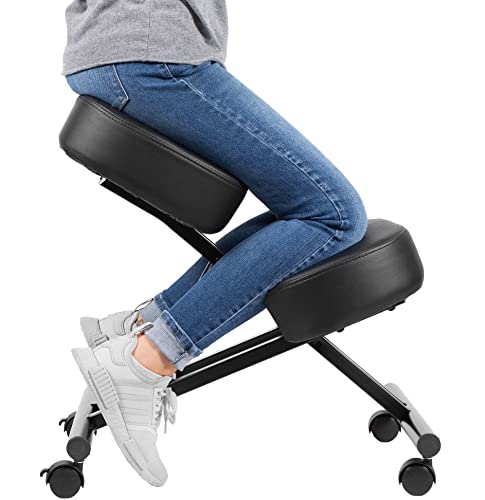

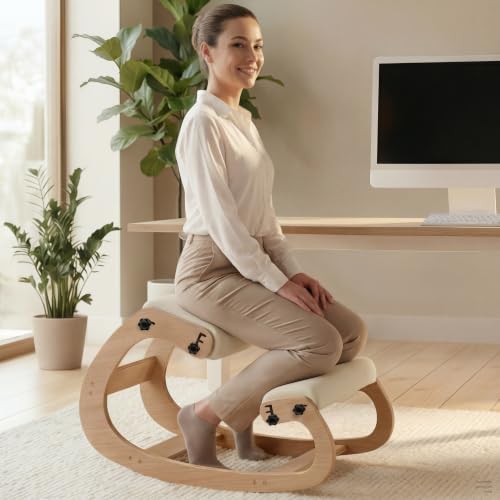
As an Amazon Associate we earn from qualifying purchases at no extra cost to you.
Best Kneeling Chairs at a Glance
| Chair | Best for | Key stated specs | Limits |
|---|---|---|---|
| Varier Variable Balans | Active sitting with a rocking base | Curved runners, fixed height, no backrest, ten-year warranty listed; designed by Peter Opsvik in 1979 | Non-adjustable height, no back support, premium tier |
| Varier Thatsit Balans | Rocking base plus a backrest | Adjustable seat and shin rest, adjustable backrest, ten-year warranty listed | Highest tier; rigid furniture-grade feel |
| DRAGONN by VIVO | First-time users and value | Height range of about 21 to 28 inches per Stand Desk Lab, rolling casters, thick cushions (ICGI cites 3 inch vinyl; Stand Desk Lab cites 4 inch) | Fixed base, no backrest; not ideal for 8-hour days |
| NYPOT Ergonomic | Adjustable all-rounder | Named best overall by two roundups; five-year warranty cited | Fixed (non-rocking) design |
| Sleekform Austin | Taller users and thick padding | Wide height adjustment, no casters, 265 lb capacity in one table | Stationary; no rocking |
| Sihoo Ergonomic | A kneeling chair with a backrest at a lower tier | Steel frame, height adjustable, backrest, contoured cushions | Not furniture-grade; backrest is firmer than an office chair |
| VIVO Ergonomic | Trying the idea cheaply | Height adjustable, casters, thinner cushions | Lighter users and short sessions; some reviewers report knee discomfort |
Details come from Stand Desk Lab, ICGI and other 2026 roundups, many of which are affiliate publications, so treat their rankings as opinions and read the maker’s own page for dimensions, weight limits and warranty terms before buying.
How a Kneeling Chair Works
A kneeling chair has a sloped seat and a shin rest. Your hips sit higher than your knees, which opens the angle between torso and thighs to roughly 110 to 135 degrees, according to the typical descriptions in these roundups, compared with about 90 degrees on a flat seat. Some of your weight moves from the sit bones to the shins. Makers and reviewers say this encourages an upright lower back and less slumping. There is no strong medical evidence in these sources that it cures back pain, and the reviews themselves describe the chair as one option in a posture routine.
What to Look For
Cushion depth and density
Because your shins carry load, padding is the first thing reviewers judge. Stand Desk Lab suggests at least 3 inches of cushion depth and notes that thinner pads on cheap models can cause knee or shin discomfort. One review of the Yaheetech chair mentions that about 13 percent of reviewers reported knee discomfort from insufficient padding. If your shins feel numb or sore, change the seat height or stop.
Height range and desk fit
Measure your desk height and your leg length. The DRAGONN lists a seat range of about 21 to 28 inches in one review, which suits many desks. The Sleekform Austin is praised for a wide range useful to taller people and sit-stand desks. A chair that is too low strains the wrists; too high and your thighs clash with the desk.
Base type: fixed, rolling or rocking
Rolling casters make the chair easy to move but may let it creep. A fixed base is steadier but less mobile. Rocking bases, like the Varier Balans line, allow constant small motion that some people find engaging and others find tiring. Try to learn which you prefer before committing to a higher tier.
Backrest or not
No backrest forces you to hold yourself upright, which can fatigue muscles you are not used to using. A backrest, as on the Thatsit Balans and Sihoo, lets you rest. Consider one if you plan longer sessions or have trouble holding posture.
Weight capacity and frame
Capacity varies. One roundup lists the Sleekform Austin at 265 lb. Check the maker’s stated limit and look for a steel frame and a stable base. Wobbly legs or thin welds are common complaints on budget chairs.
Budget, Mid-Range and Premium Tiers
Budget tier
The VIVO Ergonomic and similar entry chairs offer the lowest-cost way to try the posture, per Stand Desk Lab. Expect thinner cushions and shorter lifespans. They suit lighter users and sessions of less than an hour or so.
Mid-range tier
The DRAGONN, NYPOT, Sleekform Austin and Sihoo sit here. They offer thicker cushions, wider adjustment and sometimes a backrest. Most buyers land in this tier.
Premium tier
The Varier models are the premium picks, with ten-year warranties listed and a design lineage dating to the 1970s. They suit people who sit for hours and want a durable, furniture-style object. The trade-off is a fixed height on the Variable Balans and a high cost.
Using a Kneeling Chair Safely
- Start gradually. Stand Desk Lab advises beginning with 30 to 60 minute stretches and building up over days.
- Alternate seats. Switch between a kneeling chair, a standard chair and standing during the day instead of using one position all day.
- Watch your knees and shins. Stop if you feel pain, tingling or numbness. People with knee, hip, ankle or circulation problems should talk to a doctor or physical therapist before using one.
- Mind your back. If you have ongoing back pain, see a clinician. A chair is not a substitute for medical advice.
- Get in and out carefully. Wheeled bases can roll when you mount. Lock casters or lean on a stable surface.
- Follow the manual. Respect the weight limit and assembly steps from the maker.
Pick This Chair If You Fit This Profile
| Pick this if you… | Choose | Why |
|---|---|---|
| Are new to kneeling chairs | DRAGONN by VIVO or NYPOT | Adjustable with substantial cushions |
| Want to try it with minimal outlay | VIVO Ergonomic | Lowest-cost entry per reviewers |
| Want constant gentle motion | Varier Variable Balans | Rocking runners |
| Need to lean back sometimes | Varier Thatsit Balans or Sihoo | Backrest options |
| Are tall or use a sit-stand desk | Sleekform Austin | Wide height range and no casters |
| Are heavier and need a firm frame | A model with a stated high capacity, such as the Sleekform Austin | Confirm the limit with the maker |
Alternatives to a Kneeling Chair
Saddle stools and active stools
A saddle stool uses a split seat and a similar open hip angle without a shin rest. It suits people whose knees object to kneeling pressure.
Ergonomic office chairs
A good adjustable task chair with lumbar support spreads load across the thighs and back. For many people this remains the most comfortable full-day option.
Balance ball chairs and standing desks
A stability ball chair introduces movement but offers no support. A sit-stand desk lets you alternate between sitting and standing. Reviewers suggest pairing a kneeling chair with a standing routine instead of relying on one device.
Who Should Think Twice
A kneeling chair is not for everyone. People with knee, ankle or hip problems, poor circulation in the legs, or a history of shin or foot numbness should speak with a doctor or physical therapist before trying one. Pregnant users, anyone recovering from a lower-body injury and people who find it hard to get up from low positions may also prefer a standard ergonomic chair. Heavier users should confirm the maker’s stated weight limit and look for thicker padding and a sturdy steel frame. Taller users should check that the seat range covers their desk height. If a kneeling chair feels worse after a week of gradual use, that is a sign to stop and choose a different seat instead of pushing through discomfort.
Finally, remember that no seat fixes a day spent motionless. Reviewers repeatedly suggest standing, stretching and walking breaks alongside any chair choice. Treat the kneeling chair as one seat in a rotation, and adjust the rotation to how your body responds.
Frequently Asked Questions
Do kneeling chairs actually fix posture?
They change the angle of your pelvis and hips, which can make it easier to sit upright. The roundups describe them as a way to vary your posture, not as a cure for pain or a medical device. Anyone with persistent pain should see a doctor.
How long should I sit in one?
Stand Desk Lab suggests starting with 30 to 60 minutes and building up. Rotate with other seats through the day. Stop if you notice numbness or pain.
Are kneeling chairs bad for your knees?
Most of the load rests on the shins, not the knees, but people with knee or circulation problems may find them uncomfortable. Thicker cushions help, and a doctor or physical therapist can advise if you have joint issues.
Which is better, rocking or fixed?
Rocking chairs like the Varier Balans line encourage small movements, while fixed chairs are steadier and often cheaper. Your preference and the type of work you do should decide. Many first-time buyers start with a fixed model.
What height should I choose?
Choose a chair whose seat range lets your forearms sit level with the desk while your feet or shins are comfortable. Models with a wide range, like the DRAGONN or Sleekform Austin, suit more desks. Measure your desk before buying.
Do I need a backrest?
A backrest is optional. Without one, you hold yourself up, which can tire you early. A backrest lets you lean and rest, which is useful for longer sessions.






Write Your Review
No reviews yet. Be the first to share your experience!