
Our Short List of 3

- Size: Medium, fits hip measurement 34 to 40 inches
- Model: SIBv2-M, by Serola Biomechanics, Inc.
- Weight and width: 4 ounces; about 3 inches wide, low-profile band
- Closure: Hook-and-loop, with a non-elastic primary layer and an elastic secondary layer

- Size: Regular, fits hip circumference 32 to 47 inches
- Dimensions: 46 x 3.6 x 0.25 inches; weight 5.3 ounces
- Model: Hip Belt, by PlayActive; first listed in July 2018
- Material: Neoprene and nylon blend with anti-slip inner strips

- Size: Small/Medium; the two-size SI-LOC system together covers about 30 to 60 inches of pelvic circumference
- Model: 670, by OPTP; designed by physical therapist Valerie Phelps
- Weight: 1.44 ounces; tapered design, wider at the sides of the pelvis
- Closure: Dual hook-and-loop closures with a movable front buckle slide
All 5 Picks at a Glance
| Product | Specs | Action |
|---|---|---|
| 1. Serola Sacroiliac Belt, Medium |
| Check price on Amazon |
| 2. PlayActive Sacroiliac SI Joint Hip Belt, Regular |
| Check price on Amazon |
| 3. OPTP SI-LOC Support Belt, Small/Medium |
| Check price on Amazon |
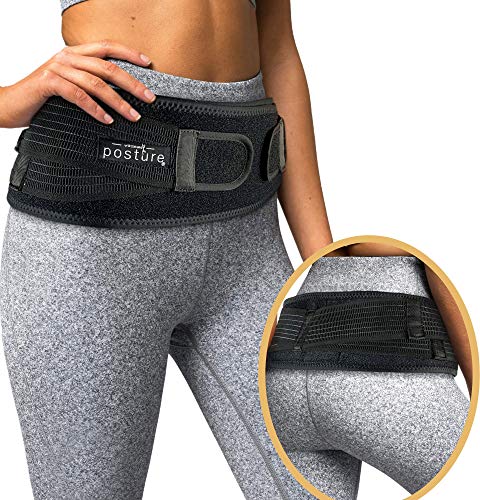 4. Vriksasana Posture Sacroiliac Hip Belt, Regular, Black |
| Check price on Amazon |
 5. Sparthos Sacroiliac SI Hip Belt, Regular, Black |
| Check price on Amazon |
Key takeaways
- Compare sacroiliac belts on trochanter fit, strap tension, padding and sizing to stabilize the pelvis and calm SI joint pain while sitting or walking.
As an Amazon Associate we earn from qualifying purchases.
Disclosure: This article contains affiliate links. If you buy through these links, we may earn a commission at no extra cost to you.
Pain that sits low, just off the center of your back, and flares when you stand up, climb stairs, or roll over in bed often points to the sacroiliac joints. These two small joints link your sacrum to your pelvis, and when they move too much or sit slightly out of balance, the ache can spread into the buttock, hip, and upper leg. A sacroiliac belt is a focused tool for that pattern of pain. Unlike a tall lumbar brace, it wraps low around the hips, at the level of the greater trochanters, and applies steady inward pressure that holds the pelvis together while you sit, stand, and walk.
The best sacroiliac belts sit low rather than high, let you fine-tune tension after you put them on, and stay in place without constant tugging. Beyond that, designs differ. Some use a firm, non-elastic main band for a hard stop against excess motion. Others use padded neoprene and silicone grip strips for softer, longer wear.
This guide compares five real, currently listed models, each with a clear sizing method and a distinct reason to choose it. Read the buying criteria first, because position and tension matter more than brand.
How to Choose a Sacroiliac Belt
Fit at the trochanters, not the waist
Measure around your hips, not your waist. Most makers ask for hip circumference at or just above the bony points on the sides of your hips, called the greater trochanters. Wear the belt at that low level, below the top ridge of the pelvis and across the upper buttock area in back. If it rides up to your waist, it is the wrong size or positioned too high. Between sizes, follow the maker guidance, because a belt that is too long overlaps awkwardly and loses even pressure.
Strap tension and adjustment style
Look for two-stage adjustment. A main closure sets the overall fit, and secondary straps let you add or release tension while the belt stays on. You may want firmer support for a walk, a lighter hold for a long drive, and a small release before a meal. Aim for snug and steady, never numb or pinching. If your legs tingle or the edges dig in, loosen the belt and reposition it lower.
Padding, grip, and wear under clothing
Thin, low-profile belts disappear under work clothes and suit a full shift. Padded neoprene belts feel softer at the edges and can be kinder during postpartum recovery, but hold more warmth. Silicone strips, textured inner foam, or non-slip linings all serve one purpose: keeping the belt from sliding upward as you move. If you plan to wear a belt while walking, exercising lightly, or sleeping, grip and edge comfort deserve extra weight.
Sizing range and belt width
Precise size ladders give a cleaner fit near the middle of each range. Broad ranges, such as one regular size spanning fifteen inches, forgive weight changes and household sharing, but the overlap can feel bulkier on smaller frames. Most belts here are about three to four inches wide, narrow enough to sit below the pelvis ridge without folding when you sit.
The 5 Best Sacroiliac Belts
1. Serola Sacroiliac Belt, Medium
- Size: Medium, fits hip measurement 34 to 40 inches
- Model: SIBv2-M, by Serola Biomechanics, Inc.
- Weight and width: 4 ounces; about 3 inches wide, low-profile band
- Closure: Hook-and-loop, with a non-elastic primary layer and an elastic secondary layer
The Serola is the most purpose-built design here, and a clinician favorite for many years. Its non-elastic primary layer acts like an external ligament, setting a firm limit on excess motion at the joint, backed by a secondary elastic layer that adds adjustable compression. Pressure is broad and steady rather than stretchy, and wearers notice it keeps them aware of holding the pelvis level.
Fit is deliberate. The medium covers hips from 34 to 40 inches, and the ladder runs from small through extra-large, so most people land near the middle of a range. At three inches wide and four ounces, it conceals well under a work shirt. The trade-off is feel: the firm band can seem intrusive in a chair, so loosening it slightly for desk work becomes routine. Choose the Serola for the firmest, most stabilizing hold, worn exactly as directed, low on the hips.
2. PlayActive Sacroiliac SI Joint Hip Belt, Regular
- Size: Regular, fits hip circumference 32 to 47 inches
- Dimensions: 46 x 3.6 x 0.25 inches; weight 5.3 ounces
- Model: Hip Belt, by PlayActive; first listed in July 2018
- Material: Neoprene and nylon blend with anti-slip inner strips
The PlayActive is the forgiving all-rounder here. One regular size spans hips from 32 to 47 inches, removing much of the sizing anxiety of narrower ladders, and the 46-inch length gives plenty of overlap. The 3.6-inch band covers the joint area without feeling like a tall back brace, and at 5.3 ounces it stays light through errands, office work, or light exercise.
Secondary straps are the highlight. Once the main band is set, pull the outer straps to add support for a walk or standing, then ease them off when you sit. Inner anti-slip strips hold the low position over clothing or on skin. Smaller wearers get more overlap in front, which can feel bulky under fitted clothing. If you want one belt that is easy to size, easy to share, and simple to adjust on the move, this is the straightforward pick.
3. OPTP SI-LOC Support Belt, Small/Medium
- Size: Small/Medium; the two-size SI-LOC system together covers about 30 to 60 inches of pelvic circumference
- Model: 670, by OPTP; designed by physical therapist Valerie Phelps
- Weight: 1.44 ounces; tapered design, wider at the sides of the pelvis
- Closure: Dual hook-and-loop closures with a movable front buckle slide
The SI-LOC takes a lighter, tapered approach. Its band is wider over the sides of the pelvis, where pressure does the stabilizing work, and narrower elsewhere, so pressure spreads evenly without a thick pad pressing into the abdomen. At well under two ounces, it is the lightest belt here and hides under clothing more easily than any padded model, a genuine advantage for people who find standard belts hot or bulky.
Dual closures let you position the front buckle slide in the center or off to one side, whichever clears your hip bones better. Sizing is measured about an inch above the top points of the hip bones, and maker guidance notes that only modest force is needed, closer to a snug hand squeeze than a hard cinch. The two-size system is less fine-grained than the Serola ladder, so measure carefully. Pick the SI-LOC if low bulk and gentle, even pressure matter more than firmness.
4. Vriksasana Posture Sacroiliac Hip Belt, Regular, Black
- Size: Regular, fits hips about 32 to 45 inches; belt length about 44 inches
- Weight: 6.7 ounces; band width about 3.75 inches
- Material: Moisture-wicking neoprene with a non-slip silicone double strip
- Closure: Hook-and-loop main band with strong elastic secondary straps
The Vriksasana is built for long, quiet wear. Its moisture-wicking neoprene body and silicone double strip keep the belt seated low through office hours, walks, and light gym sessions, and the slim profile sits discreetly under jeans or a dress. The brand positions it for day and night use during an initial settling-in period, and many wearers find the padded feel easier to keep on than a firm non-elastic band.
Sizing sits between the PlayActive and the Serola in precision. The regular covers roughly 32 to 45 inches at the hips, with a plus size in the same line, so check which variant you order. Elastic secondary straps add support without re-seating the whole belt. Warmth is the main compromise, and the band can bunch slightly over slick athletic fabrics. Choose the Vriksasana for a softer, cushioned hold over many hours and a discreet look under everyday clothes.
5. Sparthos Sacroiliac SI Hip Belt, Regular, Black
- Size: Regular (REG), black; model SPHSI-Bl-R
- Weight: 7 ounces; package dimensions 8.78 x 6.93 x 2.6 inches
- Material: Perforated neoprene blend with multiple silicone grip strips
- Closure: Hook-and-loop main band with multiple independent compression straps
The Sparthos suits people who like to tune pressure in zones rather than all at once. Multiple compression straps let you firm up one side or section more than another, which helps when pain is clearly one-sided, a common pattern with sacroiliac irritation. The perforated neoprene body breathes better than a solid wrap, and the silicone strips inside give a planted, slip-resistant feel during walking, chores, and light training.
At seven ounces it is the heaviest belt here, though still light overall, and the extra strap ends need tidying to lie flat under clothing. A larger variant is offered separately, so confirm your hip measurement against the seller size chart before ordering. Pick it if you move a lot during the day and value adjusting tension in small, separate steps.
Comparison Summary
All five belts do the same core job, holding the pelvis with low, inward pressure, but suit different wearers. The Serola offers the firmest stabilization and the most precise size ladder. The PlayActive offers the widest single-size range and simplest adjustment. The OPTP SI-LOC is the lightest and least bulky, with gentle, even pressure. The Vriksasana adds padded comfort and strong grip for long use. The Sparthos adds zoned, multi-strap tuning and a perforated body for active days.
Every belt here is worn at the hips, not the waist, and uses secondary adjustment, because re-tuning tension without removing the belt is essential in daily life. Widths cluster between three and four inches, and weights stay under half a pound. If pain is sharp and tied to pelvic instability, lean toward the Serola or the Sparthos. For steady workday support, lean toward the PlayActive or the SI-LOC. For the longest daily wear, look at the Vriksasana.
Frequently Asked Questions
How tight should a sacroiliac belt feel?
It should feel snug and steady, like a firm hand pressing inward on both sides of your pelvis, while still letting you breathe, sit, and walk normally. You should be able to slide a flat hand under the belt with mild resistance. Tingling, numbness, pinching, or pain that grows while wearing it means the belt is too tight or too high, so loosen it and move it lower, to the bony points on the sides of your hips.
How long should I wear a sacroiliac belt each day?
Many people wear one during the hours that provoke pain, such as work shifts, walks, drives, and chores, and remove it during rest. Some makers suggest longer daily wear, including during sleep, for an initial period. Follow the guidance with your model, build up gradually, and check in with a clinician if you need the belt all day for more than a few weeks.
Can I wear a sacroiliac belt while sitting at a desk?
Yes, and sitting is a common time to wear one, because prolonged sitting can let the pelvis drift and irritate the joint. Keep the belt low rather than letting it creep up to your waist, and ease the secondary straps slightly for long seated stretches, then firm them again when you stand. Re-centering the belt every hour or so helps comfort and support.
When should I see a clinician instead of relying on a belt?
See a clinician promptly if pain follows a fall or injury, travels below the knee with weakness or numbness, or comes with changes in bladder or bowel control, fever, unexplained weight loss, or steady worsening despite rest. A belt is a support tool, not a diagnosis. Persistent pain deserves an in-person assessment so other causes, such as disc problems, hip joint issues, or inflammatory conditions, are not missed.
Conclusion
The best sacroiliac belts succeed through placement and steady pressure, not bulk. Measure at your hips, wear the belt low at the trochanters, and adjust tension in small steps as your day changes between sitting, standing, and walking. For the firmest hold, choose the Serola. For easy sizing, choose the PlayActive. For the lightest, most discreet wear, choose the OPTP SI-LOC. For padded comfort, choose the Vriksasana, and for zoned tuning, choose the Sparthos. Give your pick a fair trial of consistent, correctly positioned wear, with gentle movement and clinician guidance if pain persists.
More from Amazon
Programs that pair well with the guide above. Offers and eligibility are set by Amazon and may change.
Collect the home and kitchen items you want in one registry that guests can shop from.
Create a wedding registrySet up recurring deliveries of everyday items on eligible products. Terms and savings are set by Amazon.
Explore Subscribe & SaveFree shipping on eligible items, Prime Video and more. Eligible new members can start with a free trial.
Start a Prime free trialAudiobooks and podcasts to listen to on the go. Eligible new members can start with a free trial.
Try Audible freeAs an Amazon Associate we earn from qualifying purchases.

Write Your Review
No reviews yet. Be the first to share your experience!