

Key takeaways
- Check Android requirements: Older phones may not meet the minimum Android version, Bluetooth, or Google Play requirements.
- Expect brand restrictions: Samsung’s ECG and blood-pressure-related functions are the clearest example of features tied to a Samsung phone and regional availability.
- Separate notifications from replies: Most watches can mirror Android notifications, but replying, sending voice messages, viewing media, and handling group conversations varies by app.
- Confirm payment support: Google Wallet, Garmin Pay, and regional bank support do not overlap perfectly. Check your bank before choosing a watch for payments.
- Consider the companion app: Garmin Connect, Fitbit, Samsung Health, COROS, and the OnePlus or Google wearable applications organize data differently. The app you will open every day matters as much as the watch.
The best smartwatch for Android users is the Google Pixel Watch 3 for a polished Google-phone experience, the Samsung Galaxy Watch7 for Samsung owners, the Garmin Venu 3 for long battery life and fitness tracking, and the OnePlus Watch 2 for Wear OS features without daily charging.
Compatibility matters more than the watch’s feature list. Some watches work with nearly any recent Android phone, while others reserve health tools, voice features, or setup options for one manufacturer’s phones. Before comparing screens and sensors, check your phone’s Android version, whether Google Play services are available, and whether you can accept charging every day or two.
Our top picks


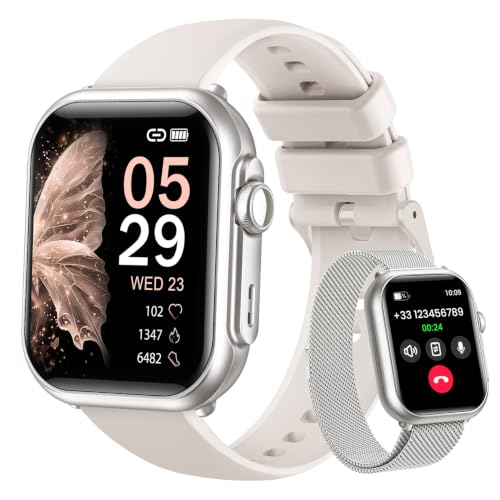

As an Amazon Associate we earn from qualifying purchases at no extra cost to you. Ratings are shown as listed on Amazon.
Best Android smartwatches by situation
| Best for | Recommended watch | Why it fits | Main limitation |
|---|---|---|---|
| Most Google Pixel and general Android users | Google Pixel Watch 3 | Excellent notifications, Google apps, safety features, and compact design | Roughly one day of battery life |
| Samsung Galaxy phone owners | Samsung Galaxy Watch7 | Strong Wear OS app support and deep Samsung Health integration | Some health functions are limited outside Samsung phones |
| Runners and frequent travelers | Garmin Venu 3 | Up to 14 days in smartwatch mode and reliable multi-band-style fitness features | Fewer third-party apps than Wear OS watches |
| Long battery with Wear OS apps | OnePlus Watch 2 | Dual-engine design, Google Play access, and up to about 100 hours in smart mode | Large and heavy on smaller wrists |
| Low-weight GPS training | COROS Pace 3 | About 30 g with a nylon band and up to 38 hours of GPS use | Limited smartwatch apps and less advanced notification handling |
Quick comparison: the numbers that affect ownership
| Model | Weight and size | Battery claim | Water resistance | Platform and phone limits | Typical 2026 market range |
|---|---|---|---|---|---|
| Google Pixel Watch 3 | 41 or 45 mm; approximately 31–37 g without band | About 24 hours with always-on display | 5 ATM and IP68 | Android only; some Google features require a compatible phone | $250–$450 |
| Samsung Galaxy Watch7 | 40 or 44 mm; approximately 29–34 g without band | About 30 hours, depending on size and settings | 5 ATM and IP68 | Android only; several health functions work best or only with Samsung phones | $200–$400 |
| Garmin Venu 3 | 45 mm; approximately 47 g with standard band | Up to 14 days in smartwatch mode; about 26 hours of GPS | 5 ATM | Works with Android and iPhone, but messaging replies are more capable on Android | $350–$450 |
| OnePlus Watch 2 | 47 mm; approximately 80 g with band | Up to 100 hours in smart mode; less with heavy GPS and display use | 5 ATM and IP68 | Android only; some features are optimized for OnePlus phones | $250–$350 |
| COROS Pace 3 | 41.9 mm; about 30 g with nylon band | Up to 24 days daily use; about 38 hours GPS | 5 ATM | Android and iPhone; focused on training rather than app-rich smartwatch use | $200–$250 |
Battery figures are manufacturer estimates under selected conditions. Always-on displays, music streaming, LTE, frequent GPS recording, bright screens, and continuous health measurements can reduce them substantially.
Google Pixel Watch 3: best all-round choice for many Android phones
The Pixel Watch 3 is the easiest recommendation when you want a small, refined watch with Google Maps, Google Wallet, Google Assistant, Gmail, Calendar, and responsive notification handling. It is available in 41 mm and 45 mm sizes, so it suits more wrists than many large sports watches.
Its health hardware includes optical heart-rate tracking, blood-oxygen-related sensors in supported regions and configurations, skin-temperature sensing, electrical heart sensing, and a built-in GPS system. GPS performance is suitable for everyday walks, runs, and route recording, although dedicated outdoor watches can be more consistent around tall buildings, dense trees, or steep terrain.
The trade-off is charging. If it lasts approximately 24 hours for your settings, a user wearing it continuously for a year would need roughly 365 charging sessions. That is manageable if you charge while showering or working, but inconvenient for sleep tracking if you forget regularly. Fitbit features are useful for trends and exercise records, but some advanced insights may require a paid Fitbit Premium subscription.
Samsung Galaxy Watch7: best for Samsung Galaxy phones
The Galaxy Watch7 offers a bright AMOLED display, Wear OS apps, Google services, Samsung Health, GPS, sleep tracking, optical heart-rate monitoring, and an electrical heart sensor. Its 40 mm and 44 mm cases are lighter and more compact than many large sports watches.
It is the strongest choice for a Samsung phone because features such as Samsung Health Monitor functions may depend on a Samsung Galaxy device and regional approval. ECG and blood-pressure-related tools also vary by country and require appropriate setup; they should not be treated as a substitute for professional assessment.
With roughly a day to a day and a quarter of practical battery life for many users, the Galaxy Watch7 is better suited to people comfortable with frequent charging. Notification actions are excellent: you can reply to messages, use preset responses, view images in some apps, and manage calls from the wrist. On non-Samsung Android phones, basic pairing may work, but the experience is less complete.
Garmin Venu 3: best battery and balanced fitness features
The Venu 3 is a better fit if you want health and exercise information without charging every night. Its headline battery estimate is up to 14 days in smartwatch mode, while GPS use is measured in hours rather than days. In practical terms, a weekend of outdoor workouts is much less likely to leave it empty than a one-day Wear OS watch.
Garmin provides optical heart-rate tracking, pulse-ox features, sleep and recovery metrics, built-in GPS, workout profiles, music storage, and structured training tools. The Venu 3 also supports calls from the wrist when paired with a compatible phone. Android users can typically use notification replies, whereas iPhone users face more restrictions.
Its app ecosystem is narrower than Wear OS. Garmin Connect IQ includes useful watch faces and specialized apps, but it does not match Google Play for general-purpose apps. Choose it for training records, battery life, and readable metrics—not for the largest selection of messaging, travel, and payment apps.
OnePlus Watch 2: best Wear OS battery compromise
The OnePlus Watch 2 uses a dual-engine architecture to separate demanding Wear OS tasks from lower-power background work. It offers Google Play apps, Google Maps, Google Wallet, notifications, calls, GPS, sleep tracking, heart-rate monitoring, and a durable sapphire crystal display.
Its 47 mm case and approximately 80 g weight with band make it noticeably larger than the Pixel Watch 3 or Galaxy Watch7. That extra size helps provide strong battery life, but it can feel bulky during sleep or strength training. It is a sensible option for a user who wants Wear OS applications but dislikes daily charging.
Compatibility is broad across recent Android phones, although OnePlus phones may provide the smoothest integration. Before buying, confirm that your phone supports the required companion application and Google services, especially if it uses a heavily customized Android installation.
COROS Pace 3: best for lightweight GPS training
The COROS Pace 3 is not a conventional app-rich smartwatch, but it may be the better tool for runners, cyclists, and hikers who value low weight and long recording time. At about 30 g with its nylon band, it is easy to wear during long sessions, and its battery estimate reaches about 38 hours of continuous GPS use.
It includes optical heart-rate tracking, barometric elevation measurement, compass functions, route navigation, structured workouts, and multi-system satellite positioning. Its screen and notification system are functional rather than luxurious. You will not get the same breadth of Google apps, contactless payment options, or message interactions found on Wear OS.
How Android compatibility changes the buying decision
- Check Android requirements: Older phones may not meet the minimum Android version, Bluetooth, or Google Play requirements.
- Expect brand restrictions: Samsung’s ECG and blood-pressure-related functions are the clearest example of features tied to a Samsung phone and regional availability.
- Separate notifications from replies: Most watches can mirror Android notifications, but replying, sending voice messages, viewing media, and handling group conversations varies by app.
- Confirm payment support: Google Wallet, Garmin Pay, and regional bank support do not overlap perfectly. Check your bank before choosing a watch for payments.
- Consider the companion app: Garmin Connect, Fitbit, Samsung Health, COROS, and the OnePlus or Google wearable applications organize data differently. The app you will open every day matters as much as the watch.
Durability, cleaning, and ownership realities
Water resistance is not the same as indestructibility. Rinse salt, chlorine, sweat, and sunscreen from the case and band with fresh water, then dry the charging contacts. Avoid pressing buttons underwater unless the manufacturer specifically permits it. Do not use harsh solvents, abrasive cloths, or high heat.
The parts most likely to wear first are the band, charging cable, display coating, and seals after repeated impacts or chemical exposure. A replaceable band is an ownership advantage. Silicone is usually easiest to clean; nylon is light and breathable but absorbs moisture; leather is less suitable for swimming and heavy sweat.
GPS battery estimates also hide a common mistake: recording every activity with maximum satellite accuracy while streaming music and using an always-on display. For occasional walks, standard GPS and a raised-wrist display can extend runtime. For remote routes, charge fully, download maps or course data beforehand where supported, and carry a phone or other backup if navigation is important.
Final recommendation
Choose the Pixel Watch 3 for the most complete Google experience, the Galaxy Watch7 if you own a Samsung phone and want Samsung Health integration, the Garmin Venu 3 if charging is your main frustration, the OnePlus Watch 2 for large-screen Wear OS features and longer runtime, or the COROS Pace 3 for lightweight GPS training. If you have a medical concern about heart rhythm, blood pressure, sleep, or exercise safety, use wearable readings as general information and discuss persistent or concerning results with a qualified professional.

Write Your Review
No reviews yet. Be the first to share your experience!