

Key takeaways
- Choose the Ambient Weather WS-2902 or AcuRite Atlas when a console, broad measurements, and moderate price matter most. Choose the Tempest Weather System when app access, compact design, and reduced mechanical maintenance are priorities. Choose the Davis Vantage Vue for a durable, established all-in-one system,…
Best Weather Stations for Accurate Home Forecasts
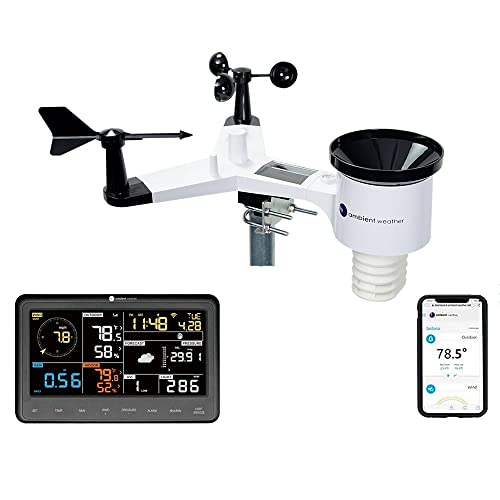
The best weather stations for accurate home forecasts are the Davis Vantage Vue for dependable all-in-one measurements, the Davis Vantage Pro2 for serious monitoring and expandability, the Tempest Weather System for the simplest modern setup, and the Ambient Weather WS-2902 for a lower-cost station with a useful indoor display.
A weather station will not replace a national forecast service: it measures conditions at your property and uses local pressure, temperature, wind, rain, and humidity trends to improve short-range awareness. The right choice depends less on the largest feature list than on sensor accuracy, siting, wireless reliability, display usability, and how much installation and maintenance you are prepared to handle.
Our top picks


As an Amazon Associate we earn from qualifying purchases at no extra cost to you. Ratings are shown as listed on Amazon.
Quick comparison of the best weather stations
| Station | Best for | Key measurements | Wireless range | Power and upkeep | Typical market range |
|---|---|---|---|---|---|
| Davis Vantage Vue | Accurate all-in-one outdoor monitoring | Temperature, humidity, pressure, wind, rain, UV, solar radiation | Up to about 300 m line of sight; less through walls and trees | Solar-assisted outdoor unit with battery backup; periodic rain gauge cleaning | About $400–$650 |
| Davis Vantage Pro2 | Detailed, expandable installations | Temperature, humidity, wind, rain, pressure; optional radiation and air-quality accessories | Up to about 300 m line of sight | Solar-assisted sensor suite with battery backup; more parts to inspect | About $600–$1,000+ |
| Tempest Weather System | App-first, low-maintenance monitoring | Temperature, humidity, pressure, wind, rain, lightning, solar radiation, UV | Sensor to hub is typically up to about 300 m line of sight | Solar-powered sensor; rechargeable or mains-powered hub depending on setup | About $300–$450 |
| Ambient Weather WS-2902 | Budget buyers wanting a console and internet access | Temperature, humidity, wind, rain, pressure, UV, solar radiation | Often rated around 100 m in open conditions | Solar-assisted outdoor array plus batteries; replace batteries periodically | About $150–$250 |
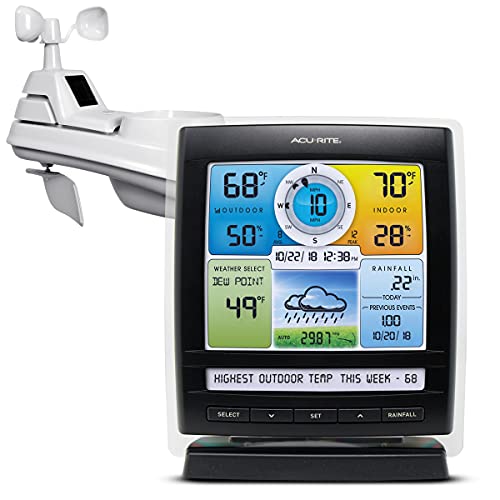
| AcuRite Atlas | Home users who prefer a straightforward console | Temperature, humidity, wind, rain, pressure, UV, solar radiation | Commonly rated around 100 m in open conditions | Solar-assisted sensor with battery backup; funnel and sensor cleaning required | About $200–$350 |
Wireless figures are optimistic line-of-sight ratings. A brick wall, foil-backed insulation, metal roofing, dense vegetation, or several floors can reduce the usable distance substantially. Treat the table as a comparison of design intent, not a guarantee for a particular house.
Which of the best weather stations fits your situation?
| Your situation | Most suitable choice | Why | Main compromise |
|---|---|---|---|
| First station, limited budget, moderate curiosity | Ambient Weather WS-2902 | Combines a color console, broad sensor coverage, and online data sharing at a relatively accessible price. | Less refined siting flexibility and typically less long-term expandability than Davis systems. |
| Frequent gardening, outdoor work, or local weather logging | Davis Vantage Vue | Well-established sensor design, strong data logging, and a compact integrated outdoor unit. | The integrated sensor block cannot separate the anemometer from the temperature sensor. |
| Large property or a carefully planned installation | Davis Vantage Pro2 | Allows more installation choices and accessories, including separated sensor arrangements in some configurations. | Higher cost and more installation decisions. |
| Apartment, rental, or app-centered household | Tempest Weather System | No tipping-bucket rain gauge to clog, no conventional anemometer cups to align, and a clean phone-based interface. | A hub and reliable Wi-Fi are part of the ownership experience; the app is more important than a dedicated console. |
| Someone who wants a physical display at a glance | Ambient Weather WS-2902 or AcuRite Atlas with console | Dedicated screens show current readings without opening a phone. | Many console models use small text and viewing angles that are less comfortable across a room. |
Sensor accuracy: the installation matters as much as the instrument
Temperature and humidity are the easiest readings to distort. A sensor mounted over concrete, beside a wall, under an eave, or in direct afternoon sun can report the structure’s heat rather than the surrounding air. For meaningful temperature readings, use a ventilated radiation shield and place the sensor roughly 1.2 to 2 metres above natural ground where possible. Keep it away from exhaust vents, dryer outlets, air-conditioning equipment, and dark roofs.
Wind accuracy depends heavily on height and exposure. A roof ridge or open mast is usually better than a fence post beside a house. Standard guidance places an anemometer around 10 metres above ground for formal exposure, but a residential installation may need to compromise. If you mount it lower, compare its readings as “your property’s wind” rather than as a perfect regional observation.
Rain gauges need a level mounting surface and unobstructed exposure. Leaves, insects, dust, and bird activity can block the funnel or alter the tipping mechanism. Ultrasonic rain measurement, used by systems such as Tempest, removes some mechanical cleaning issues, but it does not eliminate siting problems or the effects of splashing and nearby obstacles.
Display quality and connectivity
A dedicated console is best when you want instant information in a kitchen, workshop, or home office. Look for a screen with large current-value digits, adjustable brightness, a clear wind direction graphic, and a readable rain total. Some inexpensive consoles display many values but make them difficult to distinguish from normal sitting distance.
App-first systems are better for historical graphs, alerts, and checking conditions away from home. They also introduce dependencies: Wi-Fi credentials, cloud services, account access, and occasional firmware changes. Before buying, decide whether you need data when the internet is down. A console-based station can continue showing local readings during an outage, while an app may not.
For a remote sensor, test the proposed indoor location before permanently mounting the outdoor unit. Put fresh batteries in the sensor, place it at the planned position, and verify stable updates for at least several hours. A connection that works through an open window may fail once the sensor is mounted behind brick, foil insulation, or a metal frame.
Mounting options and setup demands
Most outdoor arrays attach to a pole between approximately 25 and 50 millimetres in diameter. A pole, wall bracket, roof mast, or existing fence post can work, provided the structure is rigid and the sensor is level. The pole is often not included, so budget for brackets, clamps, guy wires, and safe access equipment.
A practical installation sequence
- Map the property. Identify the most open position for wind, the safest accessible position for maintenance, and the likely indoor receiver location.
- Check the signal first. Temporarily place the outdoor unit at the proposed height and look for missed transmissions or repeated dropouts.
- Level and orient the array. Follow the manufacturer’s orientation marks, especially for wind direction and solar sensors. A small alignment error can persist in every reading.
- Secure the mount. Tighten clamps without crushing the pole, and use additional bracing where wind loading or roof height makes movement likely.
- Configure the software. Enter elevation, rainfall units, time zone, and location settings. Incorrect elevation can affect pressure comparisons and forecast displays.
- Record a baseline. Note the initial temperature, pressure, battery status, and rain total. This makes later troubleshooting much easier.
Ownership realities: what wears first?
Rain gauges usually need the most attention. Inspect the funnel and screen every few months, and check more often beneath trees. Clean with a soft brush and water; avoid forcing debris into the tipping mechanism. Replace outdoor batteries on the schedule recommended by the manufacturer, even if readings have not yet stopped. Weak batteries can cause intermittent transmission long before complete failure.
Mounting hardware also deserves inspection after severe weather. A slightly rotated wind sensor, leaning pole, or partially shaded solar panel can create a larger accuracy problem than normal sensor drift. Keep a simple maintenance note with dates, battery changes, cleaning, and any repositioning.
For a five-year ownership comparison, a $500 station used for daily decisions costs about $0.27 per day before batteries and replacement parts: $500 divided by 1,825 days. If you only check it once a week, the same purchase costs about $1.92 per use. That calculation explains why an expensive professional-style station is easier to justify for frequent monitoring than for occasional curiosity.
Bottom line
Choose the Ambient Weather WS-2902 or AcuRite Atlas when a console, broad measurements, and moderate price matter most. Choose the Tempest Weather System when app access, compact design, and reduced mechanical maintenance are priorities. Choose the Davis Vantage Vue for a durable, established all-in-one system, and step up to the Davis Vantage Pro2 when your property, logging needs, or future expansion justify a more involved installation.
The most accurate weather station is ultimately the one mounted in a suitable location, kept level and clean, and checked often enough for you to notice changing batteries or drifting readings.



Write Your Review
No reviews yet. Be the first to share your experience!