

Key takeaways
- Runners: look for pace, lap pace, cadence, heart-rate zones, vertical oscillation, ground-contact information and structured intervals.
- Cyclists: check support for power meters, speed and cadence sensors, indoor trainers and navigation.
- Swimmers and triathletes: verify pool length options, open-water GPS, multisport transitions and the ability to pair with relevant heart-rate equipment.
- Strength trainees: prioritize readable rest timers, custom workouts and comfortable wear over advanced running metrics.
- Recovery-focused users: compare sleep tracking, overnight heart-rate trends, heart-rate variability features and the ease of wearing the watch every night.
Best Sports Watches for Training and Recovery
The best sports watch for most runners and multisport athletes is the Garmin Forerunner 265, while the COROS Pace 3 is the stronger value choice, the Garmin Forerunner 965 suits endurance athletes who want maps and long battery life, and the Apple Watch Ultra 2 is the best fit for iPhone users who want a smartwatch first and a training tool second.
The right choice depends less on the longest feature list than on five practical questions: how accurate the GPS must be, how often you want to charge, which training metrics matter, whether you already own compatible sensors, and how comfortable the watch is during sleep and long workouts.
Our top picks
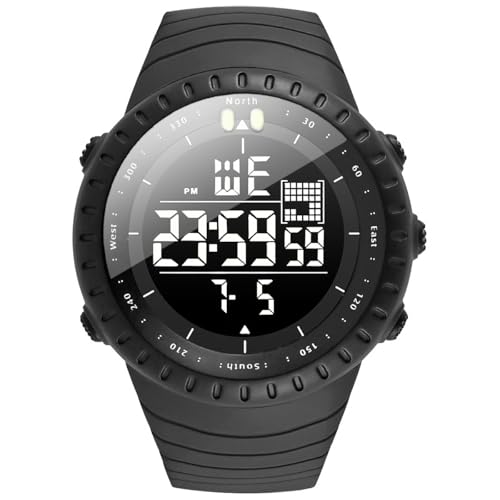

As an Amazon Associate we earn from qualifying purchases at no extra cost to you. Ratings are shown as listed on Amazon.
Quick comparison of the leading sports watches
| Watch | Weight and size | Battery claim | GPS and training strengths | Typical market range |
|---|---|---|---|---|
| COROS Pace 3 | 30 g with nylon band; 41.9 mm case | Up to 24 days daily use; up to 38 hours standard GPS | Dual-frequency GPS, structured workouts, running power, training load | About $200–$250 |
| Garmin Forerunner 265 | 39 g with silicone band; 46 mm case | Up to 15 days smartwatch mode; up to 20 hours GPS | Multiband GPS, AMOLED display, training readiness, recovery time | About $400–$450 |
| Garmin Forerunner 965 | 53 g with silicone band; 47 mm case | Up to 23 days smartwatch mode; up to 31 hours GPS | Multiband GPS, full-color maps, training status, navigation, triathlon profiles | About $550–$650 |
| Polar Vantage V3 | 57 g with wristband; 47 mm case | Up to 8 days smartwatch mode; up to 61 hours training mode with selected settings | Dual-frequency GPS, recovery and sleep analysis, orthostatic testing support | About $500–$600 |
| Apple Watch Ultra 2 | 61.4 g without band; 49 mm case | Up to 36 hours normal use; up to 72 hours in Low Power Mode | Dual-frequency GPS, excellent phone integration, cycling and multisport apps | About $700–$800 |
Battery figures vary with screen brightness, music, navigation, cellular use, wrist-heart-rate sampling and GPS mode. Manufacturers’ maximum figures are not directly comparable: a watch may last weeks as a daily timepiece but considerably less during continuous GPS recording.
Best sports watches by training situation
Best overall: Garmin Forerunner 265
The Forerunner 265 is the most balanced option for runners, gym users and multisport athletes who want meaningful guidance without moving into expedition-watch size. Its multiband GPS can improve track quality around tall buildings, dense trees and steep terrain, while the AMOLED screen is easy to read during intervals.
Useful training features include structured workouts, wrist-based running dynamics, training effect, recovery time, training readiness and daily suggested workouts. It also supports external heart-rate monitors, cycling sensors and running dynamics accessories through ANT+ and Bluetooth compatibility. Choose the smaller Forerunner 265S if a 46 mm case feels bulky; its smaller battery is the trade-off.
Best value and longest everyday battery: COROS Pace 3
The COROS Pace 3 is the sensible pick for athletes who prioritize low weight, simple controls and fewer charging interruptions. The nylon-band version weighs only about 30 grams, which is particularly comfortable for sleep tracking and high-repetition running.
Its dual-frequency GPS, breadcrumb navigation, running power support, interval workouts and training-load tools cover the needs of many runners and triathletes. The main compromises are a less luxurious display and a narrower smartwatch ecosystem than Apple or Garmin. It is a strong choice when training data matters more than apps, payments and rich map presentation.
Best for serious endurance and navigation: Garmin Forerunner 965
The Forerunner 965 earns its higher price through navigation, battery life and a larger training feature set rather than basic step counting. Its full-color maps are useful for trail running, bike touring and unfamiliar routes, and the 47 mm case provides room for a large data display without the bulk of many adventure watches.
It is particularly well suited to marathon, ultramarathon and triathlon training. Multiband GPS helps in difficult environments, while training status, acute load, recovery time and race-related tools help organize demanding weeks. If you mainly run familiar roads for 30 minutes at a time, its extra cost and features may go unused.
Best for recovery-focused analysis: Polar Vantage V3
The Polar Vantage V3 is worth considering when sleep, recovery and physiological feedback are central to your routine. Polar emphasizes overnight measurements, recovery interpretation, sleep stages, training load and guided tests. Its bright AMOLED screen, barometer and dual-frequency GPS also make it capable for outdoor training.
Recovery scores should be treated as decision support, not a diagnosis or a replacement for how you feel. If persistent fatigue, pain, dizziness or sleep problems affect training, consult an appropriately qualified health professional rather than relying on a watch metric.
Best smartwatch experience for iPhone owners: Apple Watch Ultra 2
The Apple Watch Ultra 2 is the best option for someone who wants cellular communication, notifications, music, navigation and a broad app ecosystem alongside training features. Its GPS performance is strong, the action button is useful for starting workouts quickly, and the large case is durable for outdoor use.
It is less appealing for athletes who dislike frequent charging or use an Android phone. Overnight recovery tracking also requires a charging routine, such as charging while showering and again during desk time. The large 49 mm case can feel excessive on smaller wrists, especially when sleeping.
GPS accuracy: what actually matters
Dual-frequency or multiband GPS can receive signals across more than one satellite frequency. In practice, that can reduce position errors caused by reflected signals near buildings, cliffs and heavy foliage. It does not guarantee perfect distance: tunnels, indoor sections, poor satellite visibility and deliberate route shortcuts still create errors.
For road running in open areas, a good single-frequency watch is often adequate. Multiband GPS becomes more valuable when you regularly train in cities, forests, mountains or narrow valleys. Watches with a barometric altimeter, such as the Forerunner 965 and Vantage V3, can also provide more useful elevation data than GPS-derived elevation alone.
Battery life and charging: calculate the practical runtime
Suppose a watch records four one-hour GPS workouts each week and you charge it once every 12 days in normal use. That equals roughly 12 hours of GPS recording per charge cycle. A watch claiming 31 hours of GPS battery life may therefore provide substantial margin, but always-on display, music and navigation can reduce it.
For frequent ultramarathon or multi-day hiking use, prioritize dedicated GPS endurance and a battery-saving mode. For ordinary training, a watch that lasts five to eight days in your real settings may be more convenient than one with a theoretical maximum that requires disabling the features you bought it for.
Sensor compatibility and workout metrics
Wrist heart-rate tracking is convenient, but an external chest strap usually responds more quickly during intervals and may be preferable for cycling, rowing or workouts with rapid intensity changes. Before buying, confirm that the watch supports the sensor type you own: Bluetooth, ANT+, or both.
- Runners: look for pace, lap pace, cadence, heart-rate zones, vertical oscillation, ground-contact information and structured intervals.
- Cyclists: check support for power meters, speed and cadence sensors, indoor trainers and navigation.
- Swimmers and triathletes: verify pool length options, open-water GPS, multisport transitions and the ability to pair with relevant heart-rate equipment.
- Strength trainees: prioritize readable rest timers, custom workouts and comfortable wear over advanced running metrics.
- Recovery-focused users: compare sleep tracking, overnight heart-rate trends, heart-rate variability features and the ease of wearing the watch every night.
Running power and training-load scores are most useful for observing trends within the same ecosystem. They should not be compared as if every brand calculates them identically.
Comfort, durability and ownership realities
A watch is only useful if you wear it consistently. Measure your wrist and compare it with the case dimensions, not just the listed weight. A large case can press into the wrist during push-ups, cycling and sleep, while a loose fit can reduce heart-rate accuracy. Wear the sensor snugly above the wrist bone during exercise, then loosen it afterward if comfortable.
The parts most likely to wear first are the band, charging cable and optical-sensor seal area. Rinse sweat and salt from the watch with fresh water, dry it before charging, and avoid applying sunscreen or cleaning chemicals directly to charging contacts. Do not use a metal tool to scrape contacts. Replace a damaged band rather than overtightening it, which can irritate skin and stress the lugs.
Battery capacity gradually declines over years. A watch with a replaceable band and reliable software support may be a better long-term purchase than a cheaper model whose proprietary cable or discontinued app becomes difficult to replace. Enable only the notifications and sensors you need; constant cellular use, bright screens and continuous blood-oxygen measurements can materially reduce runtime.
Final buying decision
- Choose the COROS Pace 3 for low weight, long battery life and a focused training experience at a lower price.
- Choose the Garmin Forerunner 265 for the best all-round balance of GPS, metrics, comfort and recovery guidance.
- Choose the Garmin Forerunner 965 for serious endurance training, mapping and longer GPS sessions.
- Choose the Polar Vantage V3 when sleep and recovery analysis are more important than smartwatch apps.
- Choose the Apple Watch Ultra 2 if you use an iPhone and want the strongest general smartwatch experience with capable training tools.
Whichever model you select, compare its real workout battery mode, sensor support and case fit before its headline feature count. Those three details determine whether the watch becomes a reliable training companion or another device left in a drawer.



Write Your Review
No reviews yet. Be the first to share your experience!