

Key takeaways
- Whether sonar hardware is built into the display.
- Which transducer frequencies and connector types are supported.
- Whether the unit can show traditional CHIRP, DownScan, SideScan, or high-frequency scanning.
Best Marine GPS for Safer Navigation
The best marine GPS for most small boats is a 7- to 9-inch chartplotter with a bright screen, IPX7 water protection, downloadable chart updates, and compatibility with the transducer and marine network you already use. For a compact fishing boat, the Garmin GPSMAP 723 or Raymarine Axiom+ 7 are strong choices; larger boats benefit from a 9- to 12-inch unit such as the Garmin GPSMAP 923, Simrad GO9 XSE, or Garmin GPSMAP 1243xsv.
Quick picks by boat and boating style
| Situation | Best fit | Why it makes sense | Typical price range |
|---|---|---|---|
| Small center-console or 16–20 ft fishing boat | Garmin GPSMAP 723 or Raymarine Axiom+ 7 | 7-inch display, compact flush or bracket mounting, strong chartplotter functions | About $700–$1,400 before transducer and charts |
| Frequent offshore or coastal cruising | Garmin GPSMAP 923 or Simrad GO9 XSE | 9-inch screen gives more chart area and room for split-screen navigation and sonar | About $1,000–$2,000 |
| Large helm with radar, AIS, and multiple displays | Garmin GPSMAP 1243xsv or a comparable 12-inch multifunction display | Large viewing area and better network integration for complex systems | About $2,500–$4,000 |
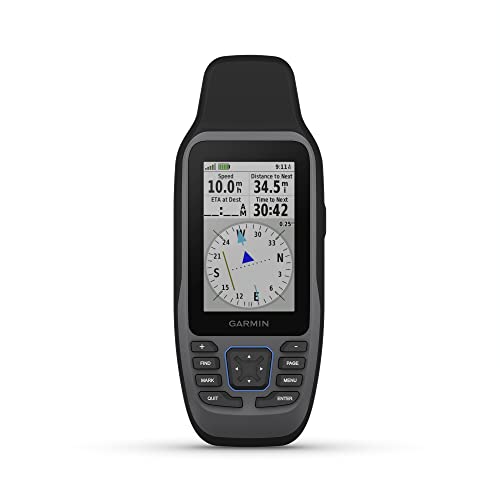
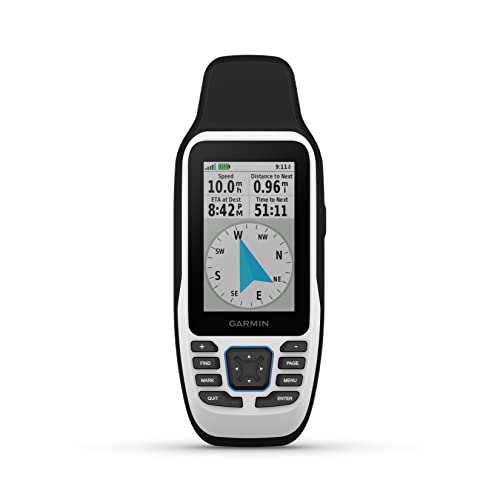
| Kayak, dinghy, or occasional freshwater use | Portable marine GPS or a rugged handheld GPS | Lower installation cost and easier removal; screen and battery capacity matter more than networking | About $200–$700 |
Head-to-head: the main marine GPS choices
Garmin GPSMAP 723 and 923
The GPSMAP 723 has a 7-inch touchscreen with a 1280 × 800 resolution, while the GPSMAP 923 steps up to a 9-inch screen with the same resolution class. Both are designed as networkable multifunction displays rather than simple position-only GPS receivers. They support Garmin Navionics+ cartography, waypoint and route planning, radar integration, autopilot control, AIS data, and compatible Garmin sonar equipment.
Our top picks


As an Amazon Associate we earn from qualifying purchases at no extra cost to you. Ratings are shown as listed on Amazon.
Choose the 723 when helm space is limited or the boat is under about 20 feet. Choose the 923 when you regularly use a split screen. A chart on one side and sonar, radar, or engine data on the other side is substantially easier to read on 9 inches than on 7 inches. Both offer IPX7 water protection, meaning they are designed to withstand temporary immersion under standardized test conditions, although the mounting area and cable connections still need careful sealing.
Raymarine Axiom+ 7 and Axiom+ 9
The Axiom+ range uses Raymarine’s LightHouse chartplotter system and is a good match for boaters already using Raymarine radar, autopilot, instruments, or networking hardware. The Axiom+ 7 has a 7-inch display, and the Axiom+ 9 has a 9-inch display. The displays are optically bonded for better outdoor visibility and support C-MAP and Navionics chart options, depending on region and software compatibility.
Some Axiom+ versions are sold with built-in RealBathy or sonar-related functions, while others require an external sonar module or compatible transducer. Confirm the exact model suffix before buying. A chartplotter that lacks the required sonar hardware cannot become a full fishfinder merely by downloading an app.
Simrad GO9 XSE
The Simrad GO9 XSE is aimed at boaters who want navigation, sonar, radar, autopilot, and entertainment controls in one interface. Its 9-inch display and split-screen layout suit cruising and fishing boats with enough dash space for a larger unit. Simrad’s C-MAP ecosystem is a natural match, and the unit can connect with compatible transducers, radar, instruments, and engine gateways.
Its main advantage is system integration. Its main limitation is that compatibility depends on the exact transducer, radar, and network components. Before purchase, check connector types and supported network standards rather than assuming every NMEA 2000 or Ethernet accessory will work with every function.
Garmin GPSMAP 1243xsv
A 12.1-inch display is easier to use from a standing helm or across a wide pilothouse, particularly when showing detailed charts, radar, sonar, and instrument data simultaneously. The GPSMAP 1243xsv includes sonar capability for compatible Garmin transducers and is built for larger networked installations. It is substantially heavier and more expensive than a 7-inch unit, so it needs a rigid dash or bracket and adequate power wiring.
What matters more than the brand
Screen size and sunlight readability
Screen size is not only about comfort. A 7-inch screen is approximately 6.1 inches wide in a typical 16:10 layout; a 9-inch screen is about 7.8 inches wide. That is roughly 60% more display area, which makes a noticeable difference when showing a chart alongside sonar.
Look for an optical or bonded display, an anti-glare surface, high brightness, and physical brightness controls. A glossy touchscreen can look excellent in a shaded showroom but become difficult to read when direct sun reflects from the helm. Touchscreens are convenient, but dedicated controls or a rotary knob are useful in rain, spray, and rough water.
Chart coverage
GPS accuracy does not create chart detail. The chart data comes from a separate cartography package, commonly Garmin Navionics+, Navionics, or C-MAP. Coverage varies by geographic region and subscription terms. Check that the package includes your home waters, likely cruising destinations, depth contours, marina information, tides, currents, and lake or river data if needed.
A useful buying calculation is the first-year cost. If a display costs $1,100, a transducer costs $350, and chart coverage costs approximately $150, the installed hardware-and-chart total is about $1,600 before labor and networking accessories. A cheaper display with incompatible charts or a missing transducer may cost more after the system is completed.
Waterproofing and installation
Marine displays commonly advertise IPX6 or IPX7 protection. IPX6 refers to protection against powerful water jets; IPX7 refers to temporary immersion. Neither rating means the unit can be pressure-washed, left underwater, or installed with exposed cable joints.
Use a drip loop on every cable, apply the manufacturer’s sealing method to the rear connectors, and mount the display where spray cannot collect behind it. Remove a portable unit when the boat is stored outdoors if theft, freezing, or prolonged weather exposure is a concern.
Sonar compatibility
For navigation only, a chartplotter with internal GPS is sufficient. For fishing or depth awareness, check three separate details:
- Whether sonar hardware is built into the display.
- Which transducer frequencies and connector types are supported.
- Whether the unit can show traditional CHIRP, DownScan, SideScan, or high-frequency scanning.
A transom-mount transducer is usually practical for smaller outboards. A thru-hull transducer offers a cleaner installation for many larger boats but may require professional fitting and careful consideration of hull construction.
Mounting and networking
Bracket mounting is easiest to service and lets you angle the screen toward the driver. Flush mounting looks cleaner and protects the unit from accidental knocks, but it requires cutting the dash and leaves less flexibility for upgrades. Measure the cutout, rear cable clearance, viewing angle, and steering-wheel obstruction before ordering.
NMEA 2000 is commonly used for instruments, GPS data, AIS, and engine information. Brand-specific Ethernet networks are often used for radar, sonar modules, and multiple displays. A single-screen boat may not need a complex network, while a cruiser with radar and autopilot should choose a display with sufficient network ports and expansion support.
Decision matrix for choosing the right size
| Your priority | Recommended size | Reason | Trade-off |
|---|---|---|---|
| Lowest installation cost | 5–7 inches | Smaller cutout, lower power demand, and cheaper accessories | Less room for split-screen information |
| Learning marine electronics | 7 inches | Enough room for charts without overwhelming a simple helm | Can feel cramped with sonar and radar together |
| Frequent fishing and navigation | 9 inches | Better chart and sonar separation; easier touch targets | Needs more dash space and costs more |
| Multiple networked systems | 10–12 inches or larger | More readable data panels and radar views at a distance | Higher purchase, installation, and replacement cost |
Ownership realities and common mistakes
The part that usually wears first is not the GPS receiver but the installation: sun-damaged covers, loose bracket hardware, corroded connectors, and cable seals. Rinse salt residue with fresh water, wipe the screen with a soft damp cloth, and avoid household glass cleaner or abrasive towels. Keep software and chart data current, but update at home or at the dock rather than relying on a weak cellular connection offshore.
Do not treat the chartplotter as a substitute for visual navigation, depth awareness, paper or backup electronic charts, a compass, and weather information. Set a shallow-water alarm, verify the chart datum and units, and test the display, transducer, and backup power before a longer trip.
Bottom line
For a compact boat, buy the brightest, best-supported 7-inch display that fits the helm. Move to 9 inches if you fish, cruise offshore, or want split-screen sonar and charts. Select a 12-inch unit only when the boat and networked equipment justify it. The best marine GPS is the one with compatible charts, a correctly matched transducer, secure waterproof installation, and a screen you can read from the normal operating position in full sunlight.

Write Your Review
No reviews yet. Be the first to share your experience!