

Key takeaways
- Loose coins: Avoid displaying them in open compartments. They can slide, scratch one another, and collect residue. Use inert capsules or individual holders first.
- Cardboard 2-by-2 flips: Choose trays with square compartments or removable dividers. Round recesses may allow the flips to shift.
- Plastic capsules: Measure the capsule’s outside diameter, not the coin’s diameter. A 39 mm coin can require a capsule wider than 45 mm.
- Slabs: Verify the internal height and support points. A case can have adequate length and width but still fail because the slab is too thick.
- Albums and folders: These are usually better for storage than display cases because pages turn easily and protect a large series in less space.
The best coin display cases are usually a purpose-built acrylic, wood-and-acrylic, or archival-fabric case chosen around your coin sizes, collection capacity, and available display space—not simply the case with the most compartments.
Our top picks


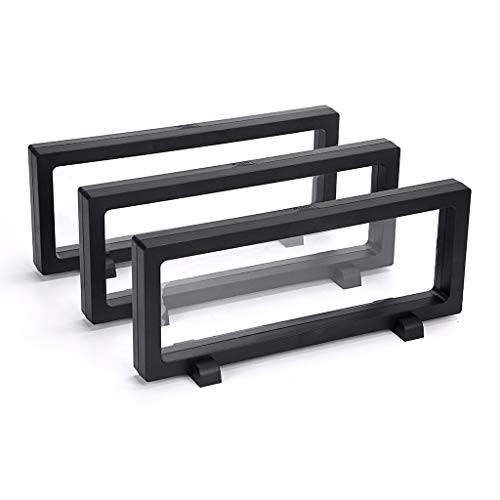
As an Amazon Associate we earn from qualifying purchases at no extra cost to you. Ratings are shown as listed on Amazon.
Best coin display cases by collecting situation
| Situation | Best case type | Typical capacity | Why it fits |
|---|---|---|---|
| Small collection on a desk | Clear acrylic tabletop case | 12–24 coins | Compact, easy to inspect, and usually the least expensive option |
| Growing collection with mixed denominations | Modular tray system with removable capsules | 24–60 coins per tray | Lets you change compartment sizes instead of replacing the entire case |
| Large collection in a cabinet | Stackable wooden or archival-fabric trays | 30–100 coins per tray | Uses vertical storage efficiently and supports collection organization |
| High-value coins displayed publicly | Lockable UV-filtering wall or tabletop case | 10–40 encapsulated coins | Combines visibility with better security and light control |
| Commemorative sets or medals | Deep presentation case with adjustable inserts | 4–20 large pieces | Accommodates oversized coins, medals, certificates, or stands |
What to check before buying
1. Capacity is more than the compartment count
A listing may say a case holds 40 coins, but that capacity can be misleading if every compartment is designed for a single small coin. Measure the diameter and thickness of your actual holders first. A case advertised for 2-inch compartments may accept a large capsule, but it may not hold two smaller capsules securely without movement.
Allow unused capacity for future purchases. A practical target is to fill no more than 70% to 80% of the case when you buy it. For example, if you currently own 28 encapsulated coins, a 40-position case gives you 12 open spaces—enough for additions without immediately reorganizing the display.
Also check the usable depth. A shallow tray may fit standard 2-by-2 cardboard flips but not thick slabs, presentation capsules, or coins mounted on stands. Deep cases are more flexible, although they occupy more shelf space and can make small coins harder to see.
2. Match the case to the coin holder
- Loose coins: Avoid displaying them in open compartments. They can slide, scratch one another, and collect residue. Use inert capsules or individual holders first.
- Cardboard 2-by-2 flips: Choose trays with square compartments or removable dividers. Round recesses may allow the flips to shift.
- Plastic capsules: Measure the capsule’s outside diameter, not the coin’s diameter. A 39 mm coin can require a capsule wider than 45 mm.
- Slabs: Verify the internal height and support points. A case can have adequate length and width but still fail because the slab is too thick.
- Albums and folders: These are usually better for storage than display cases because pages turn easily and protect a large series in less space.
Leave a few millimeters of clearance around each holder. A tight fit may look tidy, but it makes removal difficult and can force you to grip the holder against the coin window.
Materials: acrylic, glass, wood, and fabric-lined trays
Acrylic
Acrylic cases are light, clear, and affordable. Transparent lids make it easy to view the entire collection, while molded or removable compartments accommodate common capsule sizes. Their main weaknesses are scratching, static attraction, and susceptibility to cracking if overtightened or dropped. Clean acrylic with a soft microfiber cloth and a cleaner labeled safe for acrylic; household glass cleaner can damage or cloud some surfaces.
Glass
Glass resists fine scratches better than acrylic and often gives a more premium appearance. It is also heavier and can shatter, so a glass tabletop case should sit on a stable, level surface. For wall cases, confirm that the mounting hardware is rated for the fully loaded weight rather than the empty case.
Wood
Wooden cases provide a furniture-like appearance and work well in offices, cabinets, and living spaces. Look for smooth interior surfaces, reliable hinges, and a finish that does not shed particles. Wood itself is not automatically archival: varnish, adhesives, foam, and lining materials can be unsuitable for long-term contact with valuable coins.
Fabric-lined trays
Felt or velvet lining protects holders from scuffs and reduces sliding. However, loose fibers and dust can accumulate around the edges. For valuable pieces, the coin should remain inside an appropriate inert holder rather than touching the fabric directly. Replace or clean worn lining when it becomes dusty, compressed, or frayed.
UV protection, dust resistance, and security
UV-filtering acrylic or glass is useful if the case will sit near a window or under strong display lighting. It reduces exposure to ultraviolet light, but it does not make a case completely lightproof. Place valuable or color-sensitive pieces away from direct sun regardless of the advertised UV rating.
Dust resistance depends more on the seal than on the material. A hinged lid with a perimeter gasket generally keeps out more dust than an open tray with a loose cover. Look for a lid that closes evenly on all sides, but do not choose an airtight container for coins that are still damp or for materials that release moisture. Condensation trapped inside can be more harmful than ordinary room dust.
For a public room, a lockable case adds deterrence rather than complete protection. Use wall anchors appropriate to the wall structure, keep mounting screws inaccessible where possible, and avoid placing the case above seating or fragile objects. A locking tabletop case is easier to move but also easier to remove.
Wall-mounted versus tabletop display
Choose wall mounting when:
- You want the collection visible while preserving desk and shelf space.
- The display will remain in one location.
- You can anchor the case to a stud, masonry, or a properly rated wall fixing.
- The case has a secure door and a reliable hanging system.
Choose tabletop placement when:
- You frequently rearrange, photograph, or inspect the coins.
- You rent and do not want to install wall hardware.
- The case is small enough to move safely when fully loaded.
- You need quick access to a working collection rather than a permanent exhibit.
Measure the display area with the door open, not just the case’s exterior dimensions. A wall case may need 2 to 4 inches of extra clearance for a hinged door, while a tabletop case may need space behind it for a lid or stand.
Decision matrix for choosing the best coin display case
| Budget and use pattern | Recommended specification | Trade-off |
|---|---|---|
| Under about $40, occasional viewing | Acrylic case for 12–24 encapsulated coins, removable inserts, clear lid | More vulnerable to scratches and usually no lock |
| About $40–$100, regular collecting | Stackable tray or wood-and-acrylic case for 24–60 holders | Better organization, but greater depth and weight |
| About $100–$250, permanent display | Lockable wall case, UV-filtering panel, gasketed door, adjustable supports | Requires careful installation and stronger wall support |
| Mixed coins and slabs | Modular system with at least 25 mm of usable depth and interchangeable dividers | Less visually uniform than a case made for one holder type |
| High-value or historically important pieces | Archival holders inside a lockable, low-light display cabinet | Higher cost; professional security may still be appropriate |
Recognized brands and product types to consider
Collectors commonly encounter Whitman and Dansco albums, Lighthouse and Guardhouse storage solutions, and BCW display products. These brands cover several formats, but a brand name does not guarantee that every case suits every coin. Check the exact internal dimensions, holder compatibility, lining material, and replacement-part availability for the particular model.
For slabbed coins, a case designed around graded holders is usually more practical than forcing slabs into generic coin slots. For raw coins, use protective capsules before placing them in a display tray. For a presentation-style collection, a deep wood-and-acrylic case can look better than a high-capacity plastic tray, but it may provide fewer positions per square foot.
Setup and maintenance that extend case life
- Measure every holder. Record outside diameter, width, height, and thickness. Compare those measurements with the case’s internal dimensions.
- Clean the case before loading it. Remove manufacturing dust with a soft, dry microfiber cloth. Do not use abrasive paper towels on acrylic.
- Handle coins by their edges. Finger oils can stain surfaces and complicate later conservation.
- Keep spacing consistent. Use dividers or fitted inserts so holders cannot knock together when the lid closes.
- Control the location. Avoid radiators, damp basements, kitchens, bathrooms, and direct sunlight. Stable indoor conditions are preferable.
- Inspect twice a year. Check hinges, magnets, locks, wall fixings, gasket condition, lining fibers, and signs of condensation or corrosion.
The parts most likely to wear first are acrylic lids, felt lining, magnetic closures, small hinges, and foam inserts. Replacement inserts are valuable because they let you keep the case while your collection changes. If a lid becomes scratched, warped, or loose, move valuable pieces to a safer holder rather than relying on a damaged closure.
Bottom line
For most collectors, the best coin display cases are modular, dust-resistant cases that fit the collection’s existing holders and leave room for growth. Choose a compact acrylic tabletop case for a small working collection, a stackable tray for efficient expansion, or a lockable UV-filtering wall case for a permanent display. Capacity matters, but accurate holder fit, stable materials, sensible light control, and secure placement matter more than the number printed on the box.

Write Your Review
No reviews yet. Be the first to share your experience!