

Key takeaways
- People under about 130 pounds: often experience mattresses as firmer because they compress the comfort layers less. A medium or medium-soft surface may provide better contouring.
- People around 130–230 pounds: commonly have the widest range of suitable options, from medium to medium-firm, depending on position.
- People over about 230 pounds: may need stronger edge construction, a thicker support core, and a firmer comfort system to limit excessive sinkage.
Best Mattresses for Back Pain and Support
The best mattresses for back pain usually combine medium-firm support, pressure-relieving comfort, stable edge support, and enough surface flexibility to keep your spine in a neutral position while you sleep.
There is no single ideal mattress for every back sleeper. Body weight, sleep position, the shape of your hips and shoulders, how often you change position, and whether you share the bed all affect the right choice. A mattress that feels supportive at first may still create shoulder pressure, allow your pelvis to sink too far, or make turning difficult.
Our top picks
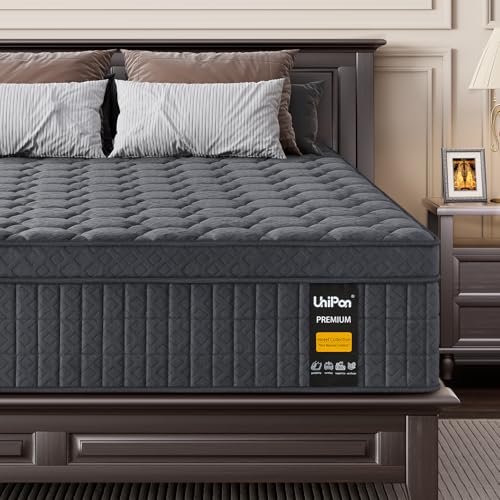

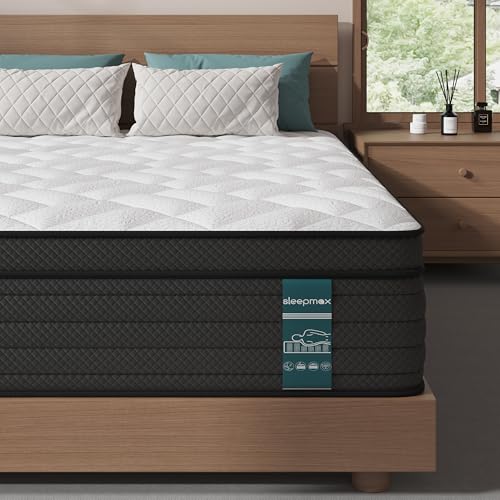
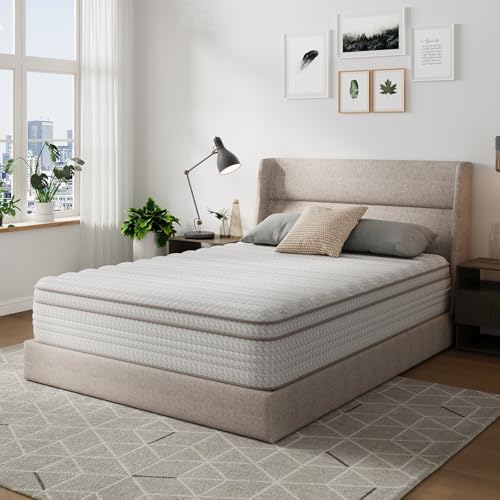
As an Amazon Associate we earn from qualifying purchases at no extra cost to you. Ratings are shown as listed on Amazon.
Quick picks by sleeping situation
| Sleeping situation | Most suitable construction | Useful firmness range | Why it may work |
|---|---|---|---|
| Back sleeper, average build | Hybrid with zoned coils and 2–4 inches of foam | Medium to medium-firm, roughly 6–7 out of 10 | Balances lumbar support with cushioning under the shoulders and hips |
| Side sleeper with shoulder or hip pressure | All-foam or hybrid with a softer comfort layer | Medium, roughly 5–6 out of 10 | Allows the shoulder and hip to sink without losing underlying support |
| Stomach sleeper or heavier sleeper | Firm hybrid with reinforced center support | Medium-firm to firm, roughly 7–8 out of 10 | Reduces excessive midsection sinkage and makes repositioning easier |
| Partner who changes position often | Individually pocketed coils with responsive foam | Medium-firm, adjusted for body weight | Combines easier movement with less transfer of motion than interconnected coils |
| Limited budget | Simple foam mattress with dense support core | Medium-firm, selected by weight and position | Can provide consistent support without paying for complex materials |
Firmness labels are not standardized. One manufacturer’s “medium-firm” can feel like another manufacturer’s medium or firm, so use the label as a starting point rather than a guarantee.
How firmness affects spinal support
A mattress should resist sagging enough to support your pelvis and rib cage, while still cushioning the parts of your body that press hardest into the surface. Too soft a mattress can let the hips drop below the shoulders, particularly for stomach sleepers and people with heavier midsections. That can feel comfortable initially but may make maintaining a neutral sleeping posture more difficult.
Too firm a mattress can create concentrated pressure at the shoulders, hips, knees, or ribs. Side sleepers are especially likely to notice this because their weight is distributed over a narrower area. They may need a softer top layer even when the underlying support core is firm.
Body weight changes how firmness is experienced:
- People under about 130 pounds: often experience mattresses as firmer because they compress the comfort layers less. A medium or medium-soft surface may provide better contouring.
- People around 130–230 pounds: commonly have the widest range of suitable options, from medium to medium-firm, depending on position.
- People over about 230 pounds: may need stronger edge construction, a thicker support core, and a firmer comfort system to limit excessive sinkage.
These are starting points, not medical or mechanical rules. Your preferred position and body shape can matter as much as the number on the scale.
Zoned support: useful feature or marketing label?
Zoned mattresses use different resistance levels across the sleeping surface. A common layout is softer foam under the shoulders, firmer material beneath the waist and hips, and a reinforced perimeter. In a coil mattress, zoning may come from coils with different gauges, heights, or firmnesses.
Zoning can be useful when your hips sink more than your upper body or when you need pressure relief at the shoulders without making the whole mattress soft. However, zoning is not automatically better. If the transition between zones is too noticeable, shorter sleepers may place their hips in an unintended section. Couples with very different body sizes may also experience the zones differently.
What to check
- Whether the zones run from head to foot or are concentrated in the center third.
- Whether the mattress can be rotated, since many zoned designs are not suitable for flipping.
- Whether the support core is zoned as well as the top foam.
- Whether your usual sleeping position places your waist and hips over the intended lumbar-support area.
Foam versus coils for back support
All-foam mattresses
Foam mattresses usually provide close contouring and quiet operation. Memory foam can spread pressure over a wider area and reduce the feeling of impact when you move. Higher-density foam generally resists early impressions better, although density does not determine firmness by itself.
The trade-offs are slower response, more heat retention in some designs, and potentially more difficulty turning if the top layers are very soft. For a back sleeper, look for a resilient support core and avoid excessive comfort-layer thickness if your pelvis tends to sink.
Hybrid mattresses
Hybrids combine foam or latex comfort layers with a coil support unit. Pocketed coils compress individually, which can improve contouring and reduce motion transfer compared with coils joined together. They also add airflow and make the surface easier to move across.
A hybrid is often a strong choice for combination sleepers, heavier sleepers, and couples, but coil count alone does not determine quality. Coil diameter, steel strength, coil height, foam density, and perimeter reinforcement all affect the result. A very thick soft pillow top can still make a hybrid feel unsupportive.
Latex and latex-hybrid designs
Latex is springier than memory foam and typically makes changing position easier. It can provide pressure relief without the deep, slow-sinking sensation associated with some memory foam. Natural latex models often cost more, and their buoyant feel is not comfortable for everyone.
Edge support matters more than many buyers expect
Strong edges increase the usable sleeping area, make getting in and out easier, and reduce the sensation of rolling toward the perimeter. Look for reinforced perimeter coils, firmer edge foam, or both. Edge support is particularly important if you sit on the side of the bed, share a smaller mattress, or have a heavier body weight.
To compare edge support during a return period, sit on the edge for 30 seconds, lie near the perimeter, and change position there. Notice whether the edge collapses sharply or remains stable. A mattress can have excellent center support but weak edges.
Choosing the right mattress by sleeping position
Back sleepers
Back sleepers generally need enough surface cushioning for the shoulders and enough resistance under the lumbar and pelvic area. A medium to medium-firm hybrid or foam mattress is a practical starting point. If you feel your hips dropping lower than your chest, consider a firmer comfort layer or a thinner top section.
Side sleepers
Side sleepers usually need more pressure relief than back sleepers. A slightly softer top layer can allow the shoulder and hip to sink while the support core keeps the body from sagging. If the mattress is too firm, numbness or pressure at the shoulder and hip can be a sign that the surface is not conforming well.
Stomach sleepers
Stomach sleeping places more demand on midsection support. A firmer hybrid with a reinforced center can limit excessive sinking. Avoid thick, soft pillow tops if they allow the abdomen and hips to dip noticeably. If sleeping discomfort persists, a qualified health professional can help you evaluate position and support needs.
Combination sleepers
If you move between positions, prioritize moderate contouring and quick response. Pocketed coils, latex, or responsive polyfoam can make turning easier than deeply conforming memory foam. Choose firmness based on the position you use most often, then verify that the other positions remain comfortable.
Construction specifications worth comparing
| Specification | Practical target or range | What it influences |
|---|---|---|
| Mattress height | 10–14 inches for many adults | Layering, ease of entry, sheet fit, and available support depth |
| Comfort-layer thickness | 2–4 inches for balanced contouring | Pressure relief and risk of excessive sinkage |
| Polyfoam density | About 1.8–2.5 lb/ft³ in a support-oriented layer | Durability and resistance to body impressions |
| Memory-foam density | About 3–5 lb/ft³ in a comfort layer | Contour, response, heat behavior, and durability |
| Coil support unit | Typically 8–14 inches in a full mattress assembly | Airflow, resilience, load distribution, and movement |
| Useful weight capacity | Often 600–1,000 pounds total, depending on model | Whether the mattress is suitable for one or two sleepers |
Manufacturers calculate weight capacity differently, so check whether a stated limit applies to the mattress alone or includes the foundation. A suitable bed frame with center support is also essential; an inadequate base can cause sagging that is wrongly blamed on the mattress.
Ownership realities: what wears first
The upper comfort layers usually show wear before the coil unit or dense support core. Repeated compression in the same hip and shoulder areas can create impressions, especially when a soft topper is placed over a firm mattress. Rotate the mattress only if the manufacturer permits it, commonly every three to six months during the first year. Do not flip a one-sided mattress unless it is specifically designed for two-sided use.
Use a washable protector, keep liquids away from untreated foam, and avoid bending or folding a mattress in ways the manufacturer does not allow. Vacuuming the cover and foundation periodically can reduce dust accumulation. A mattress that feels wrong after a few nights may need several weeks of adjustment, but persistent pressure, worsening discomfort, or symptoms such as numbness should be discussed with a healthcare professional rather than solved by endlessly changing mattresses.
Bottom line
For many people seeking the best mattresses for back pain, a medium-firm hybrid with pocketed coils, moderate foam cushioning, reinforced edges, and clearly stated weight limits is the most versatile starting point. Side sleepers may need a softer comfort layer, while stomach sleepers and heavier sleepers often benefit from firmer center support. Compare the whole construction—not just firmness, coil count, or a marketing label—and use the return policy to confirm that your spine, shoulders, hips, and movement all remain comfortable over time.

Write Your Review
No reviews yet. Be the first to share your experience!