

Key takeaways
- For most daily users, choose a soft, adjustable figure-eight or clavicle-support design with breathable panels, flat seams, and a clear size range. Choose a wider upper-back brace when stability and coverage matter more than concealability. Whichever style you select, the best posture corrector is the…
Best Posture Correctors for Daily Support
The best posture correctors for daily support are adjustable, low-profile shoulder-and-back braces that fit securely without restricting breathing or becoming uncomfortable under ordinary clothing.
For most people, a soft figure-eight shoulder support is the best starting point: it gently cues the shoulders backward, weighs little, and can be worn beneath a shirt. A wider upper-back support is preferable when you want more stability, while a rigid or heavily reinforced design is better reserved for specific professional guidance rather than all-day casual wear.
Our top picks

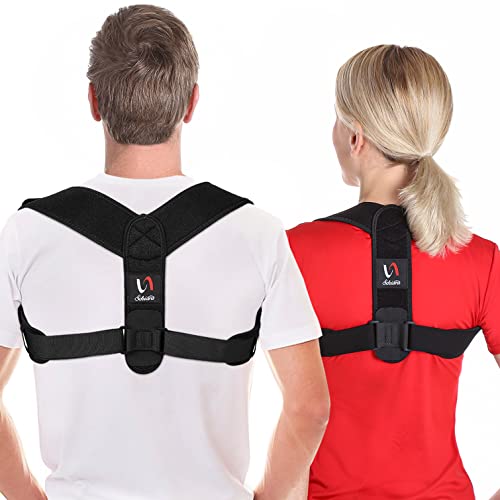


As an Amazon Associate we earn from qualifying purchases at no extra cost to you. Ratings are shown as listed on Amazon.
Quick comparison: which design suits your routine?
| Design | Typical weight | Materials | Adjustment range | Best use | Main compromise |
|---|---|---|---|---|---|
| Figure-eight shoulder corrector | 80–180 g | Neoprene, nylon, elastic webbing | Usually 2–4 adjustment points | Light daily reminders and desk work | Can press into the underarms if overtightened |
| Wide upper-back brace | 150–300 g | Breathable mesh, elastic, foam panels | Shoulder, chest, and waist straps | Longer seated periods and greater coverage | More visible beneath fitted clothing |
| Clavicle-support brace | 100–220 g | Elastic fabric, padded binding, hook-and-loop closures | Shoulder straps plus chest adjustment | Subtle shoulder-position cueing | Less support around the mid-back |
| Rigid or semi-rigid back support | 250–600 g | Neoprene, molded panels, removable stays | Multiple straps and panel positions | Short-term support when professionally recommended | Warm, bulky, and less suitable for concealed daily wear |
These are practical category ranges rather than specifications for one particular product. Construction varies substantially between manufacturers, so check the individual size chart, materials label, and return policy before buying.
Best posture correctors by situation
For discreet office or study wear
Choose a slim clavicle-support or figure-eight design with flat seams, narrow straps, and breathable mesh across the back. A neutral color, low-profile hook-and-loop closure, and straps no wider than about 5 cm make it less likely to show beneath a loose shirt or lightweight sweater.
Look for removable pads or smooth edge binding around the armpits. These details matter more than extra straps when the corrector will be worn while typing, reading, or commuting. A brace that constantly needs repositioning is not a practical daily support, even if it offers more theoretical adjustability.
For frequent wear and warm climates
Prioritize ventilation over maximum compression. Mesh panels, perforated neoprene, moisture-wicking lining, and exposed elastic sections release heat more effectively than a solid neoprene vest. A design covering less of the torso will usually feel cooler, but it may provide a less noticeable reminder when the shoulders drift forward.
Breathability does not eliminate sweat. If you use a corrector several days per week, having two washable fabric braces and alternating them can be more comfortable and hygienic than wearing one continuously.
For a stronger upper-back cue
Select a wide upper-back brace with shoulder straps that connect to a central panel rather than a simple two-loop design. The broader panel distributes tension and is less likely to twist. A removable flexible stay can add structure, but it should not dig into the spine or prevent normal bending.
This style is usually more visible and warmer under clothing. It may be worthwhile for short desk sessions, driving, or other activities where you want a clear reminder to change position, but it is not automatically better for all-day use.
For a limited budget
A basic adjustable figure-eight support generally costs about $15–$35, while wider mesh braces commonly fall around $25–$60. More elaborate semi-rigid designs may cost approximately $50–$100 or more. At the lower end, inspect stitching, strap elasticity, and closure quality rather than judging value by the number of panels.
A simple brace used three times per week for six months equals about 78 uses. A $30 brace therefore costs roughly $0.38 per use before replacement. If the elastic loses its tension after a few weeks, a cheaper purchase may have a higher ownership cost than a better-constructed $50 brace used for a year.
How to choose the right fit
- Measure the correct area. Follow the manufacturer’s instructions; many products use chest circumference, while others use shoulder width, waist circumference, or a combination.
- Compare your measurement with the middle of a size range. If your measurement is at the extreme upper or lower limit, look for a different size or a design with more adjustment. Being technically inside a range does not guarantee comfort.
- Put it on over a thin shirt. This reduces friction and gives a more realistic idea of how it will feel during daily wear.
- Adjust evenly on both sides. The straps should create a mild cue rather than pull one shoulder higher than the other.
- Check movement. Raise both arms, rotate your torso, sit at a desk, and take several deep breaths. The corrector should stay in place without restricting normal movement.
- Wear it briefly at first. Start with approximately 15–30 minutes, then increase gradually if it remains comfortable. Longer wear is not automatically more effective.
Useful fit signs include centered seams, even shoulder tension, and no numbness, tingling, rubbing, or difficulty breathing. Loosen or remove the brace if those problems occur. Persistent pain, weakness, numbness, a recent injury, or a condition affecting the spine or shoulders warrants advice from a qualified healthcare professional before using supportive equipment.
Decision matrix for a practical purchase
| Your priority | Recommended style | Minimum features to seek | Features to avoid |
|---|---|---|---|
| Lowest cost | Figure-eight shoulder support | Two-way adjustment, reinforced stitching, washable fabric | One-size-only construction with fixed straps |
| New to posture supports | Soft clavicle-support brace | Light tension, padded edges, simple adjustment | Rigid stays and aggressive compression |
| Daily use, 4–8 hours | Wide breathable upper-back brace | Mesh panel, flat seams, removable washable pads | Solid neoprene across the entire torso |
| Concealability | Low-profile figure-eight design | Thin straps, neutral color, flat closure | Large waist belt or molded back panel |
| More coverage | Upper-back brace with waist strap | Three-point adjustment and stable central panel | Straps that cannot be adjusted independently |
Comfort details that make the biggest difference
Strap width: Very narrow elastic can concentrate pressure, while very wide straps may show through clothing. Medium-width straps with soft binding are often the most versatile.
Closures: Hook-and-loop fasteners offer the most adjustment but can catch on delicate clothing. Buckles are more durable and quieter, although they may create a thicker profile.
Fabric: Neoprene provides cushioning and structure but tends to retain heat. Nylon mesh and elastic webbing ventilate better but may feel less padded. A hybrid design often works best: mesh at the back, soft elastic at the shoulders, and modest padding at contact points.
Washability: Removable pads and a hand-washable design extend useful life. Avoid a brace that cannot be cleaned after sweating. Unless the care label says otherwise, use mild detergent, rinse thoroughly, reshape it, and air-dry away from direct heat. A dryer can damage elastic fibers and hook-and-loop closures.
Ownership issues buyers often overlook
The first component likely to wear out is usually the elastic, followed by hook-and-loop fastening and edge binding. Loss of tension, curling edges, frayed stitching, or a closure that slips under light movement are signs that the brace is no longer providing consistent support. Do not compensate for stretched elastic by tightening the straps excessively.
Common mistakes include selecting a size based only on height, wearing the brace directly against sweaty skin, tightening it until the shoulders feel forcibly pulled back, and treating it as a substitute for movement breaks. A corrector is best used as a temporary cue alongside comfortable workstation positioning, regular position changes, and appropriate exercise or professional guidance.
Bottom line
For most daily users, choose a soft, adjustable figure-eight or clavicle-support design with breathable panels, flat seams, and a clear size range. Choose a wider upper-back brace when stability and coverage matter more than concealability. Whichever style you select, the best posture corrector is the one that remains comfortable, stays centered during movement, can be washed easily, and encourages you to change position rather than forcing your body into one posture.

Write Your Review
No reviews yet. Be the first to share your experience!