

Key takeaways
- Use a cabinet hardware jig rather than estimating hole positions by eye. A small error can be conspicuous across a row of matching doors.
- Support the back of the door while drilling to reduce splintering, especially on veneer or painted MDF.
- Use screws long enough to engage securely but not so long that they enter the cabinet interior. Many handles include multiple screw lengths; test one before installing the full set.
- Do not overtighten. Excessive force can crush wood fibers, crack a finish, or distort a thin metal mounting foot.
- On wide drawers, use longer pulls or two pulls where appropriate. A single short pull near the center can concentrate force and make a heavy drawer feel awkward.
The best cabinet handles for kitchen use are solid brass for a warm, traditional look, stainless steel for maximum resistance to moisture and heavy use, and zinc alloy when you want broad style choice at a lower price—provided the center-to-center measurement matches your existing holes.
Our top picks
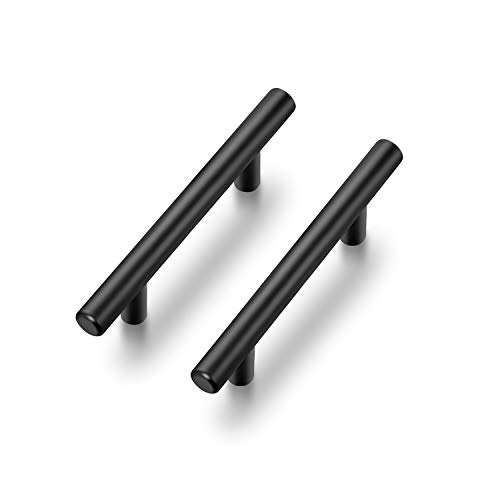


As an Amazon Associate we earn from qualifying purchases at no extra cost to you. Ratings are shown as listed on Amazon.
Best Cabinet Handles for Kitchen: Top Picks for Every Style
A cabinet handle is easy to underestimate: the right one must fit the door, withstand repeated pulling, remain comfortable with wet or greasy hands, and coordinate with hinges, faucets, and appliances. The most important buying specification is not the overall length. It is the center-to-center measurement, the distance between the two screw holes.
Quick picks by kitchen situation
| Kitchen situation | Best choice | Recommended size | Why it works |
|---|---|---|---|
| Existing holes that must be reused | Handle matching the current center-to-center spacing | Commonly 3, 3.75, or 5 inches | Avoids drilling, filling, and refinishing doors |
| Busy family kitchen | Brushed stainless steel | 5 to 7 inches center-to-center | Durable, easy to clean, and visually forgiving |
| Traditional or farmhouse kitchen | Solid brass with a satin or unlacquered finish | 3 to 5 inches center-to-center | Adds warmth and suits shaker and raised-panel doors |
| Budget renovation | Zinc alloy in a brushed or matte finish | 3 to 5 inches center-to-center | Offers many shapes and finishes at a moderate price |
| Large drawers and wide appliance panels | Long bar pull or paired pulls | 8 to 12 inches center-to-center | Spreads pulling force and feels proportional |
| Small kitchen or narrow doors | Compact bar pull or low-profile tab pull | 2.5 to 3.75 inches center-to-center | Provides clearance without crowding the door face |
Brass vs. stainless steel vs. zinc alloy
Solid brass: best for warmth and character
Solid brass handles are dense, strong, and naturally warm in color. They suit classic, transitional, English-style, and farmhouse kitchens, especially with cream, green, navy, or natural wood cabinets. Unlacquered brass gradually develops a patina, while lacquered or sealed brass keeps a more consistent appearance.
The trade-off is maintenance and finish variation. Unlacquered brass can show fingerprints and darken unevenly, particularly near a sink or range. Abrasive cleaners may scratch the surface or remove its protective coating. Choose brass when the evolving finish is part of the appeal, or select a sealed satin brass finish when consistency matters more.
Stainless steel: best for demanding kitchens
Stainless steel is the strongest practical choice for frequent use, moisture, and regular cleaning. A brushed finish generally hides fingerprints better than polished steel and coordinates naturally with stainless appliances. It is particularly suitable for households where cabinet hardware is pulled hundreds of times per week.
Not every silver-colored handle is stainless steel. Some are zinc alloy with a plated finish. Look for a stated stainless-steel construction, preferably grade 304 for ordinary indoor kitchen use. Stainless steel usually costs more than zinc, but its finish is less dependent on a thin decorative coating.
Zinc alloy: best for design variety and value
Zinc alloy is a cast metal commonly used for affordable cabinet hardware. It can be shaped into cup pulls, ornate knobs, geometric bars, and oversized decorative designs that would cost more in brass or stainless steel. It is a sensible option for a rental, a first renovation, or a kitchen where hardware may eventually be replaced.
Its weakness is that the visible finish is often a coating over the alloy. Scratches, chips, and wear at the edges can expose a different-colored base metal. Zinc is also less reassuring on very large, heavily used drawers unless the handle has a substantial mounting base and strong screws.
| Material | Typical market range per handle | Finish durability | Cleaning tolerance | Best fit |
|---|---|---|---|---|
| Zinc alloy | $3–$15 | Good when undamaged; coating can wear at edges | Mild soap and water; avoid abrasives | Budget updates and decorative styles |
| Solid brass | $8–$35 | Excellent; may patinate if unlacquered | Depends on seal; polishing may be appropriate for bare brass | Traditional and warm finishes |
| Stainless steel | $8–$30 | Very good against moisture and normal wear | Soap, water, and a soft cloth | High-use and contemporary kitchens |
How to choose the correct handle size
1. Measure the existing holes
Measure from the center of one screw hole to the center of the other, not from the outside edges of the handle. Record the measurement in inches or millimeters. Common sizes include 3 inches (76 mm), 3.75 inches (96 mm), 5 inches (128 mm), and 6.25 inches (160 mm), although manufacturers may round metric measurements differently.
2. Check the overall projection
Projection is how far the handle extends from the cabinet face. A projection of approximately 1 to 1.25 inches is comfortable for most kitchens. Handles projecting less than about 0.75 inch have a sleek appearance but can be harder to grip, especially for people with limited hand strength. Very deep handles need additional clearance from adjacent doors, walls, and walkways.
3. Match length to the cabinet
For a balanced appearance, a handle’s overall length is often about one-quarter to one-third of the drawer or door width. This is a visual guideline rather than a rule. On a 30-inch drawer, an 8- to 12-inch pull may look proportionate; on a 12-inch door, a 3- to 5-inch pull is usually less overwhelming.
Do not automatically use the same size everywhere. A smaller handle on a narrow door and a longer pull on a wide drawer can look intentional if the finish, shape, and mounting position remain consistent.
Head-to-head recommendations by style
Modern and minimalist
Choose a straight bar pull with a round or gently squared profile in brushed stainless steel, matte black, or satin nickel. Slim profiles suit flat-panel doors, while a slightly thicker bar is easier to grip. Avoid overly ornate bases if the cabinet design depends on clean lines.
Shaker and transitional
A simple 3- to 5-inch center-to-center pull is the safest choice. Brushed brass adds warmth, stainless steel keeps the look neutral, and zinc alloy can reproduce either appearance at a lower cost. A backplate is useful when replacing old knobs because it can conceal previous marks or finish differences.
Farmhouse and traditional
Bin pulls on drawers and matching knobs or short pulls on doors create a classic combination. Solid brass is the premium material choice, while zinc alloy offers more decorative shapes for less money. Select a finish with enough contrast against the cabinet color to keep the hardware readable.
Industrial or utilitarian
Look for substantial bar pulls in stainless steel, dark bronze, or an intentionally aged finish. A diameter around 0.4 to 0.6 inch gives a sturdy feel without becoming uncomfortable. Confirm that the mounting feet are smooth and do not dig into painted or wood cabinet surfaces.
Installation details that prevent common mistakes
- Use a cabinet hardware jig rather than estimating hole positions by eye. A small error can be conspicuous across a row of matching doors.
- Support the back of the door while drilling to reduce splintering, especially on veneer or painted MDF.
- Use screws long enough to engage securely but not so long that they enter the cabinet interior. Many handles include multiple screw lengths; test one before installing the full set.
- Do not overtighten. Excessive force can crush wood fibers, crack a finish, or distort a thin metal mounting foot.
- On wide drawers, use longer pulls or two pulls where appropriate. A single short pull near the center can concentrate force and make a heavy drawer feel awkward.
Ownership, cleaning, and replacement costs
The first parts to show wear are usually the finish at the gripping area, the screw threads, and the cabinet surface beneath the mounting feet. Wipe handles with a damp microfiber cloth and a small amount of mild dish soap, then dry them. Avoid bleach, scouring powder, steel wool, and aggressive solvent-based cleaners unless the manufacturer specifically permits them.
For a 24-handle kitchen, a rough hardware budget illustrates the trade-off: zinc alloy at $5 each costs about $120, mid-range stainless steel at $14 each costs about $336, and solid brass at $20 each costs about $480. If inexpensive plated handles need replacement after five years while stainless handles last 15 years, the material with the higher purchase price may have the lower long-term replacement cost. Actual service life depends on cleaning, humidity, mounting quality, and finish.
Final buying checklist
- Measure center-to-center spacing before ordering.
- Confirm the material, rather than relying on a color name such as “brass” or “stainless.”
- Choose a projection that is comfortable but does not obstruct nearby doors or walkways.
- Use longer pulls for wide, heavy drawers.
- Order one sample before buying a complete set if the finish is important.
- Keep spare screws and one replacement handle after installation.
For most kitchens, brushed stainless steel is the safest all-purpose choice, solid brass is the best upgrade for warmth and character, and zinc alloy is the practical value option. The best cabinet handles for kitchen renovation projects are ultimately the ones that combine the right center-to-center measurement with a material and finish suited to how often the cabinets are used.




Write Your Review
No reviews yet. Be the first to share your experience!