

Key takeaways
- Broad, even contact around much of the calf.
- Usually the easiest format for beginners to adjust.
- Many models include a built-in timer, reducing the temptation to run a session too long.
- Wraps can accommodate different leg shapes when they use hook-and-loop closures and an extension strap.
The best calf massagers for most home users are adjustable air-compression models, while kneading is the better choice for a deeper, localized massage and vibration wins when portability, quiet operation, and quick recovery matter most.
These devices are not interchangeable. Air compression gently squeezes the lower leg in timed cycles; kneading uses moving nodes or rollers to apply focused pressure; vibration relies on rapid oscillation through a sleeve or handheld head. The right choice depends on how much intensity you want, how large your calves are, how often you will use the device, and whether it must be stored or transported after every session.
Our top picks
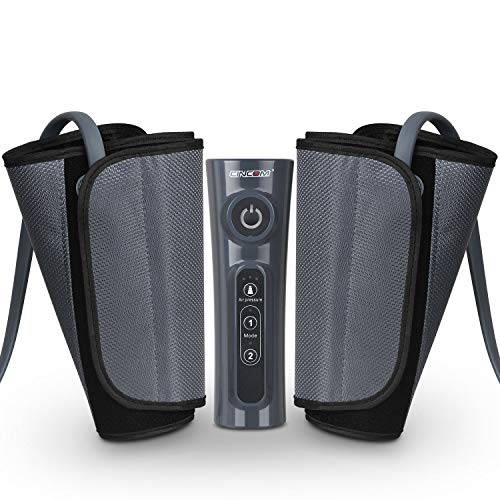
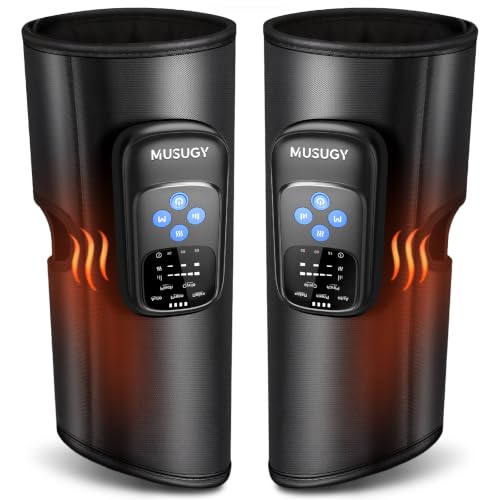
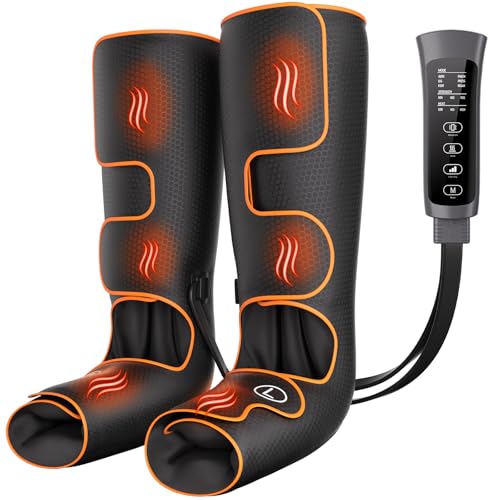

As an Amazon Associate we earn from qualifying purchases at no extra cost to you. Ratings are shown as listed on Amazon.
Best calf massagers by situation
| Situation | Best format | Useful target specifications | Why it fits |
|---|---|---|---|
| First-time buyer on a budget | Basic air compression | 2–3 pressure levels, 15–20 minute timer, 12–20 in. calf circumference | Simple controls and broad coverage without the cost or bulk of motorized kneading. |
| Frequent home recovery | Multi-chamber air compression | 3–6 chambers, 3–5 programs, separate left/right controls | Adjustable pressure and sequential compression are easier to fine-tune over repeated sessions. |
| Someone who wants the strongest localized sensation | Kneading or kneading-plus-compression | 2–4 rotating nodes, selectable direction, 10–20 minute timer | Moving nodes can concentrate pressure on the calf muscle rather than squeezing the entire lower leg. |
| Small apartment, office, or travel | Vibration sleeve or handheld unit | 0.5–2.5 lb, rechargeable battery, 2–4 intensity levels | It stores more easily and usually sets up faster than a pump-based system. |
| Large or muscular calves | Adjustable wrap or oversized air sleeve | At least 20–24 in. stated maximum circumference, extension strap | Fit is more important than maximum intensity; a tight sleeve can make a gentle setting feel excessive. |
Air compression: the best all-rounder
Air-compression calf massagers use one or more inflatable chambers inside fabric wraps. A pump fills the chambers, holds pressure briefly, and releases it in a repeating cycle. Models with several chambers can work from the ankle upward, while simpler versions inflate most of the sleeve at once.
Strengths
- Broad, even contact around much of the calf.
- Usually the easiest format for beginners to adjust.
- Many models include a built-in timer, reducing the temptation to run a session too long.
- Wraps can accommodate different leg shapes when they use hook-and-loop closures and an extension strap.
Trade-offs
- The pump creates a noticeable hum, commonly around 40–60 decibels depending on the design and distance.
- Air sleeves may feel less targeted than kneading nodes.
- The hose, controller, and pump make them less convenient to pack.
- Fabric can retain sweat if it is not wiped and dried after use.
Choose air compression when you expect to use a massager several times per week, want simple whole-calf coverage, or are unsure which intensity you can tolerate. A model with independent left and right controls is particularly useful if one leg is more sensitive than the other, though uneven symptoms should be discussed with a qualified professional rather than treated as a routine massage issue.
Kneading: deeper sensation, more demanding fit
Kneading calf massagers use rotating or oscillating nodes to press into selected areas. Some sit inside a rigid shell; others combine moving nodes with an inflatable sleeve. The sensation is more concentrated than compression and can be preferable for users who dislike the uniform squeeze of air chambers.
The main limitation is geometry. A kneading mechanism may contact the calf strongly in one position and miss another, depending on muscle shape and the distance between the nodes. Look for adjustable straps, selectable rotation, and a return policy that allows you to confirm the fit.
Because kneading applies moving pressure to smaller contact points, begin at the lowest setting for 5–10 minutes. Avoid assuming that the most forceful setting is the most effective. If the device causes sharp pain, numbness, tingling, bruising, or lingering soreness, stop using it and seek professional advice.
Vibration: portable and quick, but less comprehensive
Vibration units are usually the lightest option. They may be a flexible wrap containing a vibration motor or a handheld device that you move over the calf yourself. They start quickly, often operate more quietly than a pump, and can be useful when storage space is limited.
The compromise is coverage. A handheld unit requires consistent movement and pressure, while a vibrating sleeve may stimulate the surface without the enclosing fit of compression. Battery-powered versions also require charging. For a 20-minute session every day, a device with a three-hour battery should theoretically provide about nine sessions between charges, but actual runtime falls with higher intensity and battery age:
Estimated sessions per charge: 180 minutes of rated runtime ÷ 20 minutes per session = 9 sessions.
Vibration is a sensible choice for short sessions before or after ordinary activity, for shared household use, or for anyone who cannot spare room for a pump and multiple sleeves.
Intensity is not the same as usefulness
| Format | Typical intensity controls | Typical session timer | Approximate device weight | Cleaning difficulty |
|---|---|---|---|---|
| Basic air compression | 2–3 levels | 15–20 minutes | 2–4 lb | Low; wipe fabric and controller |
| Multi-chamber air compression | 3–5 levels and 3–5 programs | 15–30 minutes | 3–6 lb | Low to moderate; more seams and hoses |
| Kneading | 1–3 speed or pressure settings | 10–20 minutes | 3–8 lb | Moderate; fixed mechanisms need careful wiping |
| Vibration wrap | 2–4 levels | 10–30 minutes | 0.5–2.5 lb | Low; usually a surface wipe |
These are practical buying ranges rather than guarantees for every model. A greater number of settings does not automatically mean finer control: a device with three well-spaced levels may be easier to use than one with ten poorly differentiated programs.
Fit: measure before choosing a calf massager
Measure the fullest part of each calf while standing naturally, then compare that measurement with the manufacturer’s minimum and maximum circumference. Do not measure only the ankle or assume that an adjustable strap makes every sleeve suitable for every leg.
For example, if your calf measures 18.5 inches and a sleeve is listed for 12–20 inches, it leaves only 1.5 inches of adjustment room at the upper end. That may be adequate, but a 12–24-inch sleeve gives more flexibility for clothing, swelling that changes throughout the day, or a thicker leg profile. If your measurement is close to the stated maximum, choose an extension strap or a larger design rather than relying on maximum tension.
Cleaning and durability realities
The first parts likely to show wear are hook-and-loop fasteners, fabric edges, air hoses, charging ports, and seams around inflatable chambers. Kneading units add another potential failure point: the moving mechanism. A warranty covering the pump or motor is more valuable than an attractive number of massage modes.
After each use
- Unplug or switch off the unit before removing the wraps.
- Wipe the inside surfaces with a slightly damp, mild-soap cloth.
- Do not soak sleeves, immerse controllers, or spray liquid into vents and connectors.
- Leave the wraps open until fully dry before folding them.
- Store hoses without sharp bends and avoid placing heavy objects on the pump.
Wear thin, clean clothing underneath if the instructions permit it; this can reduce sweat and body-oil buildup, but it should not make the sleeve uncomfortably tight. Never use household disinfectants, bleach, or heat on fabric unless the manufacturer specifically allows them.
What to choose
Choose air compression for the most adaptable home option, particularly if you want broad coverage and repeatable sessions. Choose kneading if focused mechanical pressure matters more than compact storage and you can verify the fit. Choose vibration when low weight, quick setup, and portability outweigh full-calf enclosure.
Before buying, prioritize the stated calf circumference, timer, return policy, washable or wipe-clean materials, replacement-part availability, and a control layout you can operate while seated. People with unexplained one-sided swelling, significant pain, skin injury, reduced sensation, circulation disorders, a history of blood clots, or other relevant medical conditions should ask a healthcare professional whether this type of device is appropriate before use.

Write Your Review
No reviews yet. Be the first to share your experience!