

Key takeaways
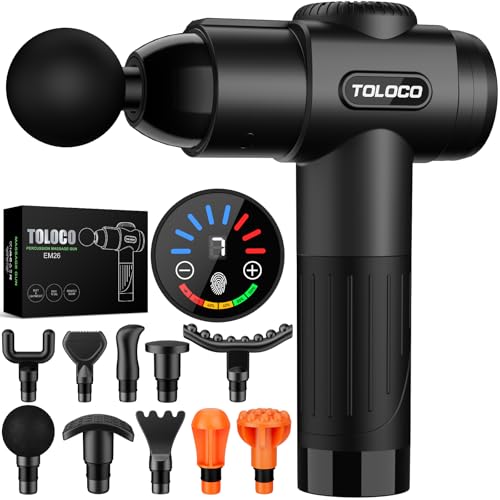
- Best for adjustable, targeted pressure: a compact percussion massager with multiple speed levels and interchangeable heads.
- Best for lower-back heat: a wearable heated back wrap such as the Hyperice Venom 2 Back.
- Best for covering the largest area: a shiatsu massage cushion with rolling nodes and a chair-compatible design.
- Best for a travel bag: a small cordless percussion massager weighing about 1.5 to 2.0 lb.
- Best for a modest budget: a plug-in shiatsu cushion or handheld massager, generally less expensive than a premium heated wearable.
The best back massagers depend on where you hurt, how much pressure you can tolerate, and whether you need portable relief or a full-size seat-style device: choose a heated wrap for broad lower-back comfort, a percussion device for targeted muscle work, or a shiatsu cushion for hands-off coverage across much of the back.
Our top picks



As an Amazon Associate we earn from qualifying purchases at no extra cost to you. Ratings are shown as listed on Amazon.
Quick picks by situation
- Best for adjustable, targeted pressure: a compact percussion massager with multiple speed levels and interchangeable heads.
- Best for lower-back heat: a wearable heated back wrap such as the Hyperice Venom 2 Back.
- Best for covering the largest area: a shiatsu massage cushion with rolling nodes and a chair-compatible design.
- Best for a travel bag: a small cordless percussion massager weighing about 1.5 to 2.0 lb.
- Best for a modest budget: a plug-in shiatsu cushion or handheld massager, generally less expensive than a premium heated wearable.
What separates the best back massagers?
“Back massager” describes several distinct techniques rather than one product category. Percussion devices deliver rapid tapping through a small head, making them useful for isolating the muscles beside the spine, upper back, glutes, and shoulders. Shiatsu cushions use rotating or kneading nodes to create a deeper, more localized pressure pattern while you sit against them. Rolling cushions move nodes vertically along a track and usually cover more of the back with less precise pressure. Heated wraps apply warmth over a broad area without mechanically kneading the muscles.
None of these designs should be treated as a diagnosis or a substitute for professional care. Stop if you experience sharp, radiating, or worsening pain, numbness, weakness, dizziness, or unusual symptoms, and seek advice from a qualified clinician when those symptoms occur.
Head-to-head comparison
| Massager type | Typical coverage | Pressure control | Heat | Power and portability | Typical 2026 market range |
|---|---|---|---|---|---|
| Compact percussion massager | Small zones, about 1–3 in. per head | High; commonly 3–5 speeds | Rare | Rechargeable; often 1.5–2.5 lb; roughly 2–5 hours per charge | $60–$250 |
| Heated wearable wrap | Mostly lumbar or mid-back area | Light compression rather than kneading | Usually 3 heat levels | Battery or wall power; often 2–6 hours depending on heat setting | $150–$300 |
| Shiatsu massage cushion | About 20–28 in. of vertical back coverage | Moderate to firm; usually one or two node modes | Often one heat setting | Typically wall-powered; about 8–15 lb | $50–$200 |
| Handheld kneading massager | Depends on arm reach and handle angle | Moderate; often 2–3 speeds | Sometimes built in | Usually corded; about 3–5 lb | $40–$130 |
| Massage roller or foam roller | Broad surface contact; user-directed | Controlled by body weight and position | None | No power; commonly 1–4 lb | $20–$100 |
Specifications vary by model and manufacturer, so use these figures as buying benchmarks rather than universal limits. A device with more speed levels is not automatically better: the useful range is the one that lets you begin gently and increase pressure without losing control.
Best back massagers by pain point and reach
For a tight upper back or shoulder blade area
A percussion massager is usually the most versatile choice because you can select a small attachment and work around, rather than directly on, the shoulder blade. A ball or soft round head is generally more forgiving than a narrow pointed attachment. A long handle or an angled extension matters if you plan to use the device without assistance; otherwise, even a powerful massager may leave the center of your back unreachable.
The main limitation is coverage. You must reposition the device repeatedly, and it is easy to spend too long on one spot. Begin at the lowest setting, keep the device moving, and limit each area to a short interval according to the manufacturer’s instructions.
For broad lower-back warmth
A heated wearable wrap provides the easiest setup. The Hyperice Venom 2 Back, for example, is designed as a rechargeable heated wrap with vibration and adjustable heat rather than as a handheld deep-kneading tool. Its advantage is consistent contact while standing, sitting, or moving lightly around the home. It is better suited to someone who values convenience and warmth than to someone seeking highly focused pressure.
Check the wrap’s waist range before buying. A wrap that rides upward or compresses unevenly will heat the wrong area and may become uncomfortable during extended use. Heat should feel comfortably warm, not hot enough to cause skin irritation. Avoid sleeping with a heated device unless its instructions specifically permit it.
For hands-off back coverage in a chair
A shiatsu or rolling cushion is the practical choice when you want to lean back and let the mechanism work. Models in this category commonly include a chair strap, a padded back panel, a timer, and either fixed or vertically traveling massage nodes. The best fit depends on your torso length: if the nodes sit too high, they may concentrate on the shoulder blades while leaving the lumbar area untouched.
Many cushions produce firm pressure because your body weight presses against the nodes. Use a thin layer of clothing or a towel at first. If the cushion has a removable lumbar flap, leave it in place for gentler contact and remove it only when the instructions allow a deeper setting.
For travel, office use, or precise control
A cordless percussion device takes up less space than a cushion and does not require a chair with a suitable back angle. Look for a battery indicator, USB-C or clearly specified charging system, an automatic shutoff, and a weight below about 2 lb if you will hold it for several minutes. The trade-off is that reaching the mid-back can be awkward, and the motor may feel weaker at higher pressure when the battery is low.
Decision matrix: which design fits your routine?
| Your priority | Most suitable choice | Why | Compromise |
|---|---|---|---|
| Under $75 and occasional use | Basic corded handheld or foam roller | Low purchase cost and no battery replacement | Less convenient reach and fewer controls |
| Daily use at one chair | Shiatsu or rolling cushion | Fast setup and repeatable coverage | Bulky and usually not cordless |
| First massage device | Heated wrap or low-speed percussion model | Gentler learning curve and simpler controls | Less deep mechanical pressure |
| Frequent travel | Compact rechargeable percussion massager | Portable and usable without a dedicated chair | Harder to reach the middle of the back |
| Several users with different preferences | Adjustable cushion or percussion device | More control over speed, mode, and location | More settings require more careful use |
How to compare heat, pressure, and power
Heat: Multiple temperature levels are more useful than a single high setting. Look for a timer and a way to use massage without heat. Heat can make a device feel more comfortable, but it does not prove that the mechanical action is appropriate for your body.
Pressure: Percussion amplitude, node firmness, and your body position all affect intensity. A cushion may feel stronger than its specifications suggest because you lean into it. Choose gradual adjustment over maximum force, particularly if you are new to massage devices.
Power source: Corded products generally provide consistent output and avoid battery aging. Rechargeable models offer better freedom of movement but eventually need a battery replacement or full product replacement. For a battery-powered device used 15 minutes per day, a stated 3-hour runtime equals approximately 12 sessions before recharging: 180 minutes divided by 15 minutes.
Reach: Measure the areas you actually want to cover, not just the product’s overall length. A 24-inch cushion may not massage 24 inches of your back if its usable node track is shorter or if your torso does not align with it.
Ownership details that affect value
The parts most likely to show wear are fabric covers, charging cables, straps, switches, and battery packs. Choose a cushion with a washable or wipe-clean cover, and avoid using oils or creams before placing your back against fabric because they can stain materials and attract dust. Wipe hard surfaces with a slightly damp cloth, unplug corded products before cleaning, and never immerse a powered device.
Do not force a percussion head against bone, the front or side of the neck, the spine itself, open skin, bruised areas, or recently injured tissue. Do not cover ventilation openings, and allow a motorized unit to cool if its instructions call for breaks. A product with a 15-minute automatic shutoff is useful because it limits accidental overuse, but it is not a signal that longer sessions are always appropriate.
Bottom line
Choose a compact percussion massager when precision and adjustable pressure matter most; choose a heated wrap when hands-free lumbar warmth is the priority; and choose a shiatsu cushion when you want broad, repeatable coverage from a chair. Before focusing on brand names, compare the usable reach, pressure range, heat controls, power source, cleaning requirements, and fit to your body. That checklist will identify the best back massager for your routine more reliably than the number of attachments or the highest advertised intensity.






Write Your Review
No reviews yet. Be the first to share your experience!