

Key takeaways
- Back sleepers: a contoured pillow with a raised neck base is the natural fit.
- Side sleepers: need extra height to fill the gap above the shoulder. Purple lists medium and tall for side sleepers.
- Stomach sleepers: most guidance is to use a low pillow; cervical shapes are usually a poor match for this position.
- Combination sleepers: look for even support across a flatter profile or an adjustable fill.
The best cervical pillow for most back sleepers is a contoured design with a raised neck base, such as the Tempur-Pedic TEMPUR-Neck, while side and combination sleepers often do better with a latex-and-grid model such as the Purple Harmony in a medium or tall height. A cervical pillow is simply one shaped for the cervical spine, the neck region; it is a comfort product, not a treatment, and ongoing neck pain should be assessed by a doctor or physical therapist.
Our top picks
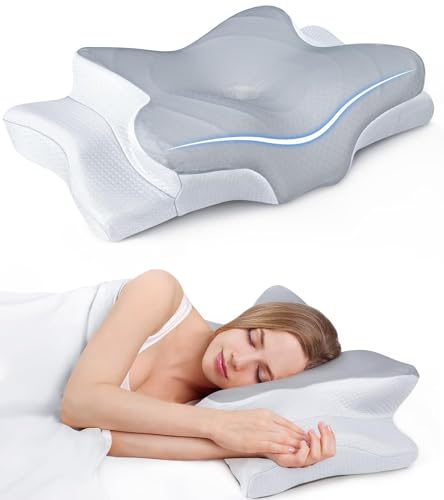


As an Amazon Associate we earn from qualifying purchases at no extra cost to you.
What Makes a Pillow “Cervical”
Cervical pillows are built around the idea that the neck has a natural forward curve and should be supported rather than flattened or pushed forward. The classic design has a rounded roll or raised edge under the neck and a gentle dip for the back of the head. Variants include contoured foam, latex pillows with grid or cutout layers, and adjustable-fill pillows. The label tells you about shape, not about proven outcomes, so compare the actual dimensions and materials the maker states.
At a Glance
| Pillow | Shape and materials stated | Best for | Trade-offs |
|---|---|---|---|
| Tempur-Pedic TEMPUR-Neck | Ergonomic contour with an elevated base under the neck; three sizes; five-year limited warranty (Tom’s Guide) | Back sleepers wanting firm, shaped support | May feel too firm; side sleepers disagree on comfort |
| Purple Harmony | Talalay latex core with Honeycomb GelFlex Grid wrap; 5.5, 6.5 and 7.5 in heights; moisture-wicking stretch cover | Side and combination sleepers; warm sleepers | Fixed heights; premium tier |
| Coop Adjustable | Adjustable fill, per roundups | Sleepers who want custom height | Less structured feel |
| Cushion Lab Deep Sleep | Contoured, per roundups | Budget-to-mid shoppers | Limited independent coverage |
| Saatva Latex / Osteo Cervical | Latex and cervical-shaped options, per roundups | Latex lovers | Details vary by listing |
| Eli & Elm Side Sleeper | Side-sleeper design, per roundups | Side sleepers | Limited independent coverage |
Cervical Pillow Types Compared
Contoured memory-style foam
The TEMPUR-Neck belongs here. Forbes Vetted names it its top pick for neck pain and credits the raised base for supporting tense neck muscles. Tom’s Guide describes the build as firm and following the natural curve of the neck. The shape is the draw. The drawback, which Tom’s Guide also lists, is that it may be too firm for some people.
Latex with a grid layer
The Purple Harmony is the representative example. Roundups praise it for cooling and for working across positions, with the cost and the lack of height adjustment as the downsides. Because it does not use a deep neck roll, it is a flatter-profile option than a classic cervical roll design.
Adjustable-fill pillows
Adjustable pillows let you remove or add filling, so you can alter the height until your neck feels level. They suit shoppers who are unsure of their ideal loft or who want to experiment.
Cervical rolls
A simple bolster-style roll sits under the neck, and some people prefer it to a full pillow. They are typically inexpensive, though they do not support the head in the same way.
Sizing and Fit
Because the TEMPUR-Neck is offered in three sizes, size choice is part of the purchase. Check the maker’s sizing chart, which typically relates to body size and shoulder width. For the Purple Harmony, the standard size is listed at about 26 by 17 inches in low and medium and 28 by 17 inches in tall, while the king size is 34 by 17 inches in all three heights. Confirm that the pillow fits your pillowcase, since contoured shapes can be too thick for some cases.
A common mistake is choosing based on firmness alone. Height and shape matter more. If your head tilts toward the mattress on your side, the pillow is too low; if your chin is pushed to your chest on your back, it is too high.
Sleep Position Guidance
- Back sleepers: a contoured pillow with a raised neck base is the natural fit.
- Side sleepers: need extra height to fill the gap above the shoulder. Purple lists medium and tall for side sleepers.
- Stomach sleepers: most guidance is to use a low pillow; cervical shapes are usually a poor match for this position.
- Combination sleepers: look for even support across a flatter profile or an adjustable fill.
Care and Safety Notes
Read the manufacturer’s care label. Foam and latex cores usually should not be machine washed, and some covers are removable while others are not. A washable protector is a practical addition. If you have a neck injury, recent surgery, or a diagnosed spinal condition, ask your clinician before switching to a firmer or more contoured pillow. Stop using a pillow that increases pain or causes tingling or numbness in the arms or hands.
Budget Tiers
- Budget: simple foam contours, cervical rolls and adjustable-fill pillows.
- Mid-range: established bedding-brand contour or latex pillows.
- Premium: the TEMPUR-Neck and the Purple Harmony. Tom’s Guide describes the Harmony as one of the most expensive pillows on the market.
Pick X If… Decision Table
| If you… | Choose | Why |
|---|---|---|
| Want a classic raised-neck cervical shape | TEMPUR-Neck | Elevated base, three sizes |
| Sleep on your side | Purple Harmony (medium or tall) | Heights designed for side sleepers per the maker |
| Run warm | Purple Harmony | Forbes Vetted cites the grid and latex for airflow |
| Want to experiment cheaply | Adjustable fill or cervical roll | Low commitment |
| Have new or severe neck pain | Medical assessment first | A pillow cannot diagnose or treat it |
Alternatives
- Rolled towel: a no-cost way to trial a cervical shape.
- Standard medium-loft pillow: sometimes the problem is a worn-out pillow and any fresh, correctly sized pillow would help.
- Travel neck support: intended for sitting upright, not as a replacement for bed pillows.
What Reviewers Disagree On
The main split in reviews is whether a firm cervical pillow suits side sleepers. Tom’s Guide rates the TEMPUR-Neck as good for side and back sleepers, but a chiropractor-reviewer quoted by Somnora says the missing shoulder cutout leaves side sleepers with shoulder compression. Customer reviews on Slumber Search also include side-sleeper complaints about the support level. The lesson is to match the pillow to your position and to buy somewhere with a trial or return period.
A Simple Trial Plan for a New Cervical Pillow
Changing pillows is easier when you do it deliberately. Start by noting how your neck feels in the morning for a few days with your current pillow, so you have a baseline. Then switch to the new pillow for at least a week or two, long enough for your body to adjust but not so long that you ignore a clear problem. Keep notes on three things: how quickly you fall asleep, whether you wake with stiffness on either side, and whether your arms or hands feel tingly or numb. A pillow that makes the third item worse should be set aside.
Take a photograph of yourself lying on your side or back from a few feet away, or ask someone to do it. A level line from the middle of your forehead through your nose and chin toward your breastbone suggests the pillow height is in a reasonable range. A visible bend upward or downward suggests the loft is off. This is a rough visual guide, not a measurement, but it often explains why one cervical shape works and another does not.
Also think about the room around the pillow. A pillowcase that is too snug can squash a contoured shape and change its height, and a very soft mattress can make a taller cervical shape feel too high. If you travel often, remember that a cervical pillow is bulky; many people keep a rolled towel handy for hotels so they can recreate the same neck support when away from home. Finally, keep the original packaging and paperwork until you are sure about the purchase, since return windows vary by seller and often require the pillow to be in good condition.
Shopping Notes
Read the product page closely for the exact name, size and height, since similar names can describe different pillows. Where roundups name a model but the maker details were not available, such as some of the adjustable and latex options above, read the seller’s description yourself before deciding. Compare return windows, because comfort is personal and cannot be judged from a specification sheet.
Frequently Asked Questions
Is a cervical pillow better than a regular pillow?
Not automatically. A cervical pillow is shaped to support the neck curve, which some people find comfortable, but a regular pillow at the right height can work equally well. Fit matters more than the label.
Can I use a cervical pillow if I sleep on my side?
Some can. Look for a model with enough height for your shoulder width, such as a medium or tall Purple Harmony, and be cautious with firm contour pillows that lack a shoulder cutout.
How long does it take to adjust?
Many people need a couple of weeks, though you should stop if pain increases. A trial period helps.
Will it help with headaches or numbness?
No claim can be made. If you have recurring headaches, tingling, or arm weakness, see a doctor rather than relying on a pillow change.
How do I clean a cervical pillow?
Follow the care label. Most foam and latex cores are not machine washable, so use a removable cover or a washable protector and spot clean as directed.
What size should I buy?
Use the maker’s size guide. The TEMPUR-Neck comes in three sizes, and the Purple Harmony comes in three heights and two widths, so choose based on frame, shoulder width and sleeping position.










Write Your Review
No reviews yet. Be the first to share your experience!