

Key takeaways
- Budget: basic contoured foam pillows and adjustable shredded-fill options. Fine for trying out a shape before committing.
- Mid-range: established-brand contour pillows and latex options such as those named in the roundups.
- Premium: the Purple Harmony, which reviewers describe as one of the most expensive pillows on the market, and the TEMPUR-Neck line. Worth it if the shape and warranty match your needs.
If you wake with a stiff neck, a contoured pillow such as the Tempur-Pedic TEMPUR-Neck suits many back sleepers, while a fixed-height latex-and-grid design like the Purple Harmony is often the pick for side and combination sleepers who sleep warm; the right one depends mostly on loft, the height of the pillow, matched to your shoulders and mattress. No pillow treats a medical condition, and persistent or severe neck pain deserves a conversation with a doctor or physical therapist. What follows is a plain-language guide to the current options reviewers discuss and how to choose between them.
Our top picks
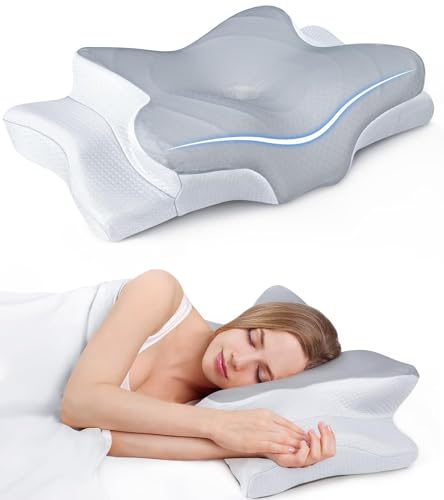

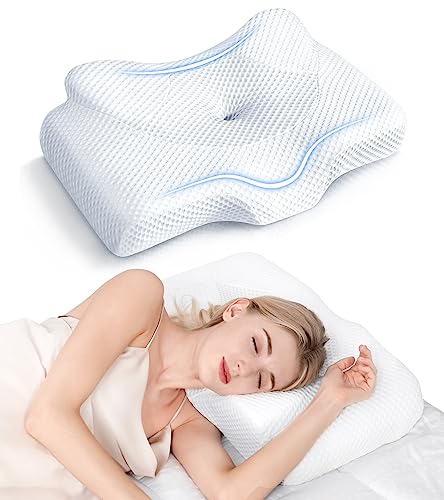

As an Amazon Associate we earn from qualifying purchases at no extra cost to you.
What “Orthopedic” Means on a Pillow
The word orthopedic is a marketing term in the pillow aisle, not a regulated medical category. In practice it describes a pillow shaped to support the natural curve of the neck, often with a raised area under the neck and a lower dip for the head. Reviewers who write about neck-pain pillows tend to agree on one idea: the goal is to keep your head and neck in line with your spine in your actual sleep position. A pillow that is too high or too low can leave the neck bent for hours, so a mismatch in loft is a frequently cited reason for morning stiffness.
At a Glance
| Pillow | Best for | Key stated details | Limits |
|---|---|---|---|
| Tempur-Pedic TEMPUR-Neck | Back sleepers wanting a firm contoured shape | Ergonomic contour with a raised neck base; comes in three sizes; five-year limited warranty, according to Tom’s Guide | Tom’s Guide lists “may be too firm for some sleepers”; a chiropractor-reviewer quoted by one outlet says the lack of a shoulder cutout limits side-sleeper comfort |
| Purple Harmony | Side and combination sleepers, hot sleepers | Talalay latex core wrapped in Honeycomb GelFlex Grid; cover is 92 percent nylon and 8 percent spandex; low (5.5 in), medium (6.5 in) and tall (7.5 in) options | Fixed heights, so a wrong pick cannot be adjusted; reviewers call it premium-priced; some stomach sleepers find it too lofty |
| Coop Adjustable | People who want to tweak fill | Roundups name it among adjustable options | Fill needs adjusting by trial; specs vary by version, so read the listing |
| Eli & Elm Side Sleeper | Side sleepers | Named in neck-pain roundups | Less commonly reviewed than the leaders |
| Cushion Lab Deep Sleep | Budget-to-mid buyers wanting a contoured option | Named in roundups | Shape may not suit all sleeping positions |
| Saatva Latex / Osteo Cervical | Latex fans and cervical-shape seekers | Named in roundups | Limited independent detail available |
Where only a roundup names a model, treat the details as soft and read the maker’s own product description before buying.
Step One: Match Loft to Your Sleep Position
Back sleepers generally need a lower, more cushioned loft so the head rests in a neutral position without being pushed forward. Side sleepers need to fill the space between ear and shoulder, so they usually need a taller pillow, and broader shoulders need more height. Stomach sleepers typically want the thinnest pillow, because a thick one extends the neck backward. Purple’s own guidance for the Harmony lines up with this: it lists the low height for back or stomach sleepers with small to medium frames, the medium for side or combination sleepers with medium to large frames, and the tall for side or combination sleepers with extra-large frames.
A softer or firmer mattress changes things. On a soft mattress your shoulder sinks in and you may need less height; on a firm mattress, the shoulder stays high and you may need more. This is why a pillow that works for a friend can feel wrong for you.
Step Two: Pick the Support Style
Contoured memory-foam style
The TEMPUR-Neck is the classic example. It has a raised base that sits under the neck, which reviewers describe as firm and shaped to follow the neck’s curve. Tom’s Guide rates it as suitable for side and back sleepers but notes it may feel too firm, and the chiropractor-reviewer quoted by Somnora says side sleepers can still feel shoulder compression. Reading both views is useful: it will not suit everyone, and a reasonable return window is worth looking for.
Latex and grid designs
The Purple Harmony uses a Talalay latex core with a GelFlex Grid wrap. Forbes Vetted says the grid layer and latex help dissipate heat and promote airflow, making it a sound option for hot sleepers. The trade-off is that you choose the height up front and cannot add or remove material.
Adjustable-fill pillows
Pillows with removable filling let you take stuffing out or add it back until the height feels right. They are attractive if you are unsure of your loft or your needs change between seasons, though they can feel less structured than a molded pillow.
Step Three: Consider Temperature, Cover and Care
Hot sleepers should look at grid or latex constructions, which reviewers describe as cooler than dense foam. Cooling cannot fix a loft that is wrong, as one source points out. Always read the care tag: many foam and latex cores should not be put in a washing machine, and covers may be removable or spot-clean only. Using a washable pillow protector extends the life of any model.
Budget Tiers
- Budget: basic contoured foam pillows and adjustable shredded-fill options. Fine for trying out a shape before committing.
- Mid-range: established-brand contour pillows and latex options such as those named in the roundups.
- Premium: the Purple Harmony, which reviewers describe as one of the most expensive pillows on the market, and the TEMPUR-Neck line. Worth it if the shape and warranty match your needs.
Pick X If… Decision Table
| If you… | Consider | Why |
|---|---|---|
| Sleep mostly on your back and like firm support | TEMPUR-Neck | Contoured shape with a raised neck base |
| Sleep on your side with broad shoulders | Purple Harmony in medium or tall | Maker lists medium and tall for side sleepers |
| Sleep hot | Purple Harmony | Forbes Vetted cites the grid and latex for airflow |
| Are unsure about your height | Adjustable-fill pillow | Fill can be adjusted |
| Sleep on your stomach | Low-loft option | A thicker pillow bends the neck backward |
| Wake with numbness, tingling or arm weakness | See a doctor | A pillow is not a diagnosis or treatment |
Alternatives
- Rolled towel or cervical roll: some people place a small roll under the neck as a low-cost trial of the shape before buying.
- Adjusting your mattress or sleep position: an unsuitable mattress can undo a good pillow.
- Physical therapy: a therapist can assess posture, desk setup and sleeping habits.
How to Know Whether a Pillow Is Working
Give a new pillow a couple of weeks, as the body can take time to adjust to a different position, but do not push through increasing pain. In a good setup, when lying on your side, a line from the nose to the breastbone should run roughly straight, and on your back, your chin should not tilt up or down. A partner or a quick phone photo from behind can help you see this. If you still wake with sharp pain, it may not be about the pillow.
Where Reviewers Agree and Disagree
Across the outlets that cover neck-pain pillows, a few points come up repeatedly. They agree that alignment in your real sleeping position matters more than brand or price, and that loft is the variable most likely to make or break a pillow. They also agree that cooling features are a bonus rather than a fix. Where they differ is on firmness. Some reviewers like the firm, shaped feel of the TEMPUR-Neck, while others warn that it can feel too hard or leave side sleepers with shoulder pressure. In the same way, some call the Purple Harmony excellent for side sleepers, while noting the cost and the fixed heights.
Because most roundups are affiliate-driven, it helps to read more than one and to focus on the reasoning rather than the ranking. If two sources describe the same trade-off, such as firmness on the TEMPUR-Neck, that trade-off is more likely to be real. Where a pillow appears in only a single list, treat it as a lead to research further instead of a verdict.
Finally, remember that a pillow is one part of a sleep routine. Regular movement breaks during the day, a comfortable screen height, and a mattress that suits your body can all affect how your neck feels. If a good pillow does not change much, that may be a prompt to talk with a professional rather than keep buying more pillows.
Frequently Asked Questions
Can an orthopedic pillow cure neck pain?
No pillow can claim that. A well-fitted pillow may help you rest with the neck in a more neutral position, but neck pain has many causes. If it lasts, spreads to the arm, or comes with numbness or weakness, see a doctor.
How do I choose the right loft?
Match it to your position and shoulder width. Back sleepers usually want lower loft, side sleepers need to fill the gap between ear and shoulder, and stomach sleepers want the thinnest. Purple’s own height guide for the Harmony follows this logic.
Is the TEMPUR-Neck good for side sleepers?
Opinions differ. Tom’s Guide rates it as suited to side and back sleepers, while a chiropractor-reviewer quoted by Somnora says the lack of a shoulder cutout means side sleepers may still feel shoulder pressure. Look for a trial or return policy if you sleep on your side.
Are cooling pillows worth it?
If you sleep warm, they may help comfort. Forbes Vetted credits the Purple Harmony’s grid and latex with heat dissipation. Cooling does not fix a pillow that is the wrong height.
How often should I replace a neck pillow?
Replace it when it flattens, loses shape, or no longer holds your head at the same height. Warranties offer a clue: the TEMPUR-Neck has a five-year limited warranty according to Tom’s Guide, though a warranty is not a guaranteed lifespan.
Can I wash these pillows?
Often not the core. Foam and latex generally should not go in a washing machine, and covers vary. Follow the care tag and use a washable protector.










Write Your Review
No reviews yet. Be the first to share your experience!